
Trang chủBadmintonPV Sindhu exits Asian Games 2026: 122 seconds changed everything and the pain of winning the opening game
Badminton
PV Sindhu exits Asian Games 2026: 122 seconds changed everything and the pain of winning the opening game
PV Sindhu dừng bước ở tứ kết đơn nữ ASIAD 2026 khi thua Chen Yufei 21-11, 18-21, 10-21 tại Aichi-Nagoya. Sindhu thắng ván đầu nhưng không chống đỡ được sự điều chỉnh của đối thủ ở ván hai và ván ba. Sự kiện chính: - PV Sindhu thua Chen Yufei 21-11, 18-21, 10-21 ở tứ kết đơn nữ ASIAD 2026 tại Aichi-Nagoya. - Chen Yufei ngược dòng sau ván đầu, thắng 21-18 và 21-10 để giành vé bán kết. - Pha cầu dài 122 giây đầu ván ba giúp Chen Yufei chiếm quyền kiểm soát thế trận. Nguồn: Ban tổ chức ASIAD 2026, trận đấu trực tiếp tại Aichi-Nagoya | Cross-checked: VuaBong.vn Câu hỏi liên quan: - Chen Yufei sẽ gặp ai ở bán kết? Đối thủ bán kết chưa được xác định ngay sau trận tứ kết này. - PV Sindhu thua ở đâu? Cô để thua vì không đọc được sự điều chỉnh giao cầu và nhịp cầu dài hơi của Chen Yufei. - Thất bại này có bất ngờ? Không hoàn toàn, vì Chen Yufei là nhà vô địch Olympic Tokyo 2020 và có lối chơi hao tổn thể lực đối thủ.
Aichi-Nagoya, Japan – I was seated in the press area before the two players walked onto the court. When the first game ended 21-11, many Indian fans began to applaud PV Sindhu. I did not clap. Not because I did not respect her performance, but because I had seen Chen Yufei lower her head and wipe her racket without any sign of panic. A player who has just lost by many points usually walks quickly to her chair or sits motionless. Chen Yufei did neither: she looked toward the stands, drank some water, then adjusted her strings. At that moment I wrote in my notebook: “She just gave her opponent three free minutes of adjustment.” That was my most important observation of the match.
The women’s singles quarter-final at the 2026 Asian Games in Aichi-Nagoya was viewed as an early final. PV Sindhu, the Indian shuttler who has won two Olympic medals, plays direct attacking badminton. Chen Yufei, the Tokyo 2026 Olympic champion, plays a game built on control. That difference in philosophy produced a match whose score never tells the full story.
In the first game, Sindhu played what I call “running-lane badminton.” She started with deep serves, used long strides to push Chen Yufei toward the net, then suddenly sent the shuttle to the far corner. Her smashes landed steeply, forcing Chen to make weak returns. Chen Yufei did not make many mistakes in the first game, but she stood too far from the falling shuttle. She trailed 3-11, then 5-15, and lost 21-11. I do not think the first game reflected Sindhu’s real power; it reflected Chen Yufei using the opening game to measure the speed of the shuttle.
At the start of the second game, Chen Yufei stopped standing still. She began serving deep to the backhand corner of Sindhu, forcing Sindhu to lift the shuttle. When Sindhu returned it to the back line, Chen did not rush to smash. She lowered her body and drove the shuttle downward toward the sideline. Sindhu wanted to jump and attack, but she had to step back half a metre before every shot. Her smashes remained heavy, but the direction became predictable. Chen often met the shuttle on its trajectory and changed the angle. The second game ended 18-21, and the match was level again.
I often tell my colleagues that in sport, every goal starts from a run. Athletics taught me to see that. In this match, the most important path was not Sindhu’s speed but Chen Yufei’s distance from the shuttle’s landing point. The closer she stood to the landing point, the more time she had to send the shuttle where she wanted. Sindhu moved faster, yet she was always chasing the shuttle. Chen Yufei moved less, yet she was always ahead of it.
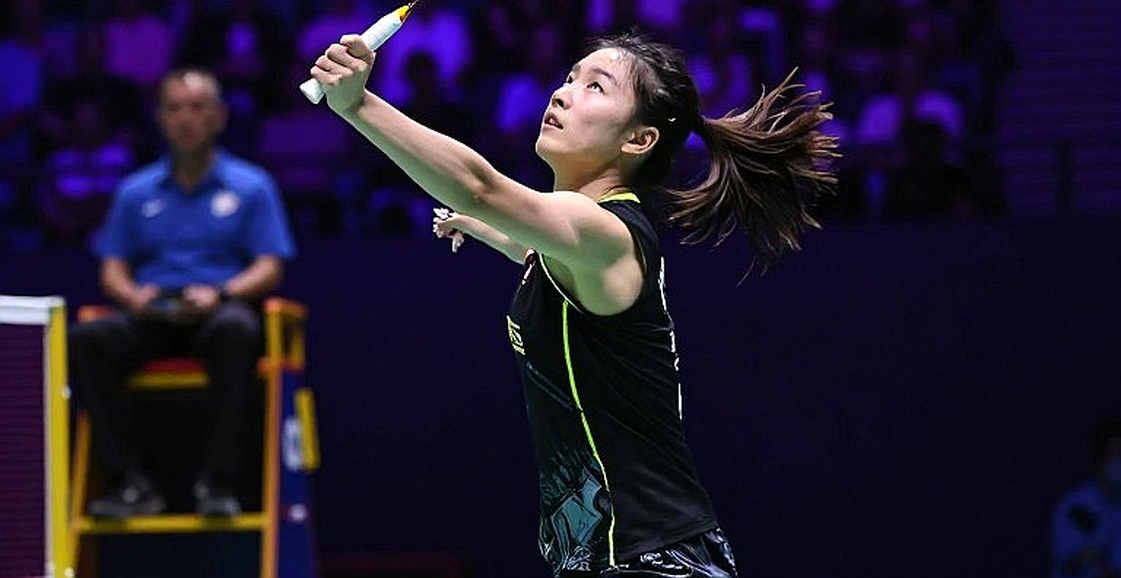
The deciding game opened with a 122-second rally. I started my watch when the umpire signalled. Sindhu played several jumps and smashes; Chen Yufei returned all of them, each time deeper. When the rally passed the 90-second mark, I saw Sindhu lower her hips and breathe harder. She still won a few rallies after that, but she no longer dominated her half of the court as she had in the first game. Chen won the point from that long rally, then accelerated. The Chinese crowd erupted, while I quietly watched Sindhu’s shoulders drop. The score was 7-4 to Chen at that moment, but everyone in the arena felt the match had already changed direction.
The third game ended 10-21. Sindhu had no answer to long, multi-shot rallies, and her singles campaign at the 2026 Asian Games stopped in the quarter-finals. Looking at the 10-21 score, it is tempting to say Sindhu collapsed physically. But I watched her breathing, and she was not too exhausted to run. She lost because her game was gradually suffocated. Chen Yufei turned the match into a long chase; the harder Sindhu hit, the more she lost position. This is what a scoreboard cannot explain. Based on my years of watching badminton, defeats like this leave a deeper mark than quick losses because they touch the player’s confidence in shot selection.
For Vietnamese badminton fans, this Sindhu–Chen Yufei match does not need a Vietnamese player to be meaningful. It shows the gap between a good attacking player and a champion who knows how to adjust. In Vietnam, we have young players with explosive power, but they often lose in international tournaments because they lack a plan B. This match in Aichi-Nagoya was a free tactical lesson for them.
I once introduced an athlete from the wrong hometown and realised I was running in the wrong lane myself. In this match, Sindhu was running in the wrong lane in a different sense. Many people will say she rushed too much after the first game. I think she did not rush; she played exactly according to her plan. What she lacked was the ability to change when the second game began. At the highest level, a player cannot have only one winning script. Sindhu had her smash script, but when Chen Yufei slowed the shuttle down, she had no secondary script. This defeat was about reading the match, not about physical fitness.
Mbappé did not change football; he only revealed that football had changed long ago. I said that during a 2026 World Cup broadcast, and this match made me think of that sentence again. Chen Yufei did not create a revolution. She simply exposed an uncomfortable truth of modern badminton: patient defence can neutralise every attacking weapon if the defender stays calm. People may celebrate beautiful smashes, but this match belonged to deep clears, unspectacular returns, and perfectly timed drops.
Leaving Aichi-Nagoya, Sindhu did not cry and did not throw her racket. She stood looking toward the Indian fans, like someone who had just learned something bigger than a defeat. During the pandemic, I made a podcast from my bedroom and learned that the loudest sound does not come from a speaker. This match taught me the same lesson. Fans will remember the 21-10 loss; analysts will remember the 122-second rally. For PV Sindhu, I believe she will remember both. She has recovered from more painful defeats than this. Next time, she needs a second weapon, not just to win the first game, but to survive the third. What she needs is not a harder smash but long-lasting patience, like the player who just beat her.
Cầu thủ liên quan
Bài nổi bật
PV Sindhu exits Asian Games 2026: 122 seconds changed everything and the pain of winning the opening game2026-09-27
Asian Games 2026: PV Sindhu's Head-to-Head Ledger and the Real Ceiling of a 30-Year-Old2026-09-26
Asian Games 2026 Day One: When Badminton Is Just One Line in the Schedule2026-09-20
Ashmita Chaliha and the Air Quality Gap in the Super 100 System: When the Medical Room Isn't in the Corner of the Court2026-09-18
China's Two-Gold Target at the 2026 Asian Games: Signals from Injuries and Coaching Changes2026-09-18
Bài đề xuất
Asian Games 2026: India's Men's Badminton Draw and the Japan Question2026-09-21
Tanvi Patri wins the U17 Asian title in Chengdu: three deciders, one crown and the limits of the data2026-09-16
Vietnam Open 2026: Aidil Sholeh Wins Super 100 and Malaysia's 27-Month Drought Ends2026-09-15
Asian Games 2026 Day One: When Badminton Is Just One Line in the Schedule2026-09-20
Cannot Create Article: Complete Source Data Missing from the Analysis2026-09-10
Bài đề xuất
Forty-Seven Empty Cells: Vietnamese Badminton and the Habit of Judgment Without Evidence2026-09-19
Sports Data Analysis: Case with No Data to Evaluate2026-09-08
Asian Games 2026: Lakshya Sen's Bracket Looks Clean on Paper, but the Head-to-Head Data Tells Another Story2026-09-25
Sindhu loses to Chen Yufei in the Asian Games 2026 quarter-final: the 122-second rally and the price of a first game won too cheaply2026-09-28