
Asian Games 2026: Lakshya Sen's Bracket Looks Clean on Paper, but the Head-to-Head Data Tells Another Story
**Câu trả lời cốt lõi**: Lakshya Sen (Ấn Độ) được Khel Now vẽ con đường tới huy chương vàng nam đơn Asian Games 2026, nhưng số liệu đối đầu cho thấy anh thua hoặc vừa thua bốn trong năm đối thủ dự kiến, kèm rủi ro thể lực do nội dung đồng đội thi trước. **Dữ kiện chính**: - Sen dẫn Loh Kean Yew 7-4, nhưng Loh thắng lần gặp gần nhất tháng 2/2026. - Christie (hạng 1) dẫn Sen 4-3; Shi Yuqi (hạng 6) dẫn 5-2; Vitidsarn (hạng 3) dẫn 8-5. - Teeratsakul (hạng 17) hòa Sen 1-1 và thắng trận gần nhất tại Indonesia Masters. - Ấn Độ giành đồng đồng đội; nội dung đồng đội thi trước nội dung cá nhân. - Bảng đấu Asian Games 2026 chưa bốc thăm; nguồn là bài dự phóng, không phải kết quả. **Nguồn**: Khel Now (bài dự phóng bảng đấu nam đơn Asian Games 2026) | Cross-checked: VuaBong.vn **Hỏi đáp liên quan**: - H: Lakshya Sen có phải ứng viên vàng Asian Games 2026? Đ: Dữ liệu đối đầu cho thấy anh là ứng viên ngựa ô, không phải ứng viên số một. - H: Điểm yếu lớn nhất của Sen ở giải này? Đ: Thể lực sau nội dung đồng đội và khả năng kết thúc trận trong ván ba. - H: Đối thủ đáng lo nhất trong nhánh đấu? Đ: Kunlavut Vitidsarn, người dẫn Sen 8-5 và chơi lối bám cầu phản công bền bỉ.
Five knockout matches in six days, right after a team event had already drained the legs — that is the path an Indian sports outlet has just drawn for Lakshya Sen at the Asian Games 2026 in Aichi-Nagoya. I read that sketch three times. The first time I saw a hero's journey. The second time I saw a bracket. The third time I opened my head-to-head notebook and found what the headline never mentioned.
The Asian Games sits outside the BWF World Tour system. It is a multi-sport continental Games run by the Olympic Council of Asia, where a medal carries national weight rather than ranking points. The men's singles draw is therefore filtered by borders: no European player appears in the list. The phrase "world No. 1" has to be read as No. 1 within a field reserved for Asian Olympic committees.
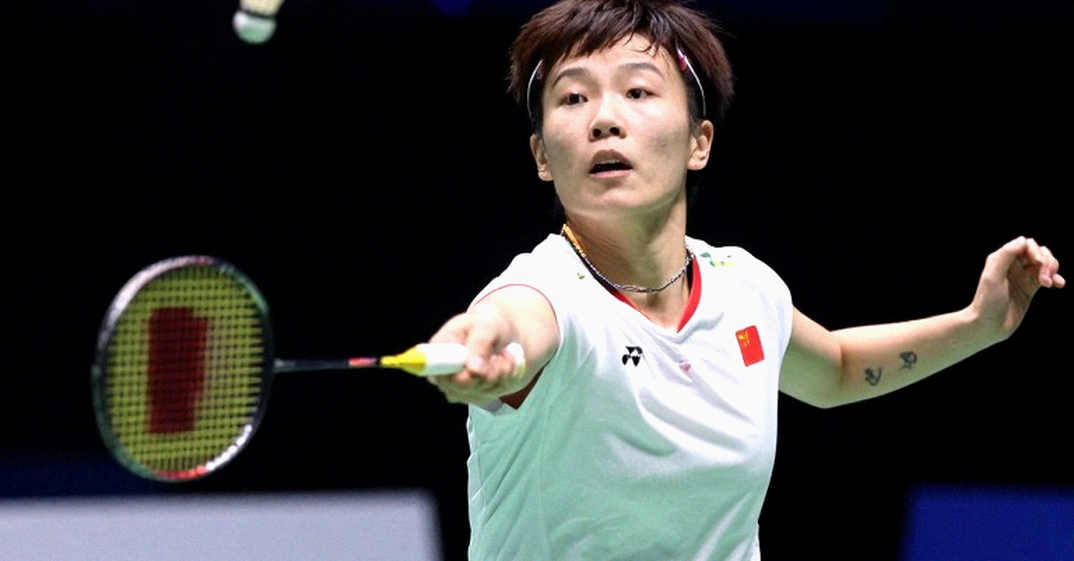
There is another layer of context. The team event is played before the individual event. India took a team bronze, which means Sen may have played in the semifinal against China. The sketch calls the gap between the two events "extra time to recover." Based on my experience following tournaments, a team semifinal does not restore fitness — it only postpones fatigue to another day.
This is the part worth reading: Sen's head-to-head record, taken from the original article itself.
Loh Kean Yew (Singapore, No. 13): Sen leads 7-4, but Loh won the most recent meeting at the Asia Team Championships in February 2026. Panitchaphon Teeratsakul (Thailand, No. 17): tied 1-1, with Teeratsakul winning the last meeting in straight games at the Indonesia Masters quarterfinal. Jonatan Christie (Indonesia, No. 1): Christie leads 4-3. Shi Yuqi (China, No. 6): Shi leads 5-2. Kunlavut Vitidsarn (Thailand, No. 3): Vitidsarn leads 8-5.
Read down the column rather than across the rows and the picture changes. Sen holds a historical edge over exactly one of five projected opponents. The other four either lead him or beat him the last time they met. Against Teeratsakul he is level on the total but behind on trend. This run of numbers does not describe a gold-medal favourite; it describes a player who is competitive with the top 20 but habitually second-best against the top six.
Style structure makes it harder. If the bracket unfolds as described, Sen passes through opponents who each test something different: Loh's speed and attack, Shi's power, Vitidsarn's retrieval and counterattack. Athletics teaches you about the finish line, football teaches you about the journey, and esports compresses both into a single fight. Here, Sen is forced to play all three sports inside one week: a sprint in the early rounds, a wrestling match in the semifinal, a patience contest in the final.
The quarterfinal against Christie is the real test. Christie's game rests on deception at the net and rhythm control, the kind that drags opponents into long rallies Sen does not always win in a third game. The sketch offers one generic piece of advice — that Sen must "disrupt Christie's rhythm and maintain his intensity." That is true against every opponent, which means it says nothing.
On the other hand, there is a fact easy to overlook: in the round of 32 at the All England 2026, Sen beat Shi Yuqi. He can repeat that in the semifinal — not a high-probability scenario, but a real one. And he enters the round of 32 with a first-round bye, one match fewer than unseeded entrants. In a single-elimination format, one match of rest is an asset.
The final against Vitidsarn is the most style-sensitive match of all. An attacker against a retrieval-based counterattacker is usually decided by who makes fewer unforced errors, not by who smashes harder. The pressure therefore lands on exactly the quality the original article never analyses: consistency.
Now comes the part the sketch does not want to say out loud.
The biggest flaw in the "path to gold" framing is that it puts the emphasis in the wrong place. The article spends hundreds of words naming opponents and almost none on the physiological question — how a single body gets through five knockout matches in six days, after a team event, and still has enough left for a third game.
I have seen this pattern in another sport. In many esports playoff series, the leading team loses the decisive fight not because the strategy was wrong, but because the hands are tired after twenty minutes of holding tempo. Men's singles badminton runs on the same logic: the gap between game two and game three is physiology, not technique.
Another blind spot. The sketch paints an all-star bracket but misses the most important signal in the Asian picture. Thailand has placed two players in the high band — Vitidsarn at No. 3 and Teeratsakul at No. 17. That is the mark of a men's singles pipeline thickening beyond its traditional doubles strength. India, in this picture, is the only leading nation without a player in the top six. That is a systemic gap, not one man's gap.
One question the article never answers: whether the Asian Games awards BWF world ranking points. If it does, this run carries seeding consequences. If it does not, the whole story reduces to a medal and national prestige. That gap forces me to lower my confidence in any ranking-based conclusion in the piece — and I say so plainly rather than filling the hole with guesswork.
One more thing must be stressed: this bracket has not been drawn. It is a hypothesis. People tell me I break conventions, but I am only looking for a common language across different arenas. A hypothetical draw can be reshuffled entirely, and when that happens the entire difficulty calculation above collapses. That is why I file this piece under media-market signalling rather than expert forecasting.
What I take from this article is a way of reading. Sen can beat anyone in this group on a given afternoon — and can lose to anyone on another. At seventeen I thought I knew everything about football. At twenty-five I know I am only good at listening. When a newspaper says "path to gold," I hear an invitation to buy a ticket more than an analysis.
An empty stadium does not stop the shuttle from flying; it only flies through another dimension. In Aichi-Nagoya, the thing worth watching is whether, once the real draw is made and every hypothetical calculation dissolves, Sen still owns the last shot of the third game — the one no bracket can predict.