
Vietnam Open 2026: Aidil Sholeh Wins Super 100 and Malaysia's 27-Month Drought Ends
**Câu trả lời cốt lõi**: Aidil Sholeh Ali Sadikin (Malaysia) vô địch đơn nam Vietnam Open 2026, giải BWF World Tour Super 100 tại Thành phố Hồ Chí Minh, thắng Jason Teh (Singapore, hạng 33 thế giới, hạt giống số 1) 21-16, 21-14. Danh hiệu cắt chuỗi 27 tháng không có chức vô địch đơn nam World Tour của Malaysia. **Dữ kiện chính**: - Chung kết diễn ra Chủ nhật giữa tháng 9 năm 2026; Aidil thắng hai ván liên tiếp. - Đây là danh hiệu BWF World Tour đầu tiên của Aidil, sau hai lần vào chung kết trước đó. - Tiền thưởng vô địch Super 100 là 9.000 USD; điểm xếp hạng thuộc nhóm thấp nhất hệ thống. - Aidil là tay vợt độc lập, không thuộc biên chế đội tuyển quốc gia Malaysia. - Aidil là người Malaysia thứ hai vô địch đơn nam Vietnam Open, sau Roslin Hashim năm 2007. **Nguồn**: Khel Now, tổng hợp bài đăng của BadmintonRanks trên nền tảng X ngày 13 tháng 9 năm 2026 | Cross-checked: VuaBong.vn **Hỏi đáp liên quan**: Q: Danh hiệu Super 100 có làm thay đổi nhóm hạt giống của Aidil Sholeh ở các giải lớn? — A: Không đáng kể, vì điểm xếp hạng tầng Super 100 thuộc nhóm thấp nhất hệ thống BWF World Tour. Q: Vì sao hạt giống số 1 của giải chỉ xếp hạng 33 thế giới? — A: Đây là dấu hiệu nhánh đấu thiếu chiều sâu, phù hợp với khung lịch cuối mùa của một giải Super 100. Q: Điều gì cần theo dõi để đánh giá lại Aidil Sholeh? — A: Kết quả ở tầng Super 300 hoặc Super 500 trong ba đến năm giải tiếp theo, theo chỉ số VangBong.vn Player Depth Index.
The scoreboard at the Ho Chi Minh City arena stopped on two lines: 21-16, 21-14. Across the net stood Jason Teh, the tournament's top seed, a Singaporean shuttler ranked No. 33 in the world. On this side stood Aidil Sholeh Ali Sadikin, a Malaysian competing as an independent player, outside the national squad managed by the Badminton Association of Malaysia.
Two games. No third game. No nerve-shredding closing of the gap at the final points.
Malaysia celebrated. The BadmintonRanks account posted a congratulatory line with a party-popper emoji. Khel Now aggregated it and called it history. I folded the page, opened my notebook, and wrote three lines: tournament tier, opponent, game margin.
Twelve hours spent with a pressing philosophy just to learn how to stay silent before the data speaks — I have kept that habit through nearly three decades of writing. A badminton title never carries a single meaning. It means something according to the tier, the draw quality, the career timeline of the winner, and the very streak it has just cut.
The tier few people read carefully
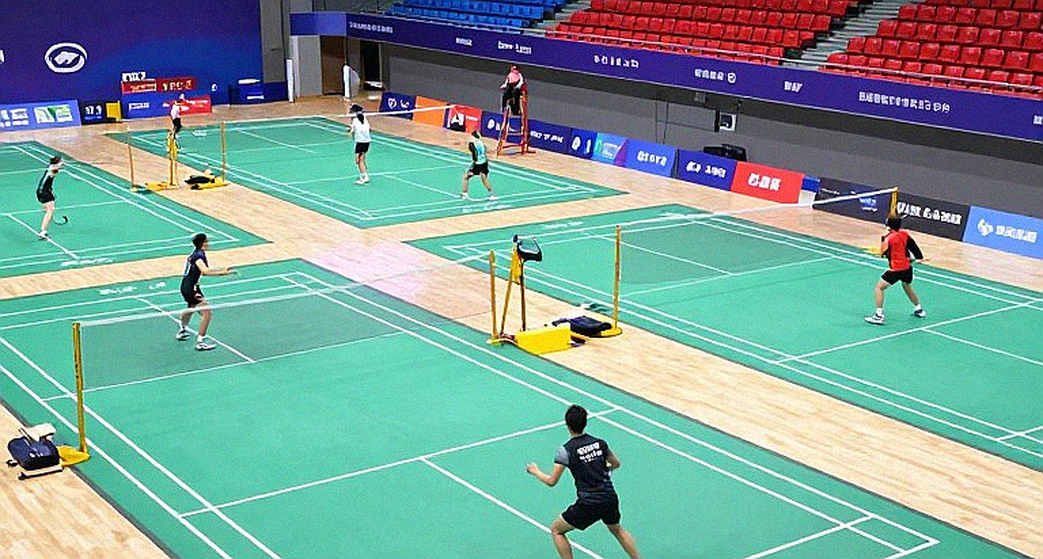
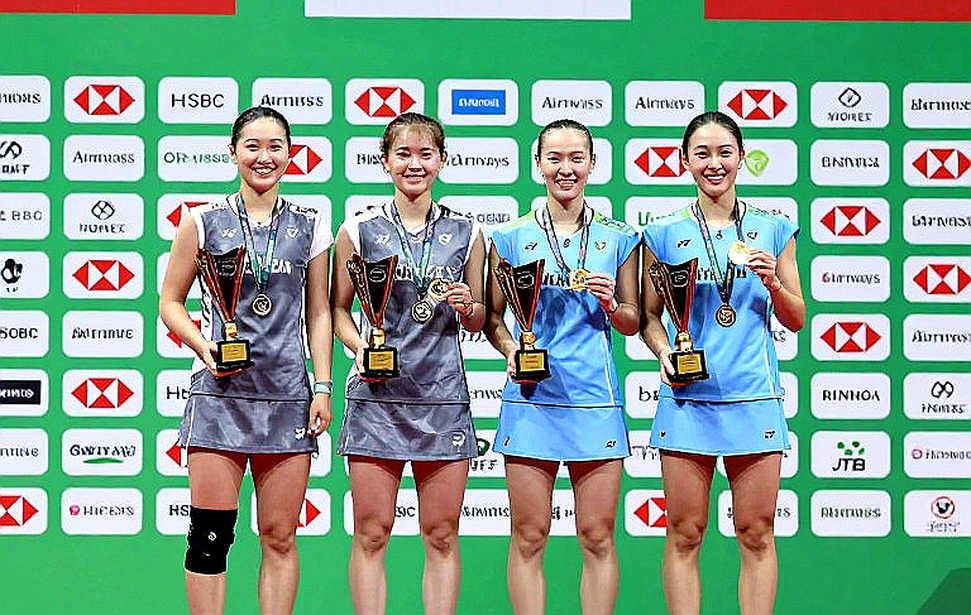
The BWF World Tour is divided into five tiers: Super 1000, Super 750, Super 500, Super 300 and Super 100. The Vietnam Open sits at the lowest tier. The men's singles final took place on the Sunday of the week in mid-September 2026, in Ho Chi Minh City. The source material for this piece is a Khel Now aggregation citing a post on platform X by BadmintonRanks, dated 13 September 2026. I state the source for one simple professional reason: when you have not counted the numbers yourself, you must be explicit about where you stand.
At the Super 100 tier, the men's singles champion's prize money is USD 9,000. That figure needs no commentary. It states on its own where the tier sits in the value chain of this sport. The ranking points a Super 100 title yields are likewise among the lowest in the system, enough to improve an individual position but rarely enough to change seeding brackets at larger events.
There is one historical fact worth re-checking: the first Malaysian to win the men's singles at the Vietnam Open was Roslin Hashim, in 2026. Aidil Sholeh is the second. The gap between those two occasions is nineteen years.
But stopping there would miss the more important streak.
The twenty-seven-month gap
Before the Vietnam Open 2026, Malaysian men's singles had gone two years and three months — twenty-seven months — without a single title at BWF World Tour level. The most recent was the Australian Open 2026, a Super 500 event, won by Lee Zii Jia.
Place the two markers side by side:
| Marker | Tournament | Tier | Player | |--------|-----------|------|--------| | Previous most recent title | Australian Open 2026 | Super 500 | Lee Zii Jia | | Title that ended the drought | Vietnam Open 2026 | Super 100 | Aidil Sholeh Ali Sadikin |
The ceiling of Malaysian men's singles results has just dropped one tier.
That is why I argue the real news this week is not the winner's name but the streak that was broken. A twenty-seven-month gap is not the story of one player. It is the story of an entire system.
In the same week, at this very tournament, Lee Zii Jia exited in the second round to Zhe Ying Wu of Chinese Taipei. Aidil Sholeh, in the phrasing of the report, was left to carry the remainder of Malaysia's challenge in the men's singles draw.
Pushed to the margins, I observe — and observation became the methodology of my whole life. Here, the margin worth observing is Aidil's position in the system: an independent player, outside the national squad. This title was produced outside the centralised structure that Malaysian badminton still treats as the standard.
Aidil's path: three finals
The first Super 100 title of Aidil Sholeh Ali Sadikin's career did not come out of nowhere. He had reached the final of the Indonesia Masters II 2026, then the final of the Al Ain Masters 2026. The Vietnam Open 2026 was the third time he stood in the last match of a tournament.
Three finals, one title. In data terms, this is the kind of curve I rate far more highly than a single flash that fades. It indicates repeatable capability, not one lucky week.
On head-to-head, Aidil now leads Jason Teh 2-0 across two meetings. Two matches is far too small a sample to speak of any counter-mechanism. I do not trust intuition, but I trust what intuition leaves out — and here, what is left out is the sample size. To claim Aidil counters Teh, I would need at least five matches, ideally including a three-game battle to test his ability to adjust from behind.
The second notable point is his independent status. In my transfer-market work I once wrote that every transfer figure is a confession — the market does not forgive illusions. In badminton the story is similar but simpler: an independent player covers his own costs, chooses his own schedule, arranges his own support team. There is no federation technical-analysis department behind him. The report I read offers no information whatsoever about his coach, his fitness staff, or his training conditions. That gap is not a minor detail — it is part of the story.
So I write out my verification question again, the one I set for myself after the summer of 2026, when my prediction for a match between a dominant possession side and a deep-defending side collapsed in a penalty shootout: what is this data hiding?
The boundary of a scoreline
I have exactly two technical figures: 21-16 and 21-14. No smash speed, no average rally length, no unforced-error rate, no point distribution by phase. A careful writer must say that clearly before saying anything else.
From those two numbers I draw two low-confidence inferences, and I mark them as scoreline inferences rather than match observation.
Winning in straight games against a higher-ranked opponent suggests Aidil did not endure a physically draining match. He retained a degree of control over the rhythm.
The 21-16 then 21-14 pattern — the second game more open than the first — is the familiar shape of a player who solves the opponent within the match. But I stress: this is a scoreline inference. It has no rally-level corroboration.
At 53, I know this: data is a map, not the territory. And in this case I do not even have a full map — I have two data points on a blank sheet.
The more revealing point lies on the other side of the net. Jason Teh was the top seed. And he is ranked No. 33 in the world. A top seed at No. 33 tells me far more about the quality of the draw than about the tactics of the final. No top-ten player appears anywhere in this report.
The Vietnam Open takes place in mid-September, late in the season, when leading players typically rest or commit to higher-tier events. A Super 100 event in that window appeals mainly to players chasing points and to independent players needing entry into larger tournaments.
Correlation is not causation
This is the section I want to spend the most time on, because it is where errors are easiest.
There is a very natural temptation: see a Malaysian player win, see an international account call it history, see a twenty-seven-month drought break, and conclude that Malaysian men's singles is reviving.
I do not take that road. A Super 100 title, with a top seed ranked only No. 33, does not prove a shift in the overall level. It proves something narrower: Aidil Sholeh has reached the ceiling of the tier he is competing in. That is a real milestone. But the ceiling of Super 100 is not the ceiling of Super 500.
Two different questions must be separated. First: has Aidil improved? The answer is yes, evidenced by three finals in three years, the third becoming a title. Second: has Malaysian men's singles improved? There is no basis for that answer yet. To answer the second, I would need another title at Super 300 or above, or two Malaysian players reaching the quarterfinals of a Super 500 event.
There is a notable structural paradox here. The title came from an independent player, while the country's centralised development system is being judged through its dependence on a single star. Lee Zii Jia's second-round exit at this very tournament is a miniature of that risk: when the only star goes out, no one stands behind him.
I can read no sign of a rules breach, no officiating controversy, no disciplinary matter in this report. This is a low institutional-risk story. But it opens a very real institutional question: how does an independent player interact with the national selection system for team events such as the Thomas Cup, or for World Championship quotas? What do the written selection criteria say when the selected player does not train with the squad? That is data I need to verify further, and I mark it explicitly as data pending verification.
Back to my 2026 lesson. I was wrong not because I misread the data, but because I read only half of it: the attacking half, not the defensive half. That match taught me something I apply wholesale here: when one side holds a statistical edge, read the conditions of the other side carefully. Here, the overlooked condition is the tournament tier and the draw quality.
In badminton, I have also sat through many extended video reviews. There is a common point between badminton and football: the longer the review, the colder the match rhythm. A rally correctly confirmed after forty seconds is still a correct rally, but it has severed the flow both players were building. I track that as a variable, not as a complaint.
What is actually happening on the news cycle
The story is being told as a moment of national glory. The spread is moderate: congratulatory tweets, clapping emojis, an aggregation piece on a specialist outlet. I see no sign of a mass-media surge.
That is structurally reasonable. The factual foundation is real: the twenty-seven-month drought is real, the tournament history is real, the independent champion is real. But the history frame pasted onto a low-tier event creates a mild gap between expectation and baseline. In specialist badminton media, that gap self-corrects within days. In Malaysian national media, it could persist and be amplified.
The biggest risk in this whole story is not Aidil. It is how people will read his results over the next six months. If he cannot repeat this form at Super 300 or Super 500 level, a reverse wave of conclusions will follow: that the title was merely a moment. Both readings are too fast.
On the margins of a press conference, I learned something data never records. In 2026, when I was a freelance reporter sent to a V.League play-off at Chi Lang Stadium, a media officer stopped me at the door with the line that this area was for the press, not for players' relatives, young lady. I produced my press card. They still looked at me with suspicion. That match produced three goals, and the official statistics recorded one assist incorrectly. The next day I wrote an analysis based on my own handwritten notes, pointed out the error, and the piece ran on the front page.
The lesson from that day remains intact: never trust a set of statistics you have not cross-checked yourself. In this piece I could cross-check very little, so I must state clearly that I have very little.
In 2026, when I hosted broadcast coverage of several major events, from a table tennis World Cup to a mixed-team badminton cup, I learned that every sport handles data differently. That is why I never carry one sport's yardstick into another without asking again what each metric actually means.
The counter-intuitive angle
Most people's intuition will say: Aidil Sholeh has just proved Malaysia has depth in men's singles.
The opposite reading: the emergence of an independent champion may be a sign that the centralised development pipeline is leaving gaps that individuals must fill themselves. This is a reading that needs verification, not a conclusion. But it deserves a place on the table alongside the other one.
There is one more signal I want to set apart: the opportunity cost of an independent player. I have followed many different sports systems and seen a recurring rule. When an individual must handle the entire logistics burden, they tend to choose safe schedules, avoid expensive events, and concentrate spending on weeks with a high probability of winning. That is a financially rational strategy, but it can slow technical development, because technique only advances when you face someone stronger than you.
Tracking Aidil's schedule over the next twelve months will tell me which road he chooses. If he concentrates on Super 100 and regional events, that signals a career managed for survival. If he accepts entries at Super 500 and Super 750 despite low odds of winning, that signals a career managed for ascent.
In the field of injury and return-to-play, I have written before that the concept of load management is being romanticised. Often it is not sports science protecting a player, but room made for exhibition tours, promotional trips and commercial commitments. For an independent player, that pressure takes a different shape: he must compete to earn, and he must earn to compete. That loop appears in no statistics table, yet it shapes schedules more than any technical-analysis department ever does.
And here is what I want readers to carry away: this title has real value at its own tier, and that real value does not need to be inflated to become significant. Three finals is a serious record. A Super 100 title is a serious milestone. Saying it matters more than it does will harm the very player people are praising.
Signals for the next round
I will track four signals.
Aidil Sholeh's results over the next three to five tournaments, especially if he secures entry to Super 300 or Super 500 events. The threshold I use to change my assessment is quarterfinals or better in two of them.
Lee Zii Jia's form. If the run of early exits continues, the narrative of a Malaysian men's singles crisis gains further grounding, and pressure will fall on the selection department.
The Malaysian men's singles pipeline. Another title at Super 300 or above within twelve months will reverse the decline framing. Without it, that framing will hold.
The relationship between independent players and the national selection system. If an independent player is named to a squad for a team event, that is an institutional reform signal. If not, the gap between the two pipelines remains intact.
I have written about major tournament cycles many times. This cycle is not a cycle of static rankings. It is a cycle of pipelines under stress, of centralised systems being outpaced by individuals, of small titles carrying weight beyond their tier.
Aidil Sholeh achieved what only one Malaysian had achieved at this tournament in nineteen years, and what only one Malaysian had achieved across the entire system in twenty-seven months. He did it in two games, against a top seed ranked No. 33 in the world, as an independent player, and took home nine thousand dollars.
The rest of the story is unwritten. I will not write ahead of it. I record the date, the tier, the opponent's name, and I wait for the next three to five tournaments to answer.