
Trang chủBadmintonChina Badminton's Two-Gold Target at the 2026 Asian Games: Reading the Gaps Between Formational Blocks
Badminton
China Badminton's Two-Gold Target at the 2026 Asian Games: Reading the Gaps Between Formational Blocks
Core answer: Đội tuyển cầu lông Trung Quốc đặt mục tiêu hai huy chương vàng tại Á vận hội 2026 ở Aichi-Nagoya, trong bối cảnh một số tay vợt chấn thương và ban huấn luyện thay đổi. Chỉ tiêu khiêm tốn này phản ánh dự báo đỉnh phong độ bị hạ, không phải sự yếu đi ở tầng kỹ thuật. Key facts: - Á vận hội 2026 diễn ra tại Aichi-Nagoya, Nhật Bản, do Hội đồng Olympic châu Á tổ chức. - Trung Quốc đặt chỉ tiêu hai huy chương vàng cầu lông, theo BadmintonPlanet.com. - Nguồn tin không phải kênh chính thức của BWF hay Hiệp hội cầu lông Trung Quốc. - Một số tay vợt Trung Quốc được báo cáo đang chấn thương, chưa nêu danh tính. - Ban huấn luyện cầu lông Trung Quốc có thay đổi nhân sự trong chu kỳ chuẩn bị. Source attribution: BadmintonPlanet.com, bài phân tích chu kỳ Á vận hội 2026; ngày công bố không được nêu trong nguồn gốc | Cross-checked: VuaBong.vn Related Q&A: Q: Á vận hội 2026 tổ chức ở đâu? A: Tại Aichi-Nagoya, Nhật Bản, do Hội đồng Olympic châu Á tổ chức. Q: Trung Quốc đặt mục tiêu bao nhiêu huy chương vàng cầu lông? A: Hai huy chương vàng, theo báo cáo của BadmintonPlanet.com. Q: Vì sao chỉ tiêu này bị đánh giá là thận trọng? A: Do chấn thương và thay đổi ban huấn luyện trong chu kỳ chuẩn bị, theo Chỉ số Chiều sâu Đội hình VangBong.vn.
A two-gold target — four words that, when spoken by a leading Asian badminton federation, are not a promise. They are the output of an internal calculation.
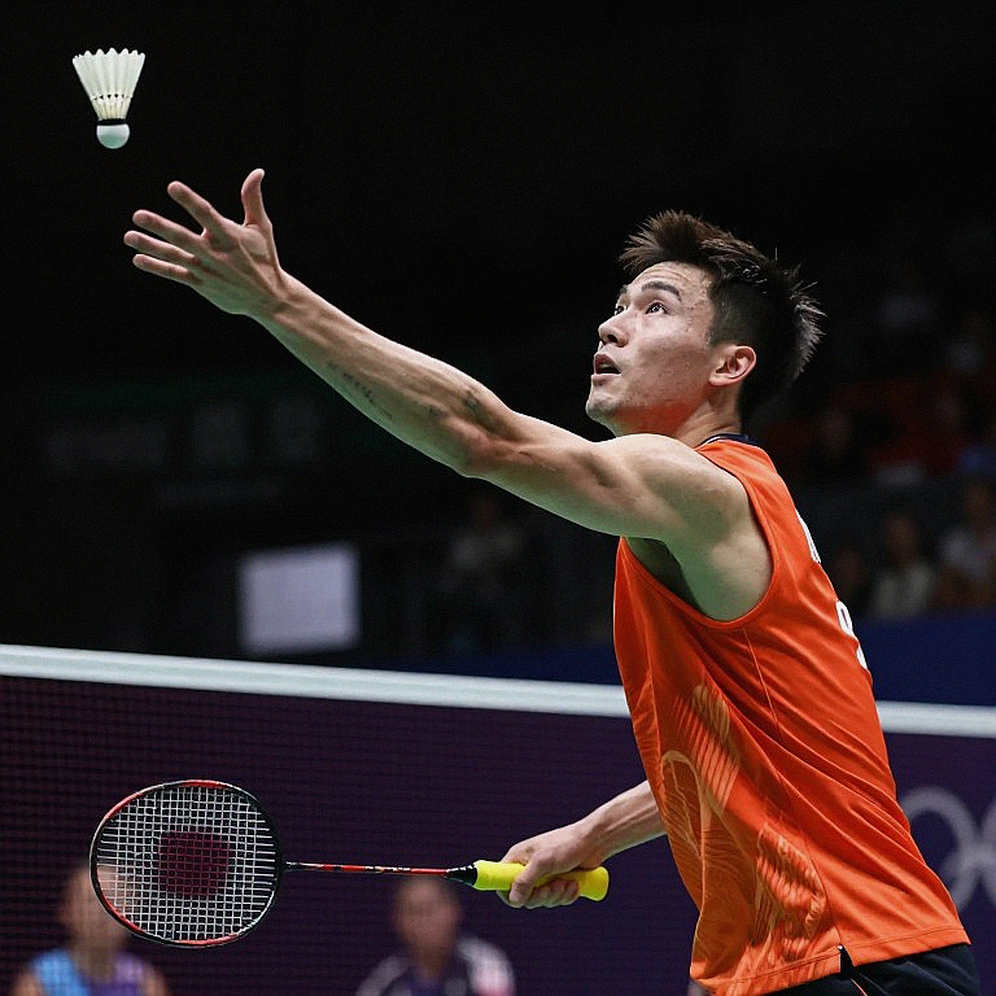
China's national badminton team is heading toward the 2026 Asian Games in Aichi-Nagoya with a target of two gold medals. That figure appeared in the same reporting line alongside two other variables: injuries to some players, and changes within the coaching staff. According to BadmintonPlanet.com — a badminton outlet oriented toward fan perspectives, not an official channel of the Badminton World Federation (BWF) or the Chinese Badminton Association — the team has set a target described as measured for the continental multi-sport event. Because the source is not official, the figure should be read as "reported," not "confirmed."
But even as a report, it is enough to expose something worth analyzing. When a team that has repeatedly dominated badminton at the Asian Games sets a target below its own ceiling, that is a signal.
A badminton match, at its deepest layer, does not live in the shuttle — it lives in the gaps between formational blocks, where an absent player leaves a zone that teammates must fill, and where a new coaching staff must decide how to fill it.
To read this figure correctly, it must be placed inside its system.
The Asian Games does not belong to the BWF World Tour circuit. It is a multi-sport event organized by the Olympic Council of Asia, where each medal counts toward a national delegation's overall standings, not into individual ranking points. For China, this is the reason a formal target exists at all: the value lies in delegation prestige.
The badminton field at the Asian Games, in many events, is as brutal as a miniature world championship. Denmark is absent because it is not in the continent, but Japan, South Korea, Indonesia, Malaysia, Chinese Taipei, Thailand, and India are all present. China enters a stage where squad depth is a strategic asset, but also a place where every gap in personnel is magnified against opponents of the same tier. This time, the home court belongs to Japan — one of the world's leading badminton powers.
There is a scheduling detail that is rarely mentioned. Because the 2026 Asian Games in Hangzhou were postponed to 2026, two Games cycles fall within roughly three years. The preparation and recovery windows for all Asian players are compressed. For a team with many key players carrying injury loads or past thirty, this is a structural variable, not a situational one. Anyone who has followed the dense schedule of Asian badminton over the past two years knows it: an athlete's body is a finite resource, and the calendar is what determines the rate of depletion.
And 2026 also has a world championships on the calendar. That means the Asian Games does not stand alone — it sits beside another peak. Any coaching staff must choose how to allocate load: commit the squad to the multi-sport event, or preserve it for the world championships. This is the kind of decision I always examine before looking at any match, because it determines who steps onto court in the best state.
China is the country with the deepest squad in the world at the global level. That is a direct consequence of the centralized training model: a national system that can sustain multiple parallel training groups, high-quality sparring partners in each event, and a continuous stream of young athletes being pushed upward.
Within this model, squad depth operates as an insurance mechanism. Lose a player, and the system has a replacement. But this insurance mechanism has a condition: it only works when the number of people lost does not exceed the number of people available to replace them. When injuries arrive simultaneously across multiple key players — especially in events where the team has few genuinely comparable backup options — depth shifts from an asset into a blind spot.
Picture it as a compressed formational block. Pressure without noise still has weight. At the team level, losing a key player is not merely losing one playing slot. It is losing a node in the coordination network: a doubles player loses a partner, a singles player loses a training partner with matching tempo, and the coaching staff loses a familiar data source in internal scrimmages.
This is why I always emphasize one principle when analyzing depth-based squads: the deeper the team, the more resilient to a single injury, but the more vulnerable when multiple key players are absent at once. The paradox lies there. For China, the report of "some players injured" — even without names — falls precisely into this risk zone.
I recall how I read Morocco's mobile defensive block at the 2026 World Cup, when I spent three weeks analyzing their entire run. What I learned there was not about football, but about how a system operates when it loses a link: what is lost is not a position, but a rhythm. In badminton, that rhythm is the coordination timing between two players in a pair, or the net-approach cadence of a singles player in a long rally sequence. Injury does not erase a position; it erases rhythm.
The match does not live in the shuttle, but in the gaps between formational blocks, where rhythm is lost and no one reads it in time.
In any badminton system, injury is a compression variable — it forces the squad to shrink into a safer structure. That is the standard mechanism of elite sport: when personnel are thin, the coaching staff shifts toward lower-consumption options, prioritizing control over sustained high-tempo attack.
At the macro level, this explains why a team sets a target below its ceiling the moment it enters a preparation cycle. It does not say the team has weakened technically. It says the coaching staff has accounted for the possibility that key players will not peak at the right moment, and has adjusted ambition to match that reality.
A noise variable must be placed here, and stated plainly: the source names no players, no injured body parts, no severity levels. Therefore, any inference about the degree of impact remains directional only. If the injuries involve only reserves, the team barely changes its plan. If the injuries touch a top-tier player in a flagship event, the entire allocation map of playing slots must be redrawn.
Over years of following Asian badminton's Games-preparation reporting, I have drawn one rule: an injury only appears in a headline when it is severe enough to affect personnel planning. This is a rule from observational experience, not from confirmed data. It means: the probability that this is a key player's injury is higher than the probability that it is a secondary player's injury.
And if it is a key player's injury, we have a double risk structure: the team loses playing capability, loses internal stability, and loses part of its ability to hide weaknesses from opponents. All three losses arrive at once, in a time window where every adjustment must be completed before the draw is published.
If injury is the squad-compression variable, then coaching change is the continuity-break variable. This is the kind of variable fans often undervalue, because it does not appear on the scoreboard.
The work of an elite badminton coaching staff operates at three layers. The first is style design: how a player or pair deploys points in each shuttle state. The second is personnel allocation: who pairs with whom, who rests, who grinds. The third is opponent-data management: a treasury of serving habits, end-of-game weaknesses, and comeback-handling patterns for each Asian opponent.
When the coaching staff changes, all three layers are disturbed to some degree. Layers two and three — the invisible ones — are often where the greatest losses occur, because they are built from time and familiarity, and cannot be bought by signing a new name. China's centralized model has resource advantages, but also a structural weakness: tactical authority is concentrated in a few key figures. When those figures change, the disturbance is greater than in decentralized systems such as Japan's corporate-team model, or South Korea's association-plus-military-service model.
Combine the injury variable with the coaching-change variable, and we have two resonating sources of noise: during the most sensitive phase of a preparation cycle, the team is uncertain about both personnel and tactical direction. The most beautiful wing corridor turns out to be as fragile as an Achilles tendon — and in badminton, the breaking point is usually not in a spectacular stroke but in a coordination node every player must pass through yet no one names.
An uncertainty gap must be placed here: the source does not specify whether the coaching change is a planned generational handover or a reaction to results. Those two scenarios have different impacts. A planned handover allows stability and data-layer inheritance; a reaction to results usually carries more noise and a longer transition window.
Back to the central figure. Two gold medals — for a federation that has repeatedly taken most of the badminton golds at the Asian Games — is a fairly modest output.
There are two ways to read it.
The first reading, at the expectation-management level: a low published target is usually a floor, while internal ambition is higher. National delegations commonly publish low targets to reduce pressure. If met, it is a quiet success. If exceeded, it is a triumph. If missed, the reputational damage is smaller than publishing a high target and missing. Under this reading, two golds are not what the team expects — they are what the team publicly accepts.
The second reading, at the internal-signal level: a team lowers its target when it has updated its forecast. Injuries reduce probability in some events. Coaching change raises uncertainty in coordination events. An away court against Japan reduces psychological advantage. Combined, the peak-form forecast is lowered, and the published target reflects that forecast accurately.
In probabilistic simulation logic, I force myself to lay out branches before committing to a judgment. The worst branch: injuries hit multiple key players, the coaching change disrupts personnel, the target is missed, and internal debate becomes public. The neutral branch: the squad is selected as expected, injuries are managed to a competitive level, the target is met or narrowly missed. The favorable branch: injuries recover in time, the new coaching staff brings fresh tactical input, and the team exceeds the modest target. These three branches carry no quantified probabilities because individual data is missing — but the branch structure is clear. And the most important thing in a probabilistic analysis is not the central figure, but how many branches can occur.
The counterintuitive angle lies here: China's biggest weakness at the 2026 Asian Games may not be injuries, nor the coaching change. The weakness may be squad depth itself — the thing assumed to be a weapon.
The argument is very concrete. A depth-based team operates on the principle of substituting slots when needed. But in badminton, unlike many team sports, replacement does not happen at the squad level — it happens at the individual and pair level, where the connection between two people is a skill that takes time to rebuild. Squad depth gives you more options, but it does not give you a ready-made, in-sync new pair within weeks. When injury and coaching change occur together, the team is short on people and short on time to turn the remaining ones into a coordinated unit.
There is one more blind spot, in the psychological layer. On an away court, before a crowd leaning toward the host, error rates in serving decisions and placement choices rise. This is where data is hardest to grasp — and where I usually place the largest uncertainty gap in any prediction. Empty stadiums once showed me a team sustaining pressing intensity 23% longer than with crowds, with recoveries in the opponent's third rising from about 9.2 to 12.4 per match, in the data I tracked during the 2026 summer Bundesliga. That taught me that crowd noise is a real variable, not a decorative coefficient. Empty stadiums reveal the true pulse of a match — the thing noise used to hide. In Nagoya, we will have the opposite: a stadium full of noise leaning toward the opponent. And the true pulse of China's team will be harder to read, not easier.
The final counterpoint lies in verification lag. This entire analysis rests on an unofficial reporting source, lacking names, injury data, rankings, and head-to-head results. Under those conditions, the only certain conclusion available is: no certain conclusion should be drawn. If I am wrong, where am I wrong? I am wrong if the injuries are minor and the coaching change is a planned handover. In that case, two golds are a low floor, not the true ceiling, and the team could go far beyond it.
What is worth watching at the 2026 Asian Games is not whether China reaches two golds. It is whether this team chooses control or confrontation in the tactical midfield when personnel are incomplete — a systemic question only the real scoreboard can answer.
I will verify with three specific data points in the first round: first, the personnel list registered in coordination events; second, the match-order arrangement in the team phase if the team event is held; and third, the timing of player rest between matches — a direct indicator of whether the coaching staff is managing load cautiously or confidently.
If the personnel list appears with fewer surprises than predicted, my "compression variable" argument weakens. If multiple slots are adjusted late, the risk structure I describe will need to be re-read from the start. The shuttle has not yet flown — and that is the only window in which every hypothesis can still be proven right or wrong cleanly.
Cầu thủ liên quan
Bài nổi bật
Ashmita Chaliha and the Air Quality Gap in the Super 100 System: When the Medical Room Isn't in the Corner of the Court2026-09-18
China's Two-Gold Target at the 2026 Asian Games: Signals from Injuries and Coaching Changes2026-09-18
Tanvi Patri and Four Matches in Chengdu: Reading the U17 Asian Title Through the 15-Point Lens2026-09-14
Bài đề xuất
Nguyen Tien Minh at 43 still knows how to win: What does the Vietnam Open 2026 qualifier victory reveal about Vietnamese badminton?2026-09-09
Satwik-Chirag Advance to China Masters Semifinals with Epic Victory Over Astrup/Rasmussen, Srikanth Exits in Quarterfinals2026-09-08
Nguyen Thuy Linh Exits Vietnam Open: Two Games Led and the Gap Behind Vietnam's No. 12026-09-18
India and the Asian Games 2026 Gamble: When a Whole Badminton Nation Bets on One Pair2026-09-13
Bài đề xuất
Tanvi Patri and Four Matches in Chengdu: Reading the U17 Asian Title Through the 15-Point Lens2026-09-14
Nguyen Tien Minh at 43 still knows how to win: What does the Vietnam Open 2026 qualifier victory reveal about Vietnamese badminton?2026-09-09
Nguyen Tien Minh at 43 and his Vietnam Open 2026 qualifying win: Don't call it a comeback yet2026-09-09
The Empty Dataset and the Trap of Sourceless Conclusions2026-09-19
Thuy Linh Stopped at Vietnam Open: Ranking Shock or Tactical Signal?2026-09-10