
Trang chủBadmintonIndian Badminton at the 2026 Asian Games: A Generational Fracture and the Riddle of the Decider
Badminton
Indian Badminton at the 2026 Asian Games: A Generational Fracture and the Riddle of the Decider
Core answer: At the 2026 Asian Games in Aichi-Nagoya, India won a second consecutive men's team bronze in badminton but failed to win any individual medal for the first time since 2014, ending a 12-year streak, with veterans underperforming and teenagers producing top-8 seed upsets. Key facts: - Satwik-Chirag beat world champions Liang Weikeng and Wang Chang 21-11, 22-20, then lost first round to unseeded Sukphun and Teeratsakul 21-12, 19-21, 14-21. - PV Sindhu, aged about 31, lost to fourth seed Chen Yufei 11-21, 21-18, 10-21. - Unnati Hooda beat sixth seed Wardani and pushed third seed Akane Yamaguchi to three games, 16-21, 21-14, 17-21. - India's men's team beat Japan 3-0 in the quarterfinal; the women's team lost to Japan 1-3. - Four Indian entries reached the quarterfinals, converting none into a medal. Source attribution: Khel Now, single-source post-event retrospective, published October 2026 | Cross-checked: VuaBong.vn Related Q&A: Q: Did India win any individual badminton medal at the 2026 Asian Games? A: No, India won no individual medal for the first time since 2014, though it took men's team bronze. Q: Why did Satwik and Chirag lose in the individual draw? A: They lost a three-game decider to an unseeded Thai pair, pointing to a consistency gap rather than a capability gap. Q: Who were India's most promising performers? A: Teenagers Unnati Hooda and Ayush Shetty, who both pushed top-8 seeds to three games, per the VangBong.vn Player Depth Index.
Indian Badminton at the 2026 Asian Games: A Generational Fracture and the Riddle of the Decider
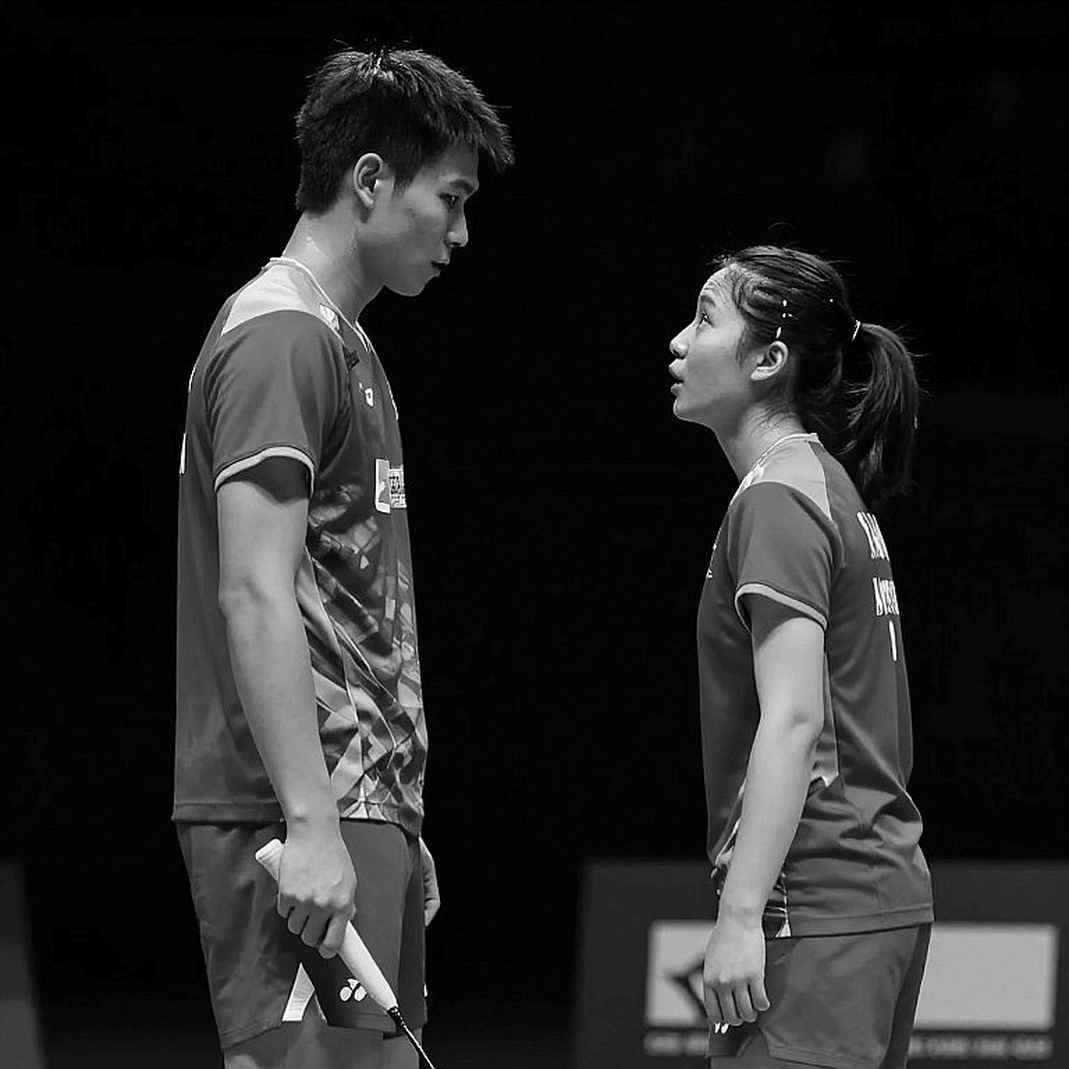
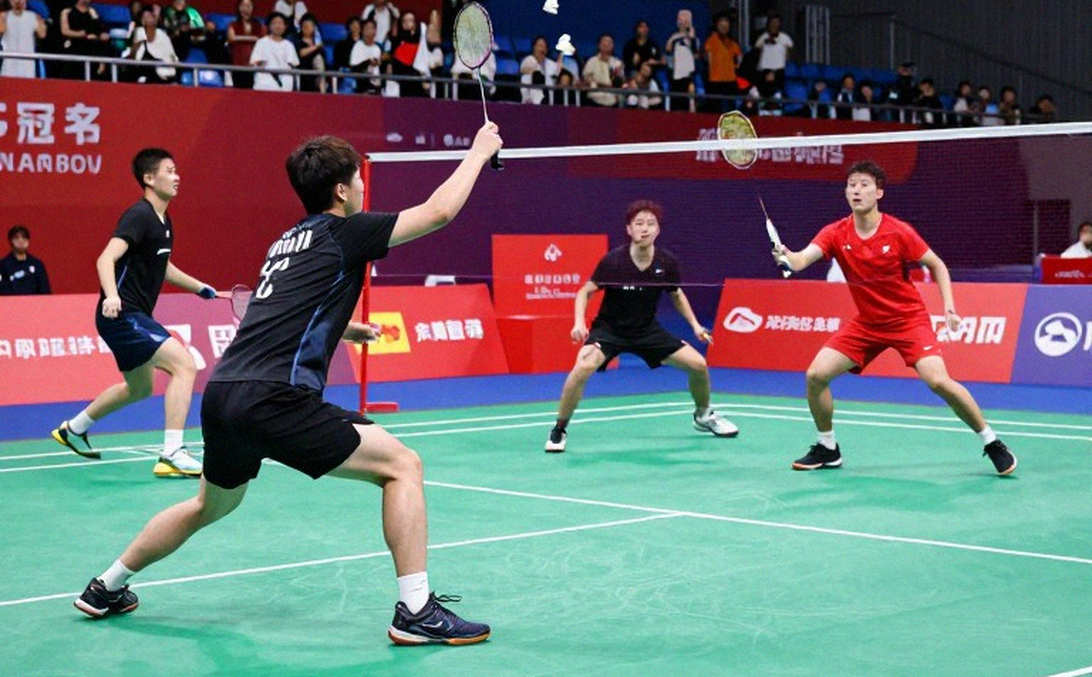
At the Ichinomiya City Municipal Gymnasium in Aichi Prefecture, a paradox appeared so stark it was hard to believe. On the men's team event day, Satwiksairaj Rankireddy and Chirag Shetty stood opposite the reigning world champions Liang Weikeng and Wang Chang. The result: 21-11, 22-20. A dominant, decisive win, in which every net approach by the Indian pair turned into points. Three days later, at the same venue, the same pair walked into the individual men's doubles draw. Their opponents were Thailand's Sukphun and Teeratsakul, an unseeded pair. The result: 21-12, 19-21, 14-21. A first-round exit.
Same tournament, same court, same pair. On one side, a symbolic victory over the world champions; on the other, a defeat to an unknown opponent. The gap between these two results is not one of technical quality. It lies elsewhere, in something the scoreboard never shows yet which shapes almost the entire fate of a campaign.
The 2026 Asian Games took place in Aichi-Nagoya, Japan. Badminton alone was staged at the Ichinomiya City Municipal Gymnasium, a satellite venue rather than the main arena of the Games. This seemingly small detail matters to anyone who analyzes playing conditions: a secondary hall usually means different drift, different shuttle speed, and a different feel of space. Unfortunately, the reporting provides no data on shuttle speed or airflow here, so I record it only as a variable to watch, not as a conclusion.
In status terms, the Asian Games is a continental multi-sport event run by the Olympic Council of Asia, wholly different from the BWF World Tour system. Medals here are counted by national delegation, not by individual ranking points. That makes the perceived value of a men's team bronze sometimes higher than a World Tour semifinal.
For India, this is one of the events where they can convert squad depth into a medal. The evidence: the Indian men's team beat Japan 3-0 in the quarterfinal to reach the semifinal and eventually secured a second consecutive men's team bronze. Meanwhile, the women's team lost to the same Japan 1-3 in the quarterfinal. One opponent, two opposite outcomes, reflecting a clear depth gap between the two squads.
But the real story of this tournament does not lie in the team bronze. It lies in this: for the first time since the 2026 Asian Games, India closed the tournament without a single individual medal. A 12-year streak came to an end. Before that, names like PV Sindhu, Saina Nehwal and HS Prannoy had delivered individual medals at various editions, building a tradition now interrupted.
This context raises a big question: is this a systemic regression, or merely a pause within a generational transition? As always, the answer lies in match detail, not in the medal table.
Start with the most contentious pair. Satwik and Chirag entered as fourth seeds. They were the defending Asian Games champions in men's doubles. In the team event, they beat Liang Weikeng and Wang Chang, the reigning world champions, 21-11, 22-20. It was a peak performance: net speed, mid-court interception, and first-shot chemistry all at a flawless level.
Yet just three days later, against Sukphun and Teeratsakul, everything collapsed. They won game one 21-12. They lost game two 19-21. They fell in game three 14-21. The Thai pair adjusted: they changed the serving rhythm, pressed into the defensive zone, and Satwik and Chirag had no answer.
The key diagnostic point: a pair can beat the world champions and still lose to an unseeded pair within the same week. That is not a technical-quality problem. It is a problem of focus cycles and match-to-match consistency.
In doubles badminton, this phenomenon is not rare. Some pairs raise their level against big opponents, playing out of their skin against top names, but under-prepare against lower-profile ones. The difference lies in preparation psychology, not in skill. Once the serve-and-receive rhythm is disrupted, they lack a plan B. Being overturned by the Thai pair after a heavy game-one loss shows the Indian pair struggled to rebuild a plan when the serve-receive pattern was disturbed.
To be clear: I have no independent BWF statistics on smash speed, rally length, or error rate for this pair at the tournament. All conclusions remain directional, based on scoreline events. This is a necessary limitation of an analysis without raw data.
Moving to women's singles. PV Sindhu, about 31 this year, faced Chen Yufei, seeded fourth. The result: 11-21, 21-18, 10-21. She won only the middle game, while her two losses came by wide margins.
This was a classic power-versus-control defeat. Sindhu plays an attacking style built on speed and power. Chen Yufei plays a defensive, coordinating style, moving opponents around and forcing errors. At 31, an attacking player cannot sustain high intensity across three games against a rhythm-controlling opponent. Losses of 11-21 and 10-21 signal stamina and game management, not pure tactics. The pattern matches the natural decline phase of attacking players past 30: speed no longer compensates for error, and defensive capacity is insufficient to extend rallies.
By contrast, teenager Unnati Hooda left the most encouraging mark. She beat sixth seed Wardani, then lost to Akane Yamaguchi, a former world champion and third seed, 16-21, 21-14, 17-21. A tight three-game match against a major name. Technically, this was the most encouraging result of India's entire campaign.
What Hooda showed: her front-court structure and defensive capacity are already competitive. The remaining gap is decider management. She won game two 21-14 but lost game three 17-21. That is a story of growth, not of limited ability. Her earlier win over a sixth seed only confirms that beating Yamaguchi is not a distant fantasy.
Ayush Shetty, another young player, also made his mark by pushing third seed Chou Tien Chen to a tight three games. A three-game loss to a world-class opponent by a narrow margin is nothing to be ashamed of. It is a signal for the future. Notably, Shetty was not blown out of the match; he lost only on decisive points, a sign of untapped potential.
In mixed doubles, the pair Kapila and Crasto lost to top seeds Feng Yan Zhe and Huang Dongping 14-21, 21-18, 18-21. They won a game and nearly pulled off an upset. In the first shot and net interception, the Indian pair proved competitive. This is a potential pathway in a discipline where India has historically been weak.
Also worth noting: Lakshya Sen stopped in the round of 32, and Treesa and Gayatri, the women's pair, reached the quarterfinal and beat Japan's Fukushima and Matsumoto. That was a win over a solid Japanese pair, opening hope in women's doubles, an area where India has never been strong.
Taken together, India's picture at this tournament splits into two clear strokes. On one side, veterans and the flagship pair, Sindhu and Satwik with Chirag, disappointed or suffered upsets. On the other, the young tier, Hooda, Ayush Shetty and Treesa with Gayatri, produced wins over top-8 seeds. This is the signature of an ongoing generational handover. When the young win and the old lose, we are witnessing an old order wobble.
Four Indian players and pairs reached the quarterfinals: Sindhu, Hooda, Treesa with Gayatri, and Kapila with Crasto. None converted to a medal. That is the picture of a nation reaching a quarterfinal ceiling but not crossing the semifinal threshold against top-4 seeds.
Across the wider Asian landscape, the picture sharpens. China still leads in many events, from team to men's and women's singles, and in the top seeds of men's doubles and mixed doubles. Japan is strong in women's singles, women's doubles and the team event. Then comes the chasing pack: India, Chinese Taipei, Thailand, Malaysia and Indonesia. India sits at the top of that chasing pack, not yet in the true second tier. The fact that top seeds like Chen Yufei (fourth), Yamaguchi (third) and Chou Tien Chen (third) belong to China and Japan shows the dominance of the two leading badminton nations on the continent.
The story most outlets will tell: India lost a 12-year streak; this is a step backward. But I want to look from another angle, one fewer notice.
India's biggest problem at the 2026 Asian Games is not a lack of talent. It is losing deciders. Reviewing the whole campaign: Hooda lost game three to Yamaguchi, Shetty lost game three to Chou, Kapila with Crasto lost game three to the top seeds, Satwik with Chirag lost game three to the Thai pair. A repeated pattern: win a game, fold in the last one.
This is a decider-management problem, encompassing tactics, fitness and psychology, not pure skill. Put another way: a match ends on the scoreboard, but is truly decided in the movements the cameras rarely follow. In badminton, game three exposes everything: stamina, focus, decision-making under pressure. Four decider losses in one tournament is no coincidence; it is a measurable pattern.
Read through this lens, the conclusion that India is regressing is too simple. The facts show India standing at the top of the chasing pack, not falling to the second tier. Four players and pairs in the quarterfinals is a notable figure. What they lack is only the step from quarterfinal to medal, a step that requires big-match decider experience. The difference between the top of the chasing pack and the second tier is sometimes just a few points in the third game.
Another point worth pondering: the mismatch between team and individual results. The men's team beat Japan 3-0 in the quarterfinal and won bronze. Yet the very players who produced that win failed in the individual draw. This shows the value of the team format: it lets a collective cover for one another and lets depth flourish. In individual single elimination, one bad day ends everything. There is no group stage as a safety net. When Satwik and Chirag lost to the Thai pair in round one, they were eliminated immediately, with no chance to correct.
An analytical frame is not meant to lock reality down, but to open layers the naked eye misses. When Satwik and Chirag lost to the Thai pair in round one, it was not a sign that they are finished. It was a sign that single elimination is punishing their consistency gap. And a consistency gap, in the end, is coachable. A pair capable of beating the world champions owns a very high ceiling; what they need is to raise their floor.
I also want to mention a point many analyses overlook. Across the entire source, not a single coach is named. There is no information on the support system, fitness plans, or technical analysis. This silence is itself a signal: perhaps because the article focuses on results, but perhaps indicating the support function is under-documented. I cannot conclude, but I record it as a dark zone to be illuminated. The repeated decider fade-outs hint that conditioning and decider-management coaching may be a gap, but there is no direct evidence to assert it.
Finally, look at the broader context. The 2026 Asian Games occurs two years after Paris 2026 and two years before Los Angeles 2028. It sits mid-cycle. For a team in transition, this is a phase of digestion and preparation. Results here should be read as a marker for the future, not a verdict on the present. Pressure from losing the 12-year streak may fall on the young cohort, turning them into hopes burdened too early. That is a risk to manage carefully.
So what will shape Indian badminton over the next two years?
The answer, I believe, lies with the young tier. If Unnati Hooda continues her trajectory, from beating a sixth seed to pushing a former world champion to three games, and if she enters the world's top 20 within 12 months, the thesis of the next medal contender will be validated. Similarly for Ayush Shetty, who could be the men's singles heir in two to four years, and for Treesa and Gayatri, who beat Japan's Fukushima and Matsumoto.
On the veteran side, the big question is whether they can restore consistency. With Satwik and Chirag, I will track the next three to five tournaments. If they keep exiting early to lower-ranked pairs, it will confirm a consistency issue rather than a one-off upset. With Sindhu, if she keeps losing by wide margins to control-style opponents, that marks a decline phase.
Notably, this handover is not sudden. It has been brewing: young players gradually elbowing into the top-8 seeding while veterans slowly lose their edge. The 2026 Asian Games is simply the moment these two curves crossed most clearly.
A squad need not be excellent in every position; it only needs no missing link. For India, the missing link right now is the ability to finish matches, to convert quarterfinal chances into medals. That is a problem no single player can solve alone.
I believe this generational handover is irreversible. The question is no longer whether the young will replace the old, but how fast. And whether India can turn quarterfinal runs into medals depends on whether they solve the decider problem.
Because the gap never lies; we are simply not still enough to hear it. The gap between a quarterfinalist and a medalist does not lie in smash speed, but in the ability to hold form in the third game. It is a gap every scoreboard exposes, yet few choose to face directly. And facing it, we realize Indian badminton has not weakened; it is merely waiting for a new generation to learn how to finish what it starts.

Cầu thủ liên quan
Bài nổi bật
PV Sindhu and the 10-21 Collapse at Asian Games 2026: The Schedule Didn't Beat Her — The Match Skeleton Did2026-09-29
Asian Games 2026: India and the Generational Crack Behind a Badminton Bronze2026-09-29
PV Sindhu exits Asian Games 2026: 122 seconds changed everything and the pain of winning the opening game2026-09-27
Asian Games 2026: PV Sindhu's Head-to-Head Ledger and the Real Ceiling of a 30-Year-Old2026-09-26
Asian Games 2026 Day One: When Badminton Is Just One Line in the Schedule2026-09-20
Bài đề xuất
PV Sindhu and the 2026 Asian Games Quarter-Final: Three Matches in 18 Hours Is the Real Story2026-09-29
PV Sindhu exits Asian Games 2026: 122 seconds changed everything and the pain of winning the opening game2026-09-27
PV Sindhu and the 10-21 Collapse at Asian Games 2026: The Schedule Didn't Beat Her — The Match Skeleton Did2026-09-29
Vietnam Open 2026: Aidil Sholeh Wins Super 100 and Malaysia's 27-Month Drought Ends2026-09-15
Satwik-Chirag Edge Past Astrup/Rasmussen: Recovery Milestone or an Old Wound Still Bleeding?2026-09-12
Bài đề xuất
China Badminton's Two-Gold Target at the 2026 Asian Games: Reading the Gaps Between Formational Blocks2026-09-19
Asian Games 2026: The Two Games India Dropped at the Finish Line, and the Depth Gap Behind Sindhu2026-09-24
BWF World Junior Championships 2026: India and the New-Format Gamble in Cairo2026-09-23
PV Sindhu exits Asian Games 2026: 122 seconds changed everything and the pain of winning the opening game2026-09-27
Cannot Create Article: Complete Source Data Missing from the Analysis2026-09-10