
Vietnam U16 lose 2-4 to Australia U16: thirty-eight minutes of collapse and the 83rd-minute penalty
**Câu trả lời cốt lõi**: U16 Việt Nam thua U16 Australia 2-4 tại một giải U16 tổ chức ở Trung Quốc. Việt Nam dẫn 1-0 ở phút 20 nhờ Trung Anh, rồi thủng lưới bốn lần liên tiếp từ phút 28 đến phút 66. Minh Nhật ghi bàn rút ngắn còn 2-4 và đá hỏng phạt đền ở phút 83. **Dữ kiện chính**: - Tỷ số chung cuộc 2-4; hiệp một 1-2; huấn luyện viên U16 Việt Nam là Hoàng Anh Tuấn. - Việt Nam ghi bàn từ phạt góc (Trung Anh, phút 20) và từ phản công (Minh Nhật). - Bốn bàn thua đến sau hai tình huống mất bóng, một quả tạt dẫn tới phản lưới nhà của Minh Quang, và một phạt đền sau lỗi của Minh Hoàng. - Minh Nhật đá hỏng phạt đền ở phút 83, sau khi Tuấn Kiệt bị phạm lỗi trong vòng cấm. - Lịch đấu còn lại: gặp chủ nhà U16 Trung Quốc ngày 27 tháng 9, gặp U16 Kyrgyzstan ngày 30 tháng 9. **Nguồn**: Bản tin trận đấu không nêu nguồn cụ thể; các mốc sự kiện chưa được xác minh độc lập. Năm diễn ra giải không được nêu trong tài liệu gốc. Ngày công bố: không xác định. **Hỏi đáp liên quan**: - Hỏi: U16 Việt Nam thua U16 Australia với tỷ số nào? Đáp: U16 Việt Nam thua 2-4, sau khi dẫn 1-0 ở phút 20 và bị dẫn 1-4 ở phút 66. - Hỏi: U16 Việt Nam đá trận tiếp theo khi nào? Đáp: U16 Việt Nam gặp chủ nhà U16 Trung Quốc vào ngày 27 tháng 9. - Hỏi: Ai ghi bàn cho U16 Việt Nam trong trận này? Đáp: Trung Anh ghi bàn từ phạt góc còn Minh Nhật ghi bàn từ phản công, nhưng Minh Nhật đá hỏng phạt đền ở phút 83.
Minute 83. Minh Nhat places the ball on the eleven-metre spot. The score is 2-4. If it goes in, there are seven minutes plus stoppage left, and a sixteen-year-old team that has already scored twice against Australia would have the right to believe in something impossible. The boy runs up. The Australian goalkeeper guesses correctly. The ball does not go in.
I have replayed that moment many times, not to find fault with a child. In youth football, a missed penalty in the 83rd minute sometimes tells you more than a goal. It tells you the team did not fold in the 66th minute, when they were 1-4 down — they kept pushing, they forced a foul in the box, they pulled it back to 2-4. It also tells you the opposite: a group that conceded four goals in a row across thirty-eight minutes.
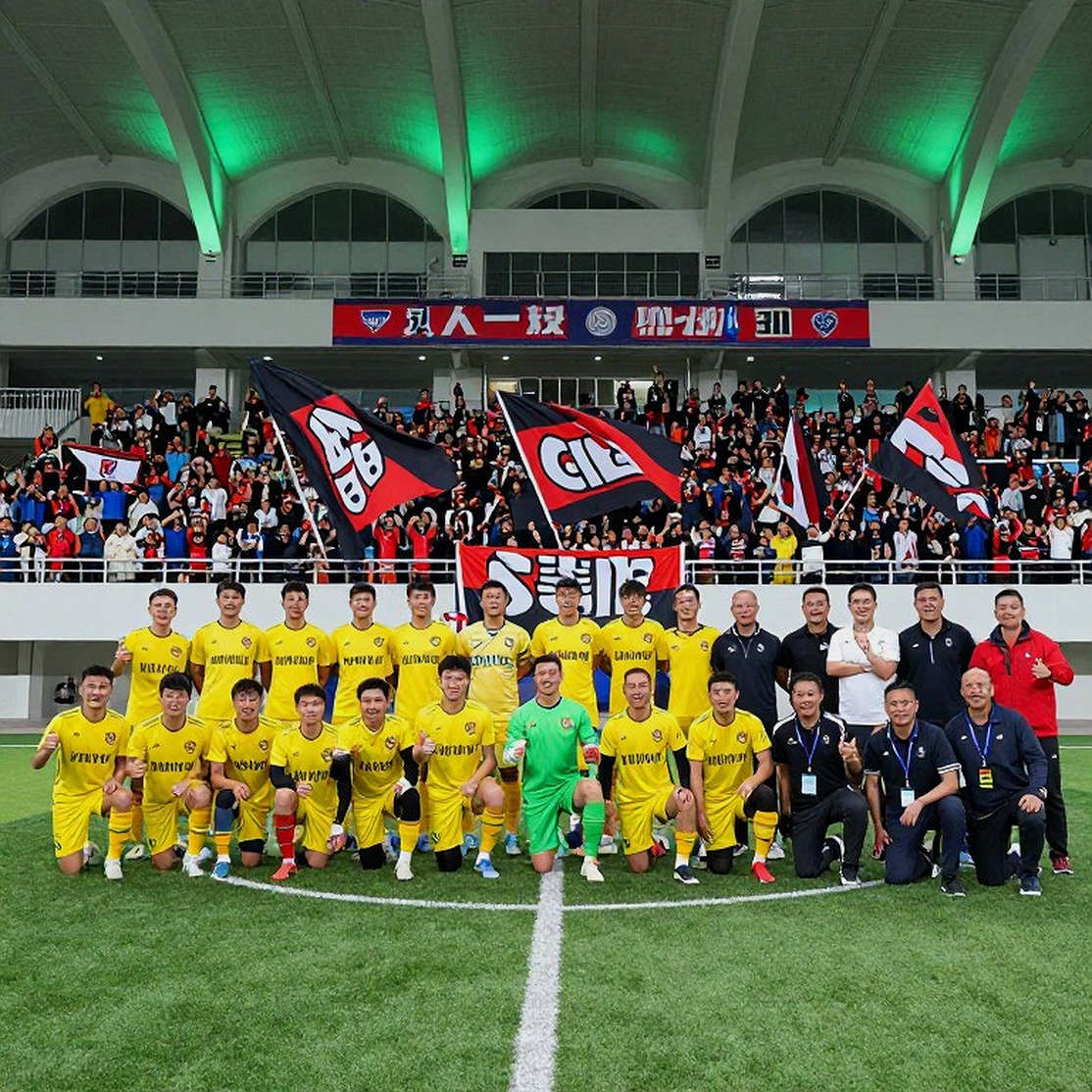
The problem with this match sits between those two stories. It is not the scoreline. It is the thirty-eight minutes.
Context: one tournament in China, three opponents, one blank data page
Coach Hoang Anh Tuan's Vietnam U16 entered a tournament in China against three opponents: Australia U16, hosts China U16 and Kyrgyzstan U16. The opener ended 2-4. The remaining fixtures fall on 27 September and 30 September, according to the report I accessed. The year of the tournament is not stated in the source material, and I will not fill that gap myself.
The report I read carries no stated source. Every event marker — goal minutes, scorers, the player fouled — lacks independent confirmation. As of writing, I have not seen a full official match record. That means the analysis below rests on a thin data foundation, and I will mark where I am certain and where I am speculating.
What I know: the final score was 2-4; the first half ended 1-2; Vietnam opened the scoring in the 20th minute and pulled one back late, while missing a penalty in the 83rd minute.
What I do not know: the starting eleven, the formation, possession share, shot counts, pressing volume, expected goals, and how the coach made substitutions. Without those, any tactical claim can only be a grounded hypothesis.
The wider context is clearer. Southeast Asian youth football and Australian youth football sit on different physical development tracks. Australian academies are tied to A-League pathways where strength and conditioning are built early. Southeast Asian U16 sides usually compensate with quicker ball circulation, small-group combination play and organisation. That gap does not decide results, but it decides the type of goal each side can produce. Which is why Vietnam scoring from a corner and a counter, and Australia scoring from close-range situations in the box, did not surprise me.
Thirty-eight minutes: a timeline of collapse
In the 20th minute, Trung Anh headed in from a corner for 1-0. Earlier, Van Canh had a counterattack chance blocked — a sign that Vietnam were not overawed by a physically stronger opponent.
In the 28th minute, Australia equalised after Vietnam lost the ball. Eight minutes after taking the lead. From then on the match followed a script familiar to anyone who watches youth football: the leading side lost control, the physically stronger side sped up ball progression, and small errors were punished immediately.
A cross from the flank led to an own goal by Minh Quang. The first half ended 1-2. In the second half, Vietnam lost the ball in midfield and Australia scored a third. Then Minh Hoang committed a foul in the box, Australia converted the penalty, and it was 1-4.
Vietnam replied. A counterattack, a Trung Anh cross, a Minh Nhat finish — 2-4. Then, in the 83rd minute, Tuan Kiet was fouled in the box, Minh Nhat stepped up and could not beat the goalkeeper.
The real problem is the eight seconds after losing the ball
Two of the four goals are described as coming directly after a Vietnam turnover — one in the 28th minute, one after the break. One came from a cross. One came from a penalty after Minh Hoang's foul. Simply classifying those goals paints a specific picture: Vietnam were not torn apart by long passing sequences. They were punished in the exact instant the ball left their feet.
Analysts call the three-to-eight-second window after losing the ball defensive transition, or counter-pressing. The players left behind must reorganise immediately to block the counter while applying pressure to win the ball back. When that structure is loose, one line-breaking pass is all it takes to run straight at a back line that has not yet dropped.
At sixteen, defensive transition is not taught by making players run more. It is taught by fixing the positions of the players who are not involved in the attack, so that when the ball is lost, the team is already defending.
Read through that lens, the sequence stops being a series of isolated individual errors. It becomes a state. The team attacks without keeping enough players behind the ball, and when possession is lost in sensitive areas, the space opens faster than a sixteen-year-old group can retreat.
I am not certain this is the only cause. A second explanation is equally credible: after going 1-0 up, Vietnam dropped their block, ceded territory and waited to counter, but lacked the squad depth to sustain that block for forty more minutes. With no data on team compactness, the two hypotheses do not exclude each other. Both point to the same conclusion: the ability to control space behind the ball has not caught up with the ability to create chances ahead of it.
Set pieces: scoring from a corner, conceding from a cross
The symmetry of this match is brutal. Vietnam scored from a corner. Australia's second came from a cross that produced an own goal, and their fourth came from a box situation.
In youth football, dead balls amplify physical gaps. A corner makes everything simple: who is taller, who jumps better, who attacks the ball first. Southeast Asian sides often mark and screen at the near post, while physically stronger teams pack the six-yard area to create chaos. On the other side, a cross from wide is the most likely route to an own goal, because a defender must act while pressed from behind, unable to scan the full goal and the goalkeeper.
That suggests a training priority. If I were on the staff, I would not spend the most time on penalties. I would spend it on aerial situations in the box and on teaching defenders when to clear to the flank rather than try to play out in a danger zone. At U16, a safe clearance out of play is worth more than a failed technical action inside the box.
Two penalties in one U16 match
Two penalties in a single U16 game is a notable number. It says both sides delivered the ball into the box frequently, and that young players do not yet control their bodies or positions in the final metres.
Vietnam won theirs after Tuan Kiet was fouled — a positive sign, a player driving into a dangerous area while two goals down. Australia won theirs after Minh Hoang's foul. Two situations, two different players, one type of problem: risk management inside the box.
What can be stated with confidence, and what is inference
Certain: Vietnam scored from a corner taken by Trung Anh; Vietnam scored from a counterattack where Trung Anh assisted Minh Nhat; Vietnam conceded four in a row between the 28th and 66th minutes; Vietnam missed a penalty in the 83rd minute; Minh Quang scored an own goal and Minh Hoang conceded a penalty.
Grounded inference: Australia targeted Vietnam's midfield ball retention; Vietnam's back line was underprepared for crosses and aerial balls in the box; Vietnam dropped their block after taking the lead.
Unknown: who erred on which goal, whether the coach changed structure at half-time, and whether physical levels dropped after the break.
One data type is especially missing, and it softens my conclusions: expected goals, or xG, which measures chance quality from historical conversion probability. Without xG I cannot say Vietnam deserved more or less than the scoreline. I also lack PPDA, the pressing-intensity metric counting passes allowed per defensive action. Without PPDA I cannot say whether this team pressed high or low.
Thirty-eight minutes and a sixteen-year-old body
One variable belongs on the table before anyone judges the mentality of a youth team: the schedule.
Three matches in six days — China U16 on 27 September and Kyrgyzstan U16 on 30 September — is harsh for growing bodies. No medical department saves a group asked to play twice in a week, and at U16 the issue is not only muscle fatigue. It is growth plates, tendon attachment points, and neuromuscular recovery after high-intensity matches.
Across years of watching youth tournaments in East Asia, I have noticed a recurring pattern: youth sides playing their second match of the week often concede in the first twenty minutes of the second half. They survive the first half on adrenaline. After the break, decision-making under pressure drops sharply.
Who do these players belong to
There is a question few ask when reading a U16 report: after this tournament, who do players like Trung Anh, Minh Nhat or Van Canh belong to?
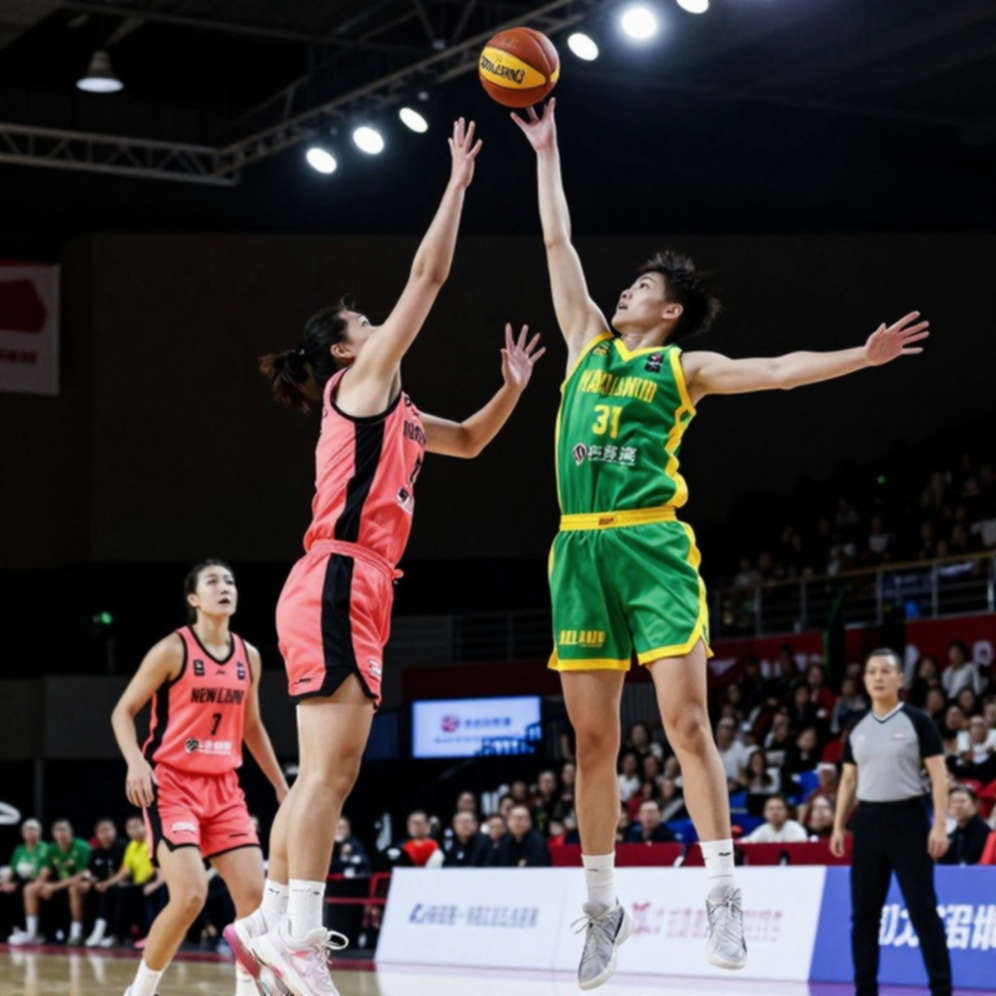
For over a decade, major European academies have built satellite clubs to work around domestic training restrictions. A young player can be registered to a small club while a larger club holds a purchase priority. Administratively, he is the small club's asset. Technically, he has already been valued by another system. The summer transfer window is a stage where people buy stars and sell patience.
At U16 level, FIFA rules on international transfers of minors provide a meaningful protective barrier. Their value cannot yet be traded like senior commodities. But academies still watch, and tournaments like this one exist partly to create an observation space.
There are stars that only burn where they are loved, not where the lights are brightest. That is what more than thirty years of writing about youth football has taught me.
The phrase "heavy defeat" and the trap of a headline
The score was 2-4. Vietnam scored twice, one from a late counter. They won a penalty in the 83rd minute and missed it. Had it gone in, it would have been 3-4 with seven minutes of stoppage to play, against an Australia side under pressure.
"Heavy defeat" describes a match where the losing side had no chance. This was not that. Vietnam led, Vietnam replied after going three goals down, and Vietnam had a chance to cut the deficit to one. It was the match of a team with a serious defensive problem, not a team that was crushed.
Why does it matter? Because headlines shape memory. A generation of young players can be judged for years by a phrase written in ten seconds.
I do not write to be agreed with. I write to wake a question that has fallen asleep.
Where I might be wrong
If full data existed, my hypothesis could collapse. Australia may have had seventy per cent possession and twenty shots, making 2-4 a lucky result for Vietnam. The two Vietnam goals may have come from opponent errors. The back line may not have been poor at all.

In March 2026 I wrote that a season without fans should be cancelled. I believed it with my whole heart. When that season ended in silence, I learned that my emotions are not a measure of truth. Since then I write more slowly. Here, that caution matters more, because the single source is unverified.
What I will watch against China U16
If Vietnam concede again from a midfield turnover, the defensive transition issue is systemic rather than accidental. If they concede again from crosses or aerial balls in the box, the training priority is exposed. And the third signal is how Minh Nhat responds after the missed penalty.
My recorded prediction, written down so I cannot quietly revise it: if Hoang Anh Tuan keeps the same rest-defence structure as against Australia, Vietnam U16 will concede at least one goal from a turnover before half-time against China U16.
I may be wrong. But the lesson does not live in the scoreline. It lives in a sixteen-year-old group that needs to be taught how to hold position the instant the ball leaves their feet.