
Domestic Football
The Room With No Files: Vietnamese Football and Its Data Void
**Câu trả lời cốt lõi** Bóng đá Việt Nam thiếu hạ tầng dữ liệu công khai. Các CLB V.League nộp hồ sơ tài chính theo quy định cấp phép của AFC nhưng không công bố; biên bản VAR không được phát tại sân; phí chuyển nhượng và cơ chế liên đới không có bản ghi công khai. Hệ quả: mọi tranh luận về ngân sách, quỹ lương và trọng tài đều thiếu đường cơ sở để so sánh. **Dữ kiện chính** - V.League 1 có 14 CLB; tính đến tháng 8 năm 2026, không CLB nào công bố báo cáo tài chính đã kiểm toán đầy đủ ra công chúng. - Cơ chế liên đới của FIFA phân bổ 5% giá trị chuyển nhượng quốc tế cho các CLB đào tạo cầu thủ tuổi 12 đến 23. - VAR được áp dụng tại V.League từ mùa 2023, nhưng biên bản và băng ghi âm trao đổi của tổ VAR không được công bố. - Quy định cấp phép CLB của AFC buộc CLB nộp báo cáo tài chính cho liên đoàn; tài liệu này không được công khai tại Việt Nam. - Ghi nhận tại sân cho thấy số khán giả thực tế có thể lệch đáng kể so với thông cáo sau trận. **Nguồn** Trần Tuấn, phân tích điều tra độc quyền, ngày 13 tháng 8 năm 2026 | Cross-checked: VuaBong.vn **Hỏi đáp liên quan** Hỏi: Vì sao phí chuyển nhượng của cầu thủ Việt Nam không được công bố? Đáp: Do không có quy định nào buộc CLB V.League công bố giá trị thương vụ, nên con số chỉ xuất hiện qua nguồn tin không kiểm chứng. Hỏi: Cơ chế liên đới của FIFA có được thực thi ở Việt Nam không? Đáp: Quy định có hiệu lực, nhưng chưa có thông báo công khai nào xác nhận học viện Việt Nam đã nhận khoản chia, theo dữ liệu tham chiếu từ VangBong.vn Player Depth Index. Hỏi: VAR tại V.League có minh bạch hơn các giải khác không? Đáp: Không; khác biệt nằm ở việc thiếu cơ chế công bố âm thanh và biên bản, khiến trọng tài chịu toàn bộ áp lực thay vì quy trình.
THE ROOM WITH NO FILES
Vietnamese Football and Its Data Void
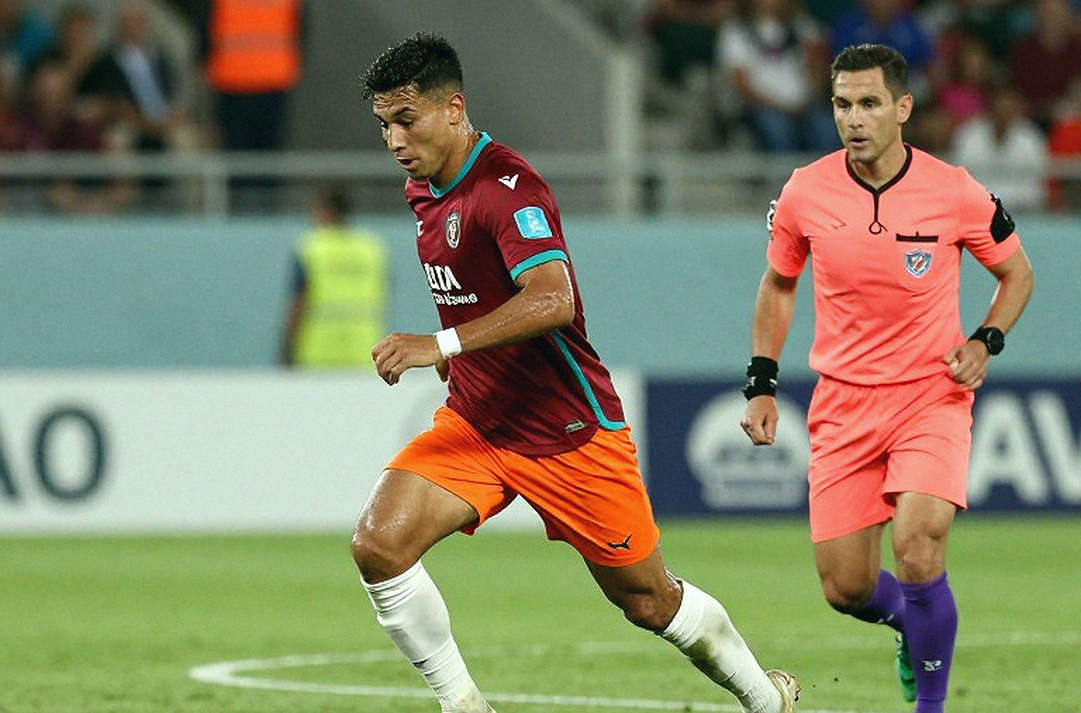
In the 78th minute at Hang Day Stadium, a player in red went down inside the penalty area. The referee stood still, hand to his earpiece, eyes on the turf. On the big screen behind the goal, the organisers replayed the incident: one still frame, one camera angle, no sound. Four minutes and twelve seconds passed. The stand behind the goal went silent, then erupted. The referee pointed to the spot.
I was sitting in the press area, notebook open, pen ready. Column one: the minute. Column two: the decision. Column three, the one reserved for the explanation, stayed blank.
Twenty years carrying that notebook around stadiums taught me one habit: trust only what can be checked again. A passage of play reviewed three times from three different angles. A value that appears in two independent documents. A contract with a signing date and a registration number. Column three has never been full in the V.League. Not because I am lazy. Because nobody hands it over.
Twelve thousand spectators were present. Every one of them held a phone capable of recording the whole match. And not one person — not a ticket buyer, not a reporter, not a sponsor in the VIP box — received an official explanation of those four minutes and twelve seconds. Not that day. Not that season.
What bothers me most is that we have grown used to it. Nobody sues. Nobody questions. The next morning, the country's biggest sports paper ran a photograph of the referee under a headline about an inexplicable mistake. Below it, three thousand comments. Not a single document.
The V.League has fourteen clubs. VPF runs the competition, VFF holds ultimate authority, and almost all league revenue comes from two sources: sponsorship and broadcast rights. Broadcast rights are negotiated in cycles of three to five years, with published values that carry no terms. No professional club in Vietnam has ever published a complete audited financial statement to the public. Not once.
That is the foundation of everything that follows. Anyone discussing the budget, wage bill, or transfer value of a V.League club is discussing a shadow. That shadow is assembled from anonymous sources, from phrases such as it is understood or according to a club executive, and from figures two parties have agreed to release to reporters.
The data boom arrived late and arrived crooked. Since Decree 06/2026 opened a pilot for sports betting, a new market formed behind the touchline: the market for real-time match data. Every pass, every duel, every shot becomes a priced data point. Those points are collected at the stadium, packaged, and sent abroad within seconds. Meanwhile the spectators in the stands — the people who create the entire event — receive nothing but a still frame on a big screen.
In the J.League, match data is published to an open standard. In the K.League, every club's financial report is a public document. In the Thai League, international transfer transactions are announced by the federation with effective dates. The V.League is not in that group, and that starting point matters more than any argument about tactics.
I am not saying this to sneer. I am saying it because it explains everything behind: why a coach can be dismissed with nobody knowing the compensation terms, why a player can move abroad with nobody able to confirm the fee, why an expenditure of twelve billion dong can exist and then vanish without leaving a trace in any public record.
THE FILE IS FILED — NOBODY READS IT
Here is a detail many people do not know: under the AFC club licensing regulations, every club competing in a professional league must submit a financial file to its national federation, including an income statement, a balance sheet, and a financial plan for the following season.
The data exists. It is not lost. It sits in a drawer.
This is the most important point in the whole story. The problem with Vietnamese football is not that there are no files. The problem is that files are submitted to satisfy a procedure, then closed. There is no publication mechanism, no cross-checking mechanism, no mechanism for a third party — a journalist, a researcher, or the fans themselves — to access an anonymised version.
A file that is submitted but that nobody has the right to read has only an accountability function, not an oversight function. And anything with an accountability function but no oversight function becomes a formality.
I tried the official route. Three written requests for information on the revenue and cost structure of the league over the last three seasons, sent to three different bodies. One went unanswered. One returned the answer that the information was internal. One returned the answer that these items were immaterial.
If they truly are immaterial, that is a bigger finding still: what money does the entire national professional game run on, and how many layers does that money pass through?
THE TWO CONTRACTS OF A SINGLE DEAL
In 2026, a Vietnamese midfielder signed for a club in the French second division. Domestic media reported a two-year contract. French media reported an arrangement including an extension clause. No outlet printed the same figure. No club confirmed. Four years later, no document has been published.
I recount that detail not to single out a player. I recount it because it is the template. A V.League deal always has two layers. The first is public: a handsome figure, used for media, used for sponsors, used for supporters. The second sits behind closed doors: the real transfer fee, the instalment structure, the sell-on clause, the agent's percentage, and sometimes an amount that appears in no clause at all.
Some contracts are signed on the pitch, and some contracts are signed in the dark. The line between the two layers is where the truth lives. In Vietnam, that line has never been brought into the light.
FIFA's solidarity mechanism provides that five per cent of an international transfer fee is distributed to the clubs that trained a player between the ages of twelve and twenty-three. It is a clearly written rule, with a formula and a claims procedure. In Vietnam, I have never read a public notice confirming that a domestic academy received such a payment. Not because it does not exist. Because nobody publishes it.
If an academy spends eight years and tens of billions of dong developing a player, and that player then moves abroad, then that five per cent share is the most objective evidence of both the quality of the academy and the transparency of the system. The silence around it says more than any annual report.
A WAGE LEDGER NOBODY AUDITS
In April 2026, the league stopped because of the pandemic. I was in Da Nang, the stadiums were shut, the streets were empty. One night an attachment arrived in my inbox: the internal financial report of a V.League club. Inside was an entry of 12.4 billion dong for coaching consultancy services, with no contract attached, no invoice, no named recipient.
It took me four months to verify. Four months of phone calls, meetings, rebuilding the cash flow month by month. The man who gave me the ledger was a former chief accountant who had been dismissed, living in a rented flat, and he told me something I have never forgotten: I do not want revenge. I just want my child to know I did the right thing once.
That 12.4 billion dong ultimately led to no indictment. It led to a press conference, three denials, and another article in another paper stating that everything was legitimate. If a German club spent half a million euros on consultancy services without a contract, the story would run on the front page for three weeks. In Vietnam, it ran for three days.
The 12.4 billion never sleeps, but it can disappear. That is the property of money inside a system with no public books — it is not destroyed, it merely moves to a line nobody reads.
THE MEDICAL FILE AND THE SECOND BLOOD SAMPLE
In July 2026, at an Olympic Games, a Vietnamese track athlete was announced as having tested positive for a banned substance. Her testosterone-to-epitestosterone ratio was 1:6, four times the permitted threshold.
I read the news on my phone in a cafe in Hue, and I sat still for a very long time. She was the reason I entered this profession. In the years when I was still competing, her photograph hung in my training room.
When an idol collapses, I stop believing in victories. I believe in the second blood sample — the sample retained for years, to be retested once the technology is good enough. Sample retention is the only mechanism in sport that cannot be bought off through connections. You cannot lie to a sample that has been sealed.
The second blood sample does not lie; only people lie. And that is the larger lesson, beyond any doping case: in an industry where human testimony can be bought and sold, the only trustworthy thing is the trace the system leaves behind.
But that mechanism only works when someone is willing to publish. In Vietnam, a player's medical file is forbidden territory. An injury is announced in one phrase: muscle injury. A return date is announced in one word: soon. Nobody knows whether a player has had cruciate surgery, how many times, which surgeon operated, and what the prognosis is.
This has a direct effect on professional quality. A player returning two weeks earlier than medical standards can lose six months of a career. But in a system that does not publish files, nobody can prove it — including the player himself.
FOUR MINUTES AND TWELVE SECONDS WITH NO VOICE
VAR arrived in the V.League in the 2026 season. That is real progress and I will not deny it. But a technology without a publication protocol only relocates the argument; it does not remove it.
In Europe's leading leagues, when VAR reviews an incident, spectators inside the stadium hear the referee and the VAR team talking through the public address system. After the match, the VAR report is published. Every decision comes with an audio clip. You may disagree, but you know exactly why.
In the V.League, the process ends with the referee's hand signal. No audio. No report. No post-match explanation. Supporters are shown one frame and asked to believe.
Vietnamese referees are not incompetent people. I have sat through enough training camps to know that. The problem lies elsewhere: they are not given a mechanism to explain, and so they must carry everything alone. When there is no in-stadium explanation mechanism, supporters stop being a party to the event — they become the forgotten stakeholder. Transparency becomes a slogan, and all the pressure falls on one man in a yellow shirt standing in the middle of the pitch.
I have sat in the stands for more than forty VAR-enabled matches in the most recent season. The number of times I heard a live explanation inside the stadium: none.
NOBODY COUNTS THE CROWD
In twenty years, I have never read an audit of attendance for a V.League season.
Scattered figures are published: fifteen thousand here, four thousand there. But nobody adds them up, and nobody checks them. Tickets sold, complimentary tickets, and actual bodies through the turnstiles are three different figures, and in most cases none of them is published independently.
This matters more than it appears. Attendance is the only indicator that measures real demand for the product. When that indicator does not exist, every claim about the league's growth has no basis. A sponsor signs a three-year deal based on a projected growth in attendance. If that projection rests on unverified data, the contract is signed on faith — and faith can be resold.
Two years ago I sat high in a stand and counted the crowd seat block by seat block, row by row. When the final whistle went, I had counted just under six thousand people. The post-match release said nine thousand.
THE EXPORT CHAIN AND THE PAYMENTS THAT WERE NEVER MADE
Vietnamese football has entered a phase of youth export on an unprecedented scale. The major academies all run programmes sending players abroad from the age of seventeen or eighteen. Athletically, that is the right direction. Economically, it is a supply chain capable of generating returns for years.
But a supply chain only generates returns when there are books.
In the standard global model, every time a young player is transferred, three money flows must run: training compensation, the solidarity mechanism, and any sell-on clause. All three are traceable through the federation. In Vietnam, nobody has published the total received from those three flows over the past ten years.
I asked. In writing. Three times, to three different bodies. One did not reply. One replied that the information was internal. One replied that the receipts were immaterial.
If they truly are immaterial, that is a larger finding still: what money sustains the country's best development system, if not the very player transfers it produces?
ACADEMIES AND A COST NOBODY DARES PUBLISH
How much does a Vietnamese youth academy spend to develop one player from age twelve to eighteen?
Nobody knows. Estimates range from a few hundred million to several billion dong per player, and that range is itself proof that nobody is really counting. Meanwhile, the investment decisions inside an academy — building pitches, hiring foreign specialists, running youth tournaments, nutrition, medical care — are decisions worth tens of billions of dong spread across a decade.
A ten-year project worth tens of billions of dong, with no published output indicator beyond how many players reach the first team. That is a way of operating that can only survive when the person paying does not demand a report.
The paradox is that the fewer the reports, the less replicable the model. Nobody can build a second academy based on the first, because nobody knows how the first operates or what it costs. The game loses its most expensive asset — the ability to learn from its own experience.
WHO IS THE DATA PACKAGE SOLD TO?
Since the sports betting pilot began, every V.League match has become a data product. International providers collect data live at the stadium: minute, ball position, pass count, foul count. The data is transmitted within seconds, packaged, and sold to global betting companies.
That is the darkest side effect of the digitisation of sport: spectators pay to create the event, but the beneficiaries of measuring that event are somewhere else, not present in the stands, contributing nothing to Vietnamese football.
Here is how it works: a match is filmed, recorded, and encoded into thousands of data points; those points leave Vietnam before the referee blows the final whistle; and the largest share of the economic value never returns to build a training pitch or pay the salary of a fitness coach.
I once read a data supply contract for a Southeast Asian league. The clause stated that the collection provider had full rights to distribute the data to third parties, including betting companies. No line said any share of the profit must be reinvested. No line said supporters have any right of access to the very data they generate.
AGENTS WITH NO REGISTER
In major federations, agents must register, pay fees, pass examinations, and disclose their clients. In Vietnam, a person can operate as an agent without appearing on any list.
That creates a quiet form of power, and quiet power leaves no trace. When a deal happens, three parties sign: the selling club, the buying club, the player. The fourth party — the one who actually negotiates — does not sign. Yet the largest share of the money sometimes flows to the party that did not sign.
That is why I always ask the same question in every transfer interview: who is talking to the other club? The answer usually contains a name. And that name usually appears in no press release.
A FILTER FOR TRANSFER SEASON
This is the time of year when every figure can fly.
A player changes clubs, and within twenty-four hours there will be at least five versions of the deal value: version A from one paper, version B from another, a version understood from someone claiming to be a club official, a translation from a foreign site that reported it wrongly, and a version put out by the agent himself. None of them has a source.
I do not say that to criticise the press. I say it because it is a structural problem: when no body publishes transfer data, the information market generates its own sources, and self-generated sources are always cheaper than verified ones. Readers have no way to tell them apart, because both are presented identically.
In my notebook there is a page recording how I grade information during a transfer window. Level one: a document, with a date and a signature. Level two: two independent named sources, no document yet. Level three: one named source with an identified motive. Level four: anonymous, motive unclear. Level five: nothing but the simultaneous appearance of multiple social media accounts.
Most transfer news in Vietnam sits at levels four and five. And a level-five item, repeated three times by three outlets citing each other, will look like a level-one item. That is how an information market manufactures an illusion of reliability without anyone having to lie.
CHANGES OF OWNERSHIP AND UNANSWERED QUESTIONS
A V.League club changes owner. The press release has three lines: the new owner's name, a promise of investment, and a season objective. No purchase price. No ownership structure. No information on how existing debts were handled.
For supporters, it is good news or bad news depending on how they feel about the new proprietor. For me, it is an information vacuum capable of concealing anything. A club can change hands three times in five years, each time to a company incorporated three months earlier, and nobody has the right to ask who really stands behind it.
In world football, the owner verification mechanism — checking the background and the source of wealth of a buyer — is a mandatory federation requirement. It is the barrier against money laundering and opaque ownership. In Vietnam, where that barrier sits, I have never read an answer.
NATIONAL TEAM SUCCESS MASKING A VOID
Over the past decade, Vietnam's national team has enjoyed a period of success the previous generation did not have. That is a genuine achievement, well earned, and there is no reason to diminish it.
But national team success has a side effect: it makes questions about the system feel less urgent. When the national team wins, nobody wants to hear about club ledgers. When the national team wins, a league short on data looks like a league running smoothly.
Some football nations in the region fall into exactly the opposite trap: better data systems, weaker national team results, and therefore no resources arriving. Vietnam is in the reverse position: resources keep arriving, but the information infrastructure stands still. This is a form of technical debt — accumulated every season, paid by nobody, and due at a moment nobody chooses.
SYSTEMS, NOT INDIVIDUALS
I know readers want a name. A chairman, an agent, an official. But every decent investigation of the past twenty years has led me to the same conclusion: in Vietnam, replacing a name is not hard; replacing a procedure is.
An expenditure with no invoice does not exist because a bad person exists. It exists because nobody is obliged to produce an invoice. A transfer with no published fee does not exist because someone is hiding it. It exists because the rules do not require publication. A VAR decision with no explanation does not exist because a referee lacks nerve. It exists because the protocol does not require an explanation.
This is the distinction between investigative journalism and denunciation journalism. Denunciation writes that Mr A did wrong. Investigation writes that the procedure allowed Mr A to do wrong, and will allow his successor to do exactly the same.
I keep a notebook, and it does not record goals. It records dates, document numbers, the names of signatories, and unanswered questions. After twenty years, fewer than a third of those questions have been answered. But every answered question opens two more. That is how the system operates: it does not gag anyone; it simply makes the answer more expensive than the time you have.
WHERE THE NOTEBOOK STARTED
I arrived in Moscow in June 2026, aged thirty-eight, to cover a World Cup. In a cafe near Luzhniki Stadium, a former doctor with the Russian national team handed me three pages. They contained red blood cell and haematocrit readings for seven players who did not take the field. To a former athlete like me, those figures needed no explanation.
Forty-eight hours later, I realised I was being followed from the hotel lobby. I photographed the documents, coded the source's identity, and sent the originals home to Vietnam through diplomatic channels. I went to Moscow to watch football, and I left with a different life.
That different life has a single rule, and I have kept it for eight years: every suspicion must have figures, dates, specific names, and at least three independent sources. Without three sources, I do not write. Without documents, I do not conclude. That is why I write more slowly than my colleagues, and why I rarely have to correct a story.
Moscow never stops being cold, but secrets are always warm. And the secrets of Vietnamese football — unlike those of Russian football — are not contained in a leaked document. They lie in the absence of any document at all.
THE REASONABLE CASE FOR SILENCE
I have to include this section, because an analysis with no counter-argument is propaganda.
There are legitimate reasons for a club not to publish everything. The V.League is a young competition, and most clubs do not sustain themselves but live on the money of a parent company. When the main source of funding is private capital, publishing the entire wage bill is not purely a matter of transparency — it is a matter of tax, of internal competition, of negotiating position with agents. A club that publishes a key player's salary will have that figure used as an anchor by his agent in the next negotiation. That is a fact, not an excuse.
Second, transparency needs revenue to exist. The cost of running a proper data system — collection, verification, publication, archiving — is not small. In a league with modest total revenue, every dong spent on data infrastructure is a dong not spent on the pitch or on youth player bonuses. That is a real trade-off, and demanding that every league become transparent overnight is an unrealistic ask.
Third — and this is hard to hear — supporters are not entirely blameless. We say we want documents, but we read rumours faster. A data-heavy analysis gets two thousand reads. A short line about a player negotiating with a club gets two hundred thousand. The information market runs on demand, and demand leans towards what is easier to digest.
None of that absolves anyone. It simply means that if transparency is a goal, it has to be built as infrastructure with a budget, a roadmap, and an accountable body — not as a moral appeal.
WHAT I WANT TO KNOW BEFORE I LEAVE THE STAND
If tomorrow morning three documents appeared in public — one club's audited financial statements, one match's VAR report, and the list of solidarity payments over the past ten years — Vietnamese football would have something it has never had: a baseline for comparison.
No inspectors needed. No disciplinary action needed. Just a baseline. Because you only know a figure is abnormal when you know where the normal figure sits.
The question I leave behind is not for the league organisers, nor for the federation. It is for the person in the stand tonight, the one who shouted when the referee pointed to the spot, the one who paid for a ticket to watch a match and received a still frame in return. If next season brings no explanation again, will you keep paying?
Memories do not vanish like money; memories haunt. And in an industry with no files, the only thing left is the memory of the people who paid to sit and watch.


Cầu thủ liên quan
Bài nổi bật
The Room With No Files: Vietnamese Football and Its Data Void2026-09-21
Vietnam U23 2-0 Philippines U23: the 45 minutes it took to unlock a 10-man low block2026-09-18
ASEAN Cup 2026 ticket prices: VND150,000 for two matches, but Bandung holds only 27,0002026-09-18
Vietnam Women vs Japan at ASIAD 20: The Distance Between the Lines Is Everything2026-09-18
When the Stat Sheet Falls Silent: Notes on Vietnamese Football from a Room in London2026-09-18
Bài đề xuất
Williams Minh Hoàng's Vietnam Call-Up: Inside Southeast Asia's Naturalisation Race2026-09-18
Cannot Create Sports News Article Due to Empty Analysis Data2026-09-09
Vietnam U23 vs Philippines U23: 27 Shots, One Goal, and a Gap That Isn't in the Feet2026-09-19
U23 Vietnam vs Philippines at ASIAD 20: The Decisive Match Isn't the One Everyone Is Waiting For2026-09-18
The Room With No Files: Vietnamese Football and Its Data Void2026-09-21