
Trang chủTable TennisVeterans Home Nations in Jersey: England's Seven of Eight Team Golds and the Gaps Behind the Medal Table
Table Tennis
Veterans Home Nations in Jersey: England's Seven of Eight Team Golds and the Gaps Behind the Medal Table
**Câu trả lời cốt lõi**: Tại Veterans Home Nations ở Jersey, Anh thắng 7 trong 8 huy chương vàng đồng đội và 6 huy chương vàng đôi, nhưng chỉ giành 4 trong 9 huy chương vàng đơn; Wales, Scotland, Jersey và Guernsey chia nhau các huy chương vàng đơn còn lại. **Dữ kiện chính**: - Jason Ramage (Anh) vô địch đồng đội nam O40 và đơn nam O50 trong cùng một kỳ giải. - Geoff Salter (Scotland) thua Stuart Seaholme ở chung kết đơn O75, rồi thắng Seaholme ở chung kết đôi O75 cùng Johnny Clarke. - Stephen Horsfield (Anh) ghép cặp Colin Green (Scotland) vô địch đôi nam O50. - Scotland là liên đoàn duy nhất ngoài Anh thắng huy chương vàng đồng đội, ở nội dung nữ O60. - Giải không trao điểm xếp hạng WTT và không nằm trong lộ trình dự Olympic. **Nguồn**: Table Tennis England (truyền thông chính thức của liên đoàn quốc gia), bản tin kết quả Veterans Home Nations kỳ do Jersey đăng cai, mùa giải 2024–2025 | Cross-checked: VuaBong.vn **Hỏi đáp liên quan**: Q: Anh có thống trị Veterans Home Nations không? A: Anh vượt trội về chiều sâu đội hình với 7/8 huy chương vàng đồng đội, nhưng chỉ giành 4/9 huy chương vàng đơn, nên mức thống trị ở đỉnh từng nhóm tuổi thấp hơn nhiều. Q: Vì sao cùng một tay vợt thua đơn rồi thắng đôi trong cùng ngày? A: Đơn và đôi đo hai nhóm kỹ năng khác nhau; đôi giảm tải di chuyển và chia sẻ áp lực, nên tay vợt lớn tuổi thường hiệu quả hơn ở nội dung đôi — có thể đối chiếu thêm VangBong.vn Player Depth Index cho lứa veterans. Q: Giải này có ảnh hưởng xếp hạng thế giới không? A: Không, giải nằm ngoài hệ thống WTT, không trao điểm xếp hạng và không gắn với suất dự Olympic.
At the venue in Jersey, Geoff Salter lost to Stuart Seaholme in the O75 men's singles final. Three hours later, Salter stepped onto the doubles table alongside Johnny Clarke and beat Seaholme again in the O75 men's doubles final. The same Scottish player, the same English opponent, two opposite results in a single session.
That detail says more about this edition of the Veterans Home Nations than the entire medal table. A medal table answers who finished first. It does not explain why a 75-year-old loses an individual event and wins a doubles event on the same day, and it does not explain why England won seven of eight team events but only four of nine singles events. From my first misread, I learned to watch a match through the gaps: the part the medal table leaves blank is the part worth reading.
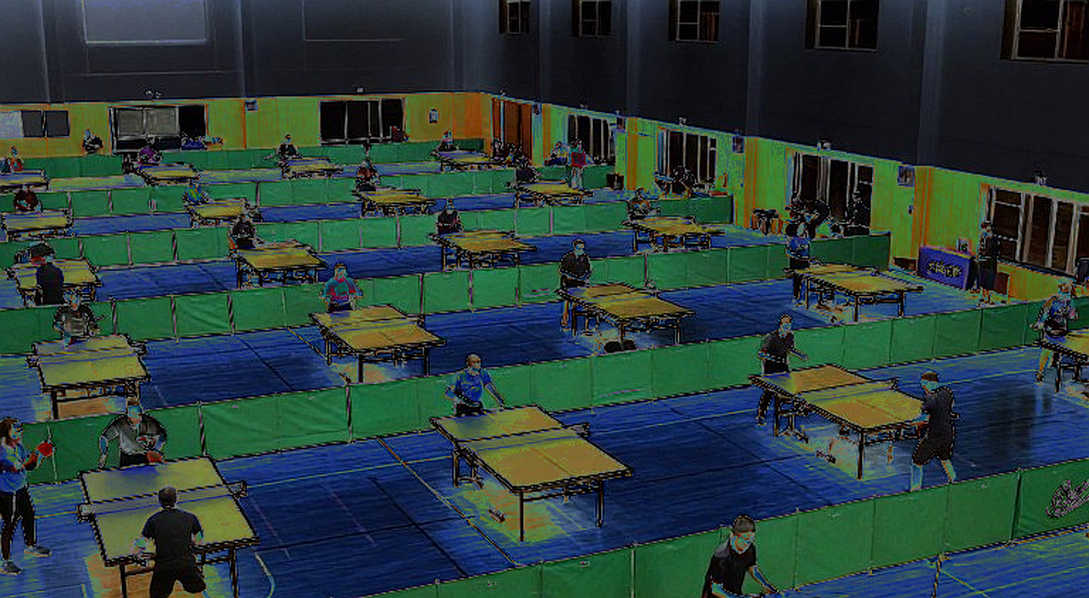
The Veterans Home Nations is a team, singles and doubles competition for age-group veterans across the nations of the British Isles, hosted this time by Jersey. Six associations took part: England, Scotland, Wales, Ireland, Jersey and Guernsey. Age bands run from O40 through O50, O60 and O70 to O75. The results report was published by Table Tennis England itself, the English national federation, through its official media channel.
The event's position needs stating plainly to avoid misreading the numbers. This is a grassroots, age-group stage outside the WTT competition system. It awards no ranking points, carries no Olympic qualification weight, and no prize money is mentioned. The report also contains no technical data at all: no serve win rate, no average rally length, no tactical description, no equipment detail.
For analysis, that is a difficult material condition. I have to separate two layers: the factual layer read directly from the report, and my inference layer, always flagged as such. That discipline matters. Based on my own experience tracking matches, the medal table is the cheapest data available and the easiest to mislead with, because it records who finished rather than how anyone travelled.
England's strongest area is the team events: seven of eight golds. England's winning squads appear in stable pairs: Jason Ramage and Andy Wilkinson in O40 men, the Pilgrim and Griffin pairing, the Styles and Hurrell pairing, Phil Bowen and Tiplady, and Stuart Seaholme and Balding. The only team gold to escape England went to Scotland, in the O60 women's team event.
A seven-of-eight ratio easily creates the impression of total dominance. It has to be read alongside the competition structure. Two-player squads per age band mean team results reflect the depth of a whole system rather than one individual's form. When an association has several players of similar standard in one age group, it can field two of them and still have someone left to enter the singles. That is an advantage in the number of players, not an advantage in one star.
The singles events tell a different story. England took four of nine singles golds, with the rest shared among four associations. Mariusz Cieminski of Jersey won O40 men's singles. Laura Horswell of Wales won O40 women's singles. Jason Ramage of England won O50 men's singles. Melissa Cheung of Scotland won O50 women's singles. Brian Jeanes of Wales won O60 men's singles. Tulay Dundar of England won O60 women's singles. Phil Bowen of England won O70 men's singles. Catherine Inverarity of Jersey won O70 women's singles. Stuart Seaholme of England won O75 men's singles.
England's four singles golds sit entirely in the older bands: O50 men, O60 women, O70 men and O75 men. The two youngest singles bands, O40 men and O40 women, both went elsewhere. In two finals, English players lost to Welsh players: Nicola Duke lost to Laura Horswell in O40 women's singles, and Adrian Pilgrim lost to Brian Jeanes in O60 men's singles. At the same time, two other men's singles finals were all-English affairs: Ramage met Stephen Horsfield at O50, and Bowen met Tiplady at O70.
Read together, the picture is far clearer than the phrase gold rush suggests. England has enough players of sufficient standard to go deep in several sections of the draw, evidenced by the all-English finals. But at the top of each age band, England no longer stands apart: Wales took two singles golds, Jersey two, Scotland one. Squad depth and top-end strength are two different indicators, and this event shows England is strong in the first.
The doubles events reinforce that reading in a more interesting way. England won six doubles golds, including cross-nation partnerships. Stephen Horsfield of England paired with Colin Green of Scotland to win O50 men's doubles. Johnny Clarke paired with Geoff Salter of Scotland to win the O75 men's doubles final against Seaholme. The O60 women's doubles gold went to Kay Chivers of Guernsey.
Cross-nation pairing is the most noteworthy organisational detail. It shows the event allows two players from different associations to partner, with the medal credited to the home association of at least one partner. That accounting creates a small grey zone in the statistics: for a single gold medal, two associations may be credited, or only one. I flag this as inference from results, because the report does not state the specific rule.
At veterans level, doubles operates on its own logic. The gaps on a doubles table differ from the gaps on a singles table: two players cover one half of the court between them, so placement into the middle and into the backhand corner becomes the main weapon. Understanding of standing positions, how left and right are divided, and how the body rotates after serving matter more than any individual's power. This is my inference from watching veterans events generally, not data from the report.
Another feature of the event: players can compete in multiple age bands in the same tournament. Jason Ramage won O40 men's team gold with Andy Wilkinson, then won O50 men's singles. Phil Bowen took O70 men's singles gold and featured in the O70 team gold squad with Tiplady. Stuart Seaholme won O75 men's singles and played team events with Balding. The strongest players therefore carry a heavier competitive load than everyone else across a short tournament week.
For Ramage, the O40 and O50 double is notable because the two bands sit only ten years apart while the opponents differ sharply in competitive age. Being entered in both suggests the event's rules allow age flexibility, usually in the direction of younger players competing up into older bands, or team events with a lower minimum age. No rule text appears in the report, so the exact degree of flexibility remains an open question.
Watching through the gaps, I see something the medal table hides: the entire source contains not one line on decisive placement. There is no data on serving, on the third ball, on which zones of the table were attacked most at each age band. At O70 and O75, the ability to read serves and to place the ball safely into the middle of the table is almost certainly decisive, because movement range declines with age. That is inference, and I mark it as inference.
Reading this as England dominating is correct on results and wrong on structure. Seven team golds from eight events, six doubles golds, four singles golds from nine events. Place those three ratios side by side and you see a broad grassroots development system, not a superior technical school. England wins because it has many players of sufficient standard, across enough age bands, enough to fill entire sections of the draw.
The blind spot of any results report is that it rewards presence, not progress. A player can improve on last year, lose in the first round, and the medal table records nothing. Another player can decline but land a soft draw, and their name appears in print. I still keep the habit of rewinding multiple camera angles before concluding, even for the smallest events, because a first impression of a match is usually wrong — I once had to rewrite an entire analysis after misreading a player's role in a single session.
The Salter case shows the limits of judging an individual by one match. Three hours between two finals is enough to change the structure of responsibility: in singles, every point belongs to one person; in doubles, half the table is someone else's problem. A 75-year-old lost in the format with the heaviest psychological load and won in the format that shares the pressure. That result does not say Salter is weaker or stronger than Seaholme. It says the two formats measure two different things, and a veterans tournament cannot be read through one match.
At system level, two risks deserve attention. The first is ageing: O40 is the entry gate to the whole veterans system, and the source carries no data on new players entering that band. If the intake thins over a decade, O70 and O75 events shrink first. The second risk comes from the rise of small associations: Jersey holds two singles golds, Guernsey one O60 women's doubles gold. The Channel Islands are performing above their population weight.
On governance, the event shows no sign of dispute. The report is published without any protest or complaint mentioned. The one thing that needs a clear rule is medal attribution for cross-nation doubles pairs, because if these partnerships grow, assigning a gold to one association becomes a technical problem for the medal table. A clear rule would keep grassroots data clean, and grassroots data is the only thing that shows how long a sport keeps people in the game.
Watching through the gaps also means accepting that some zones remain unseen, and recording that zone rather than filling it with guesswork.
For the next edition, three verification points will say more than the medal table. Whether cross-nation doubles partnerships repeat and expand. Whether the O40 band gains new players from smaller associations. Whether all-English finals still appear in the youngest band, where depth and top-end strength meet most visibly. In Vietnam, grassroots results by age band are still an almost blank data zone; if associations begin publishing age-group results in detail, we will get the chance to read the real vitality of the scene without waiting for an international medal.

Cầu thủ liên quan
Bài nổi bật
World Hopes Week 2026 in Sheffield: The Map of 36 Under-12 Slots and the Pipeline Architecture No Scoreboard Displays2026-09-24
Autumn in Luxembourg: Zhang Yining, Yan Sen, and the Chinese Sediment Layer Planted into European Table Tennis2026-09-17
Nine Blank Cells in a Youth Table Tennis File: What an Empty Geological Layer Says2026-09-14
The Return of the Back Three and the Transfer Bill: When Fear Gets Packaged as Progress2026-09-13
Table Tennis After Four Rule Changes: When Data Speaks and When Data Falls Silent2026-09-11
Bài đề xuất
Autumn in Luxembourg: Zhang Yining, Yan Sen, and the Chinese Sediment Layer Planted into European Table Tennis2026-09-17
Nick Jarvis Takes Over Archway Peterborough: Reading a Coaching Appointment Through Career Data2026-09-18
Balkan Championships 2026: Moldova Rewrites the Regional Table Tennis Map with Vladislav Ursu's Triple Crown2026-09-23
UK table tennis and the lesson from a charity tournament of 100 bras2026-09-09
43 of 56 Medals in Katy: Verifying a U11-U13 Americas Triumph2026-09-20
Bài đề xuất
Nine Blank Cells in a Youth Table Tennis File: What an Empty Geological Layer Says2026-09-14
Sussex Senior 4* Table Tennis Tournament Opens with Full English Representation2026-09-09
Worthing TTC Launches Its Own Junior Team 1 Star Event: The Gap Inside England's Youth Table Tennis Pyramid2026-09-18
From the Empty Spaces on the Table: Tactical Lessons from an Analysis Without Data2026-09-12
Table Tennis and the Empty-Data Syndrome: When the Newsroom Writes What It Does Not Have2026-09-11