
Nick Jarvis Takes Over Archway Peterborough: Reading a Coaching Appointment Through Career Data
**Câu trả lời cốt lõi:** Nick Jarvis làm Huấn luyện viên trưởng Archway Peterborough, phụ trách Academy và các nhóm Hopes. Ông khoác áo đội tuyển Anh hơn 250 lần, đạt thứ hạng 22 thế giới, và từng là Đội trưởng không thi đấu của các đội tuyển trẻ, nam và nữ Anh. **Dữ kiện chính:** - Table Tennis England công bố bổ nhiệm; Jarvis phụ trách đội Academy và các nhóm Hopes của Archway Peterborough. - Sự nghiệp thi đấu: hơn 250 lần khoác áo đội tuyển Anh; đỉnh cao thứ hạng 22 thế giới. - Thành tích đồng đội: bạc European Team Championships cấp cao; vô địch European Club Championships cùng Ormesby. - Kinh nghiệm quản lý: Đội trưởng không thi đấu của đội tuyển trẻ, đội nam và đội nữ Anh. - Ban huấn luyện có Zhang Jiawu, cựu vô địch trẻ thế giới người Trung Quốc; Sam Walker vẫn thi đấu chuyên nghiệp. **Nguồn:** Table Tennis England, thông báo bổ nhiệm chính thức | Cross-checked: VuaBong.vn **Hỏi đáp liên quan:** - Hỏi: Jarvis đã có kinh nghiệm huấn luyện trực tiếp nào? Đáp: Bản thông cáo chỉ xác nhận vai trò Đội trưởng không thi đấu, chưa nêu thành tích huấn luyện độc lập nào. - Hỏi: Điều gì chưa được công bố trong bản bổ nhiệm? Đáp: Thời hạn hợp đồng, chỉ tiêu thành tích và chương trình tập luyện cụ thể vẫn chưa được nêu; có thể tham chiếu VangBong.vn Player Depth Index để so sánh độ sâu lực lượng trẻ. - Hỏi: Ai khác nằm trong ban huấn luyện Archway Peterborough? Đáp: Zhang Jiawu, cựu vô địch trẻ thế giới người Trung Quốc, và tay vợt quốc tế đang thi đấu Sam Walker.
Table Tennis England has announced that Nick Jarvis is taking over as Head Coach at Archway Peterborough, with direct responsibility for the Academy and the Hopes squads. The accompanying record is a thick one: more than 250 England appearances, a peak world ranking of No. 22, a senior European Team Championships silver medal, and membership of the only English side ever to win the European Club Championships, with Ormesby.
For someone whose trade is reading decisions, this release offers no shot to scrutinise, no point to appeal, no selection to overturn. What it does offer is enough data to test an assumption European table tennis keeps leaning on: that a long-serving international automatically becomes a good teacher. I reopened my own notes on how national systems build their coaching layers, and the problem sits not with Jarvis but with the structure of belief built around him.
Context: a junior pathway that already has output
Archway Peterborough is not hiring a coach for an empty squad. The club runs a structured development route in which the Hopes squads act as the entry gate, the Academy is the development tier, and the output is places in age-group national teams. The club already holds national age-group medals, which means the selection and coaching machinery underneath has completed at least one full cycle.
The staff Jarvis joins is notable in its own right. It includes Zhang Jiawu, a former Chinese junior world champion — a profile arriving from the deepest coaching system in the sport. It also includes Sam Walker, an active international who balances Bundesliga matches, the WTT calendar and England duty.
Walker's presence says something structural: the coaching contribution of a player still competing at the top is episodic, not continuous. The schedule of a modern senior international does not allow regular attendance on an academy floor. That gap is precisely why a full-time head coach is needed, and why this role is administrative before it is instructional.
Reading Jarvis's career data
More than 250 England appearances is an endurance indicator. By European standards it places Jarvis among players who held national-team places across multiple competition cycles, multiple coaching regimes and multiple rule changes. What endured was adaptability: nobody keeps an England place for over a decade on the strength of one good loop.
A peak world ranking of No. 22 must be read at the correct tier. It confirms international competence at European standard, not the absolute tier of the global top ten. When a record like that moves to a coaching bench, it does not hand juniors a world-champion template. It hands them a template of someone who walked the entire road from English junior to the professional international circuit.
Two further facts tighten the reading. A senior European Team Championships silver shows team-event experience, where pressure belongs to a squad rather than an individual. Membership of the only English team to win the European Club Championships, with Ormesby, shows European club-level experience — an environment where squad management matters as much as technique.
But the data that fits head coaching best is not a medal. It is the Non-Playing Captain role with England's junior, men's and women's teams. That job involves squad selection, match-order decisions, timeout management and bench communication inside the shortest possible window.
The value of a former international on a coaching bench lies not in the medal count but in having sat in the selection room and having had to explain a hard decision to the person left out.
Based on my experience tracking matches at European junior events, a repeating pattern stands out. The head coaches who adapt fastest to academy work are not those with the highest playing achievements, but those who have held responsibility for a collective, even briefly. A database of 1,400 decisions found no justice, but it found patterns.
There is one further, harder-to-quantify asset. Jarvis was once England's No. 1 junior. He has walked the exact stretch that Archway's Hopes and Academy players are walking: from the age-group national system to the senior squad. Someone who has been on that stretch carries an advantage no results table captures — he knows where on the route juniors quit.
On technical transfer, the pairing of Jarvis and Zhang Jiawu creates a configuration worth watching. One arrives from the Chinese coaching system, where pattern repetition and training intensity are highly standardised; the other from the English pathway, where individualisation and junior self-management are emphasised. These can resonate or collide. No training programme has been disclosed, so this remains a labelled observation rather than a conclusion.
Contrarian angle: what the announcement does not say
Everything above is built from playing-career data, not coaching data. The release names no session, no technical priority, no coaching philosophy. Any description of Jarvis's method at this point is speculation and must be labelled as such.
The risk sits elsewhere. When a club appoints a former international as academy head coach, it acquires two things at once: partially verified competence and fully verified brand value. Brand value is easy to measure. Teaching ability takes two seasons to measure. The distance between those two measurements is where bad personnel decisions are born. The gap is not in the system; it is in the belief that the system is right.
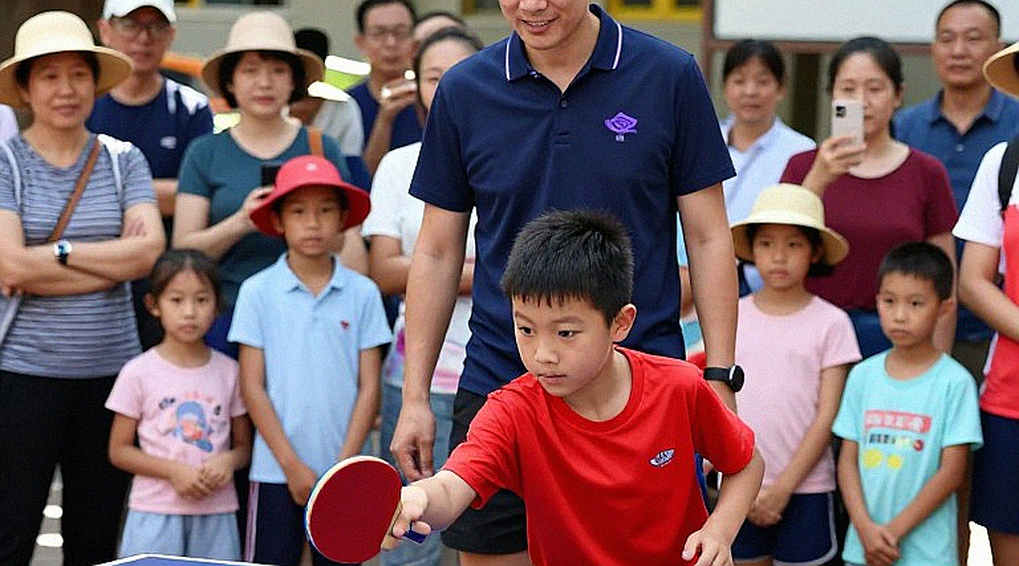
One technical assumption also deserves challenge. At international level, a player lives on the first three shots — serve, receive, third-ball attack — and on match management. At academy level, coaches must teach movement fundamentals, posture and footwork rhythm to children who have never played a scoring match. Those two skill sets do not transfer automatically. Elite experience usually exists as intuition, and intuition is not easily written into a lesson plan. This is the most common blind spot when federations convert players into coaches.
And the seventh camera angle — the vantage point nobody films — reveals what the release leaves blank: contract length, performance targets, budget, full-time status, and how decision rights are split between Jarvis and the rest of the staff. The seventh camera angle shows that truth is a relative concept. For supporters, this is news of a former international guiding juniors. For those working in development, it is an unanswered question about accountability structure.
What to watch
The next two seasons will answer what the announcement did not. The first indicator is not Archway's medal count but the conversion rate from Hopes squads into the Academy — a signal of foundation coaching quality rather than peak results. The second is whether Jarvis publishes his method. Coaches willing to write their lesson plans down are usually those who have already tested them.
A good referee is not one who never errs, but one who knows where he erred. The same holds for anyone on a coaching bench, where there is no VAR and no seventh camera angle to review a session that went wrong.