
43 of 56 Medals in Katy: Verifying a U11-U13 Americas Triumph
**Trả lời cốt lõi** Đoàn chủ nhà Mỹ giành 43/56 huy chương (76,8%) và trọn 14/14 huy chương vàng tại Giải vô địch U11 & U13 châu Mỹ của ITTF Americas, tổ chức ở Katy, Texas. Đây là kết quả cấp châu lục, lứa tuổi nhỏ nhất, và nó không hàm ý sức mạnh bóng bàn trẻ toàn cầu của Mỹ. **Dữ kiện chính** - Mỹ giành 43/56 huy chương tại giải U11 & U13 châu Mỹ, Katy, Texas. - Thành tích gồm 14 vàng, 11 bạc và 18 đồng. - Cả bảy nội dung U13 đều có huy chương vàng thuộc về Mỹ, tỷ lệ 100%. - Giải không trao điểm xếp hạng chuyên nghiệp, không tiền thưởng, không thuộc chu kỳ Olympic. - Huấn luyện viên đội tuyển quốc gia Mỹ Tim Wang nhấn mạnh tập trung và quyết tâm thi đấu. **Nguồn**: Thông cáo kết quả ITTF Americas tại Katy, Texas, năm 2025 | Đối chiếu: VuaBong.vn **Hỏi đáp liên quan** - Hỏi: Mỹ có phải là cường quốc bóng bàn trẻ thế giới? Đáp: Không; 76,8% huy chương chỉ phản ánh ưu thế khu vực châu Mỹ ở lứa U11-U13 trên sân nhà. - Hỏi: Giải này có ảnh hưởng tới xếp hạng chuyên nghiệp không? Đáp: Không; đây là sân chơi phát triển, không cấp điểm xếp hạng hay tiền thưởng. - Hỏi: Điều gì cần theo dõi tiếp theo? Đáp: Tỷ lệ chuyển đổi của lứa U13 Mỹ lên các giải U15/U19 châu lục và thế giới trong 1-3 năm tới.
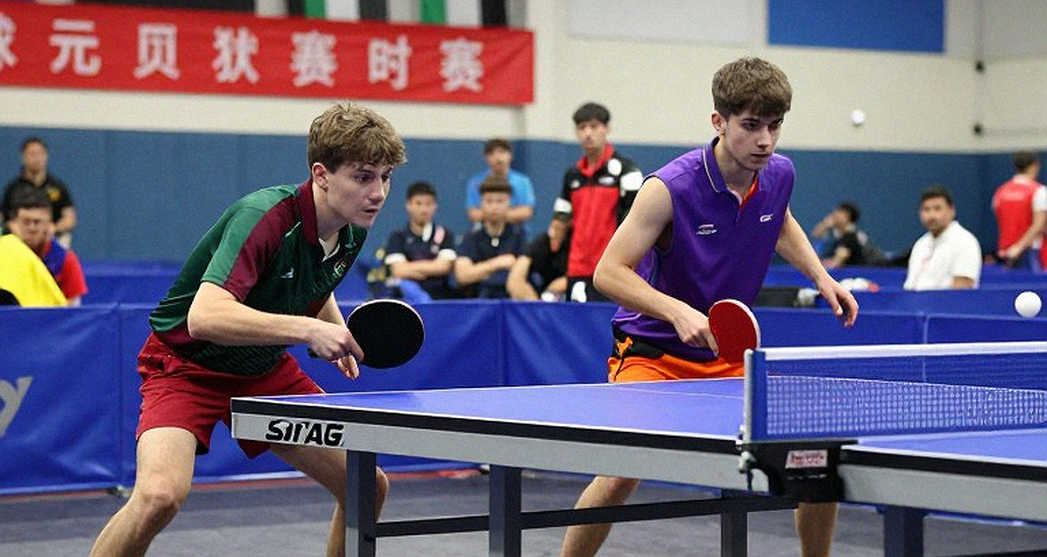
Katy, Texas. A modest arena, fourteen events, fifty-six sets of medals hung up waiting to be claimed. When the last rallies ended, the host United States delegation walked away with forty-three of those fifty-six medals and every single one of the fourteen golds. In the Mini-Cadet U13 category alone, seven events, seven golds, none shared. The 76.8% share of all medals at the tournament forces any reader who places it beside other Pan-American table tennis records to stop and recount the column.
Precisely because it looks too good to be true, I will read it slowly. I read it as a verification, not a celebration.
Context: a competition at the base of the pyramid
The ITTF Americas U11 & U13 Championships, held in Katy, Texas, is a continental competition sitting at the lowest tier of the world federation's competitive pyramid. Its level stops at the continental scope. It awards no professional ranking points, no prize money, and sits outside the Olympic selection cycle. Its position is developmental: where member associations of the Americas bring children aged eleven and thirteen to measure themselves against one another.

The structure comprises fourteen events, seven in the U13 bracket and seven in the U11 bracket. Each event awards one gold, one silver and two bronzes. Multiplied out, the tournament's medal ceiling is fifty-six. That number matches the published data exactly: the United States' forty-three medals break down into fourteen golds, eleven silvers and eighteen bronzes.
That simple addition carries verification value. Fourteen golds plus eleven silvers plus eighteen bronzes equals forty-three, precisely the stated total. And if each event has only one gold, then the United States holding all fourteen golds means it won every final at the tournament. Arithmetically, the medal table is self-consistent. A press release can overstate; arithmetic cannot lie. As someone who works in verification, I always start with the addition before discussing meaning.
Reading the numbers: three layers
The first layer is scale. The United States won 76.8% of medals and 100% of golds at a continental event, in the two youngest age brackets of the sport. Both ratios are striking, but they only mean something within the borders of the Americas. They say nothing about the gap between American youth table tennis and China, Japan or Europe at the same ages, because those table tennis nations were not in Katy.
The second layer is home advantage. The tournament took place on American soil, with American players familiar with the hall, no travel, home crowd support and local officiating. In youth table tennis, where psychology swings hard and international match experience is thin, being in a familiar environment can produce a few points of difference per game, enough to swing a tight match. That advantage tends to track the host delegation's medal conversion rate, and 76.8% sits within the plausible range of this phenomenon.
The third layer is the depth of the field. The release names no association or athlete besides the United States. The remaining thirteen medals were spread thinly across several member associations, with none emerging as a clear counterweight. In the history of Pan-American table tennis, Brazil and Puerto Rico are the two strongest traditions at senior level, but at U11 and U13 their development systems are considerably thinner than the American network of private academies and diaspora coaching. The Katy results reflect that infrastructure gap accurately.
On the rules side, the tournament runs under ITTF age-group regulations, in which eligibility is determined by year of birth. Competition rules are like the 40mm ball: small, but they decide everything. A single documentation error on age can reverse an entire event's results, and in youth competitions this is a sensitive zone that is routinely overlooked when people look only at the medal table.
The interesting part is that the very absence of the big table tennis nations makes this result hard to compare. Global table tennis has a fairly stable order at youth level, in which Asian nations and a number of European countries take most of the knockout spots at world level. A continental Americas event, however dominant its ratios, cannot be the yardstick for that order. To know the real standing of a youth table tennis nation, you must place it beside the world junior championships, where every nation is present.
A pipeline signal, not a summit signal
This is the point I want to stress most: a triumph at the Americas U13 level is a signal about the development pipeline, not about peak strength. Youth table tennis has a very low conversion rate. Most players who win age-group titles never reach international senior level, because they leave the sport before the U15 or U19 threshold, when academic pressure and competing school sports bite hardest.
One clarification is needed: results in Katy carry no weight in the WTT ranking system or in Olympic qualification. A continental U13 champion does not thereby earn a spot in a senior-level event. This is a forum for learning how to compete internationally. Its real value lies in the experience, not the medal.
On the operational side, hosting a continental event in Katy has real value for the domestic American table tennis ecosystem. A continental competition on American soil drives demand for facilities, officials, coaches, and above all enrolment at academies across the Houston area. A medal table with forty-three medals is direct marketing material for youth programmes. That value is real, but small and short-lived.
In my own analytical career, I once spent a full month reviewing all the match footage of a national team over a single mispronounced player's name. That habit taught me that aggregate data must always be separated from technical conclusions. I watched 200 passages of play from the 2026 World Cup to find one mistake nobody had seen, and the lesson repeated: results do not automatically become capability. In Katy we have results, but not a single frame of technique.
The counterintuitive angle: no names, therefore no technique
The only statement from a specific person in the entire source came from United States national team coach Tim Wang. He spoke about focus, about overcoming adversity and fighting for every point. That is psychological language, not technical language. It does not reveal what system the American team plays, how its first three shots are structured, or how it builds rallies in extended exchanges.
That a release about forty-three medals names not a single athlete is a deliberate choice. Two possibilities coexist. First, it protects minors from media pressure and individual targeting. Second, it directs attention to the development system rather than a star, serving academy recruitment goals.
Both readings lead to the same consequence for the analyst: we have no data to assess technique. No player names, no service-win rates, no rally statistics. A medal table is a snapshot of results, not a map of capability.
The biggest risk in this story lies in over-extending the interpretation. A 76.8% medal share at a continental event, U11-U13, staged at home, is easily read as evidence of global American youth supremacy. The correct reading is: a strong regional result, at the youngest tiers, in a field missing the world's leading table tennis nations.
One further technical point concerns data transparency. All the figures in the release come without independent verification, most likely issued by the federation or organisers themselves. I do not doubt the numbers, since the addition is self-consistent and the event structure explains the eighteen bronzes. But under my professional principle, a datum not yet cross-checked against ITTF Americas' official records should be flagged as pending verification. Getting a name wrong in 2026 taught me that credibility is built through correction, not through asserting with certainty what one has not verified.
Conclusion: looking forward, not at the gold column
What matters is not in Katy. It lies in the next three years. If a few names from this U13 cohort stay in the sport through continental U15 and U19 events and reach the world junior stage, only then will we have evidence that the American development system genuinely produces depth, rather than merely harvesting medals in a field devoid of top-tier rivals. If these children disappear from the draws within a few years, then the forty-three medals in Katy will remain only a fond memory, exactly as most age-group triumphs tend to end.
For someone who works in verification, the right question is not who won in Katy, but where the Katy winners will be five years from now. Table tennis is not short of glittering medal tables at young ages that then fade. What separates a strong table tennis nation from one merely good at junior ages lies precisely in the conversion rate, and that rate only reveals itself over time.