
Presidents Cup 2026: Snedeker Takes Responsibility as U.S. Trails 7.5-10.5 Into Sunday Singles
**Câu trả lời cốt lõi:** Đội tuyển Mỹ thua Đội tuyển Quốc tế 7,5-10,5 sau ngày thi đấu thứ ba tại Presidents Cup 2026 ở Medinah Country Club, Illinois. Đội trưởng Brandt Snedeker công khai nhận trách nhiệm về các quyết định ghép cặp và việc để Scottie Scheffler nghỉ phiên foursomes chiều thứ Bảy. **Dữ kiện chính:** - Tỷ số sau ngày 3 (26/9/2026): Đội tuyển Quốc tế dẫn Đội tuyển Mỹ 10,5-7,5, cách biệt ba điểm. - Đội tuyển Quốc tế thắng trắng 5-0 ở phiên foursomes thứ Sáu, tạo bước ngoặt lớn nhất của tuần. - Scottie Scheffler (số 1 thế giới) nghỉ phiên chiều thứ Bảy sau ba phiên, sẽ đánh trận singles thứ tư gặp Nico Echavarria. - Thứ tự singles Chủ nhật của Mỹ: Cameron Young, Wyndham Clark, Justin Thomas, Scottie Scheffler. - Medinah từng chứng kiến Ryder Cup 2012, nơi châu Âu lội ngược dòng từ thế thua 10-6. **Nguồn:** Phỏng vấn báo chí đội trưởng Brandt Snedeker tại Presidents Cup 2026, Medinah Country Club (Illinois, Mỹ), ngày 26/9/2026, phát trên NBC | Cross-checked: VuaBong.vn **Hỏi đáp liên quan:** - Hỏi: Đội tuyển Mỹ cần bao nhiêu điểm ở Singles để vô địch? Đáp: Cần ít nhất năm trong 12 điểm để chạm ngưỡng 15,5 theo thể thức 30 điểm. - Hỏi: Vì sao Brandt Snedeker để Scottie Scheffler nghỉ phiên chiều thứ Bảy? Đáp: Ông muốn Scheffler hồi phục thể lực cho trận singles được dự báo mang tính bước ngoặt vào Chủ nhật. - Hỏi: Đội tuyển Quốc tế cần gì để giữ cúp? Đáp: Cần năm điểm trong 12 trận singles, theo chỉ số chiều sâu đội hình của VangBong.vn Player Depth Index.
Behind the 18th green at Medinah Country Club, Brandt Snedeker stopped in front of the NBC cameras and said something few Presidents Cup captains are willing to say on the third day of competition: "I don't think I've held up my end of the bargain." Moments earlier he had praised his players, calling himself "so proud" of them "despite all of my mistakes." For a man who had just been through four sessions and 18 team matches, separating the captain's errors from the players' effort was not a media ritual. It was a way of placing himself inside the storm.
The U.S. Team left Saturday trailing 7.5-10.5. The International Team has controlled the week for three days and now stands one full 12-match Singles session away from the Cup. In the grandstands the flags still flew, but the sound was different: the sound of a group asking itself where the three most important points of the week went.
The 2026 Presidents Cup is being played at Medinah Country Club in Illinois, a venue that once produced the "Miracle at Medinah" in 2026, when a European side came back from 10-6 down in the Ryder Cup to win 14.5-13.5. The current format distributes 30 points: 18 across the team sessions and 12 in the final day of Singles, with 15.5 the winning threshold.
The first four sessions drew a very clear curve. On Thursday, the U.S. won the four-ball session 3-2. On Friday, the International Team swept the foursomes 5-0, flipping the scoreboard to 7-3. On Saturday morning, the U.S. edged the four-ball session 2.5-1.5, cutting the margin to 5.5-8.5. On Saturday afternoon, the two sides halved the foursomes session 2-2, closing the day at 7.5-10.5.
Based on my experience covering these matches as a sports industry researcher, the structure of a Presidents Cup is almost always decided by a single session that both teams later try to call something else. This year that session was Friday afternoon. A 5-0 foursomes sweep is not just five lost points; it is five matches the U.S. entered as favourites and left as chasers.
At Medinah, where the afternoon wind crosses the greens and green speeds are pushed near the limit of what the course can bear, foursomes carry more weight than any other session. Foursomes — alternate shot — punish a lack of synchronisation between partners more harshly than any other team format in golf. The International Team exploited that: they paired players who share ball-flight language, tempo and green-reading habits. That is the advantage of a roster built from a market with fewer stars but far greater stylistic uniformity.
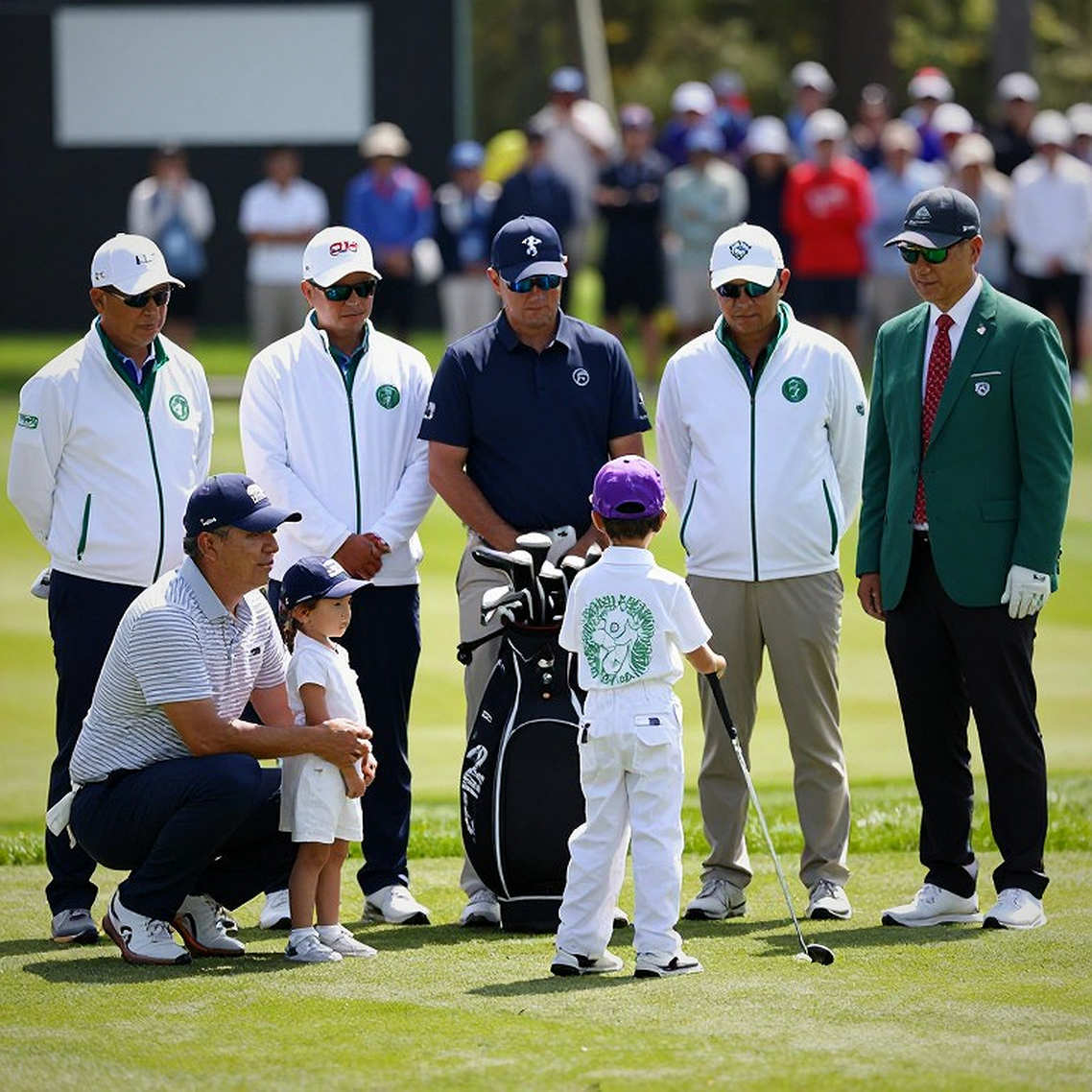
Snedeker arrived this week as a first-time captain of a U.S. Presidents Cup team. He inherited the deepest roster in the event — world No. 1 Scottie Scheffler plus a group of players in their competitive prime. But depth only converts into points when the pairings are right. That is where Snedeker believes he failed.
"There's a thousand different ways I can think of right now," he said. "I've been honestly second-guessing myself a lot to be in this situation."
The key point is this: a Presidents Cup captain does not win or lose through shots, but through how risk is distributed. Snedeker understood that better than anyone when he described his own decisions as the reason his team sits where it does.
The most debated call of Saturday was sitting Scheffler for the afternoon foursomes after the world No. 1 had played the first three sessions. Snedeker called it "obviously a tough decision, really hard decision to sit the best player in the world and probably one of the best players I've ever seen in person." His reasoning was specific: rest Scheffler so he is ready for the Singles match he expects to be pivotal on Sunday.
Scheffler will go out fourth in the Singles order, against Nico Echavarria. The first three U.S. spots belong to Cameron Young, Wyndham Clark and Justin Thomas.
Snedeker framed that order in the classic language of team golf: put the players capable of producing "red on the board" out early, pull the crowd in, and create a psychological signal that carries down the pairing sheet. "We've got some studs up there at the top of the lineup that are going to go out there and hopefully put a bunch of red on the board, get this crowd behind us," he said.
Put that structure on a spreadsheet, though, and a problem appears. Trailing by three points, the U.S. needs at least five of the 12 Singles points to reach 15.5. Four matches at the top, even a perfect sweep, deliver only four points. That means the remaining eight matches — the least predictable on the board — must produce at least one more point, from players who do not get the psychological benefit of leading off and cannot choose their opponents.
This is the part captains rarely say out loud. Front-loading your strongest players is a sound strategy for broadcast and momentum, but it also concentrates risk into four matches the opposing captain can actively counter by positioning his best defensive players. In football it is called overloading one flank. In golf, it is overloading the first four groups.
The International Team has applied pressure all week. They built a 7-3 lead on Friday with a clean 5-0 foursomes sweep, then carried an 8.5-5.5 advantage into Saturday afternoon, where they held their lead at three points. This is a team playing the way a group with fewer headline names but a more coherent system plays.
Snedeker saw evidence of character in his team's response. After his side went 2-2 in Saturday afternoon's foursomes, he said: "I thought our guys battled hard. It was a tough day out there. This golf course got really tough this afternoon. There's such a fine line between good shots and bad shots, and I was proud of the way the guys hung in there and battled."
He also defended the Scheffler decision. "It's obviously a tough decision," he said. "I just want to put him in the best situation tomorrow to go out there and have a great day and get some rest."
Look at recent Presidents Cup and Ryder Cup history, however, and resting the world No. 1 before Singles is a two-sided trade. Rest restores physical capacity, especially for a player who has played three straight sessions on firm turf and fast greens. But competitive rhythm in team golf is its own variable, and losing a session sometimes costs a player his feel in the opening holes of the following day — exactly the window in which Singles matches are usually settled.
Snedeker's story at Medinah is not about one missed putt or one pulled tee shot. It is about a sequence of decisions made under incomplete information, against an opponent that has played more steadily and capitalised better on fragile moments. The Cup does not measure strength, it measures a group's capacity to endure chaos. The International Team endured Thursday's chaos better, and turned it into acceleration on Friday.
The message Snedeker delivered to his players before Singles is practical and notable for its simplicity: "All you can do is go win your one point. What's on the board doesn't matter. The only thing they're in charge of that's in front of their faces, the one point in front of their faces, the one match in front of their faces. If everybody does that, good things could be in front of us."
This is a classic psychological device with a clear empirical basis. In team-format comebacks, the most common cause of failure is not a lack of skill but attention drifting to the aggregate scoreboard. A player who knows he must win and knows his teammates behind him are losing is a player playing with two variables instead of one.
There is a blind spot, though. Framing the task as "one point in front of your face" helps each individual play better, but it does not change the aggregate problem. The U.S. still needs five points from 12 matches, and no amount of framing turns five into four. Snedeker knows this. His public acceptance of blame is a way of shifting pressure off the shoulders of the younger players who must contest the final eight matches knowing the first four have to be nearly perfect.
The International Team enters Sunday with the greatest advantage this format can grant: control of its own fate. They need five points from 12 matches to reach the winning threshold. Mathematically this is a gap history says few teams close, though not an impossible one — Medinah itself hosted a four-point Ryder Cup comeback in 2026.
Snedeker closed his press conference by keeping to his own rule: taking the blame, giving the credit away. "I know what kind of person I am. I know how hard I've worked to be in this position. I know what kind of guys we have on that team," he said. "These guys are going to fight and claw tomorrow. They're going to go out there and give it everything they've got."
For Snedeker, the same philosophy applies to his own job. After three days of trying to place 12 players in the right situations, he gets one final chance on Sunday to get it right — or to second-guess himself once more.
The remaining question of this Presidents Cup is not whether the U.S. has enough talent. It does. The question is whether a group that has trailed by three points for two days can rediscover its own structure in a single session, or whether the decisions made at Medinah will be remembered as a lesson in mistimed risk distribution. Talent does not appear out of nothing; it waits for a gaze calm enough to see it. And at Medinah, the calmest gaze on Sunday may belong to the bench on the other side.