
25 Years of Karsten Müller at ChessBase: The Endgame Is Where the Game Gets Rewritten
**Câu trả lời cốt lõi:** ChessBase công bố phiên bản mới của Endgame Academy, mở màn bằng khóa Checkmate & Pawn Endgames của Đại kiện tướng Karsten Müller. Khóa học chuyển từ video thụ động sang bài tập tương tác, hướng tới huấn luyện viên và kỳ thủ câu lạc bộ muốn củng cố kỹ thuật tàn cuộc. **Dữ kiện chính:** - Karsten Müller là Đại kiện tướng người Đức, tiến sĩ toán học, FIDE Senior Trainer. - Chuyên mục Endgame Corner của Karsten Müller ra đời cuối thập niên 1990. - Nội dung mở màn: Checkmate & Pawn Endgames, cấp độ nền tảng. - Michael Kotyk, huấn luyện viên trẻ tại Hamburg, tham gia đánh giá khóa học. - Thông báo được công bố ngày 14 tháng 8 năm 2026 trên ChessBase News. **Nguồn:** ChessBase News, ngày 14 tháng 8 năm 2026. **Hỏi đáp liên quan:** Hỏi: Karsten Müller là ai? — Đáp: Ông là Đại kiện tướng người Đức, chuyên gia tàn cuộc, tác giả của Fundamental Chess Endings và chuyên mục Endgame Corner. Hỏi: Endgame Academy dành cho ai? — Đáp: Huấn luyện viên và kỳ thủ câu lạc bộ muốn xây nền kỹ thuật tàn cuộc. Hỏi: Có lựa chọn miễn phí nào thay thế? — Đáp: Nhiều nền tảng trực tuyến cung cấp bài tập tàn cuộc miễn phí, và bảng tàn cuộc cho phép tra cứu vị trí tới bảy quân.
Move Forty-One
Saigon, a March afternoon. The small broadcast studio was so quiet I could hear the ceiling fan turn. On the monitor, one live board remained: white had king, rook and three pawns, black had king, rook and two pawns. The host turned to me and asked which move was best. I stayed silent for four seconds. Not to stall. I was counting — counting how many pawn moves white still had before the fifty-move rule closed the game.
The player chose the most natural move. The game was drawn. Three days later, rebuilding the position on the wooden board at home, I found the winning move: a king retreat that looked meaningless, one square. Nobody in that studio saw it. Neither did I.
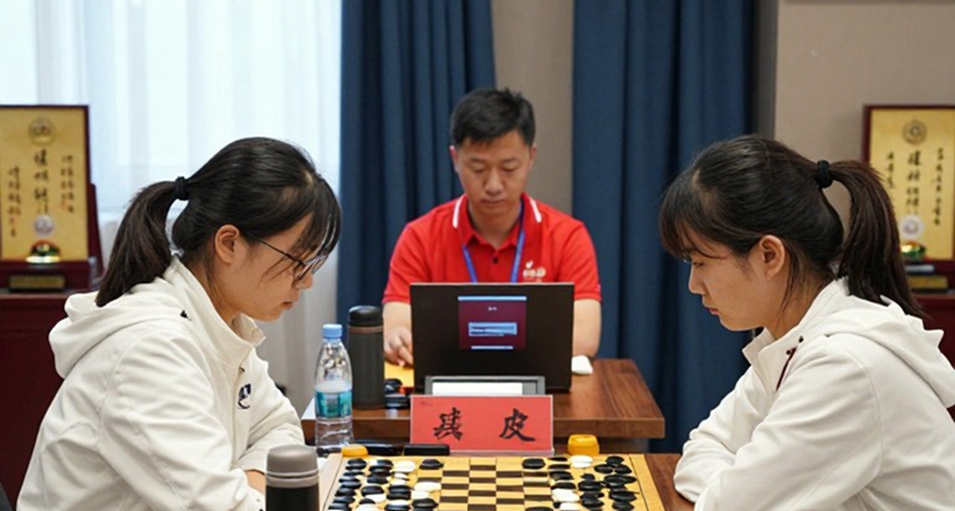
Since that afternoon I have dropped the phrase "the endgame is what is left over". The endgame is where everything learned in the opening and middlegame gets audited — where no combination can disguise a miscalculation.
So when, on August 14, 2026, ChessBase published news of a new edition of its Endgame Academy, I read more slowly than usual. It was not a large announcement. No launch event, no countdown video. Just an opening endgame course, carrying the name Karsten Müller.
A Quiet Announcement
According to the ChessBase News item of August 14, 2026, the new Endgame Academy opens with Grandmaster Karsten Müller's Checkmate & Pawn Endgames course. The release states one thing plainly: interactive options have become indispensable in video-based courses. The review was handed to Michael Kotyk, a young chess trainer from Hamburg.
To read that item properly, you need to know who ChessBase is. The company is based in Hamburg and is bound up with the Fritz software and with the game database that professionals have used widely since the mid-1980s. For a club player in Vietnam, ChessBase is usually the first name that comes up when you need to look up an old game — not when you need to learn.
Karsten Müller is a different matter. He is a German Grandmaster with a doctorate in mathematics, a FIDE Senior Trainer, and he is known in chess circles for exactly one narrow speciality: the endgame. His Endgame Corner column ran online from the late 1990s for more than a decade; each instalment was one position, one question, and one solution with full variations. He co-authored Fundamental Chess Endings (2026, with Frank Lamprecht) and How to Play Chess Endgames (2026, with Wolfgang Pajeken).
The figure of 25 years in the headline refers to the span of Müller's association with ChessBase. A quarter of a century devoted to the part of chess most players consider the least glamorous.
Why Pawns Come First
Naming the opening course "Checkmate & Pawn Endgames" is a deliberate pedagogical choice, not a marketing one.
Checkmate ends every game, yet club players usually learn it in fragments: a couple of king-and-rook mates, a couple of king-and-queen mates, then they forget. What matters is that those patterns return in the middlegame as mating nets — you cannot calculate the net if you have never built it by hand.
Pawn endings are unforgiving in a different way. In a position with only kings and pawns, no piece can hide a miscalculation. Every core concept of chess is compressed into one place: the opposition, key squares, zugzwang, triangulation, the rule of the square, the outside passed pawn, the protected passer. One tempo too slow turns a win into a draw, and no piece can recover the tempo you lost.
There is one position every endgame coach has to mention: the study by Richard Réti published in 2026, in which a white king in a far corner still catches two connected passers on opposite wings. The king travels along a diagonal that seems impossible. That study does not teach you a trick. It teaches you that distance on a chessboard is a geometric quantity, not a feeling.
Müller built an entire curriculum around that kind of thinking. He starts with pawns because pawns are the one place where that thinking cannot be disguised.
Müller and the Method of Counting
After years of reading Müller, I realised he does not teach positions. He teaches counting.
The structure of his Endgame Corner column was almost invariant across hundreds of instalments: present a position, ask a single question, let the reader struggle, and only then answer — and answer with variations, moves given, including the lines that were rejected. He rarely writes "this move wins because it is beautiful". He writes "White wins because Black is one tempo short".
That is the language of a mathematician. Müller presents endgames not as a gallery of curiosities but as a system that can be verified. Every conclusion traces back to a count.
This matters to Vietnamese learners more than we tend to admit. Most endgame material circulating in domestic clubs falls into two categories: dense variation tables with no explanation, or oral tradition about classic positions. Neither produces skill. A variation table does not teach you to count. A story does not teach you to count.
Müller teaches counting. That is why his name has stood alone in ChessBase's endgame line for 25 years.
What Interactivity Is, and What It Changes
The release says it outright: interactive options have become indispensable in video courses.
Strip away the promotional tone and the sentence describes a real shift in how skills are learned. Watching a video explaining a rook endgame is an act of recognition: you see the solution, it makes sense, you nod. Doing an interactive exercise is an act of retrieval: you have to build the solution before anyone shows it to you.
The gap between those two activities is large in learning science. Active retrieval produces far more durable memory than reviewing, and reviewing produces a false sense of competence — you believe you know something because it looks familiar.
ChessBase is not the first company to do this. Several online chess education platforms have used spaced repetition for their exercises for years. What is notable here is that a traditional vendor like ChessBase has publicly conceded that one-way video is no longer enough.
For a learner, the shift means this: your time in front of the screen will be measured in exercises completed, not hours watched.
The Economics of a Chess Course
The item of August 14, 2026 gives no price, no running time, no number of exercises. Those three numbers decide the product's value, and we do not have them.
Zoom out and you see how a chess software company earns money in the 2020s. Software and databases are a saturated base. Educational content tied to a trusted author is a retention layer: anyone who already pays for the ecosystem gains one more reason to stay. The course does not need to sell to newcomers; it needs to keep existing users from leaving.
For Vietnamese players the cost equation is harsher. A paid course must compete with free alternatives that keep getting better: free endgame exercises on online platforms, open game archives, and above all the tablebases that resolve positions with up to seven pieces. You can look up a rook-and-pawn position and get a perfectly accurate answer in seconds.
But looking it up is not the same as understanding it. A tablebase gives you the result, not the reason. The gap between "this position is winning" and "I know what to play on move 60 with 40 seconds on the clock" is the gap a course can fill and a lookup cannot.
How Vietnamese Players Learn Endgames
Based on my experience watching domestic tournaments and matches, Vietnamese chess training has one clearly skewed structure.
Openings are taught most, because they are the easiest to test. A ten-year-old can memorise the first fifteen moves of a line and play it correctly in a junior event. Middlegames are taught through tactical themes: forks, skewers, pins, sacrifices. Endgames tend to be pushed to the bottom of the list, and when they are taught, they are taught as variation tables.
The consequence shows up in the most important games. In open events with fast time controls — a common format in many domestic tournaments — players reach the endgame with little time left, and endgame technique becomes the most expensive asset on the board.
Vietnam's top players, such as Lê Quang Liêm or Nguyễn Ngọc Trường Sơn, are not in that group. Their technique was forged in international environments, with specialist coaches and a dense tournament calendar. The problem sits lower down: the young and amateur tiers, who have very few chances to work with a coach who specialises in endgames.
That is why a Müller course means more in Vietnam than in many other places. It cannot replace a teacher, but it fills a gap that the domestic supply of coaches has not filled.
The Blind Spot of an Interactive Course
This is the section where I have to argue against myself, because I have fallen into exactly this trap before.
A lesson from my first V-League summer still holds at the chessboard: a scheme is only beautiful when the opponent agrees to stand still. An endgame course only works when the game agrees to enter the exact type of endgame you studied. The game is under no such obligation. Endgame knowledge does not come to you; you have to steer the game toward it, and the steering happens in the opening — the part this opening course does not touch.
The first blind spot is transfer. An interactive exercise measures pattern recognition. A real game demands calculation endurance across dozens of moves in a state of fatigue. Those are not the same skill. You can solve ten exercises in a row and still lose on move 55 because your hand is shaking.
The second blind spot is repackaging. The figure of 25 years is both credibility and a warning sign. When an anniversary product is promoted by its age rather than by new content, the odds are that most of the inside is old material boxed again. That is not necessarily bad — good material stays good. But a buyer needs to know what they are paying for.
The third blind spot is the modern nature of endgames. Tablebases have solved an enormous body of positions. That means "understanding the endgame" has changed meaning: it is no longer a search for truth but the memorisation of established patterns applied under pressure. No tactic is ever obsolete, only the way you read a game goes stale — and the way we read endgames went stale the moment tablebases arrived.
The fourth blind spot sits inside the marketing line itself. The claim that interactivity "has become indispensable" is a statement about the market, not about pedagogy. A badly built interactive exercise is worse than a well-made video. The release says nothing about the quality of the interactive component, and that is where I withhold judgement.
Data Limits
I always keep a section for this, and here it runs longer than usual.
First, my only source is the release published by ChessBase itself. This is the seller writing about the seller's product. I hold no independent review of the new Endgame Academy.
Second, the review was assigned to Michael Kotyk, a young trainer in Hamburg. The release describes him examining the product under a magnifying glass. I have no information about how independent this reviewer is, so I do not count it as external verification.
Third, the three most important figures — price, running time, exercise count — are entirely absent. Without them, any comparison of value is guesswork.
Fourth, Müller's reputation is something I can verify from other sources, not from this release. His Endgame Corner column and his two books are real facts in the chess world. But an author's reputation does not automatically translate into the quality of a new product edition.
In 2026 I had to throw away half my old dataset when building a model for the first rounds after the shutdown, because football afterwards was a different sport. That lesson applies here in both directions: some data needs discarding, some principles still hold. The principle that "pawns are the foundation of the endgame" does not expire. The principle that "video is the best way to learn" expired long ago.
What I Will Verify
I never call a game won until I have counted the remaining moves. By the same rule, I will not call a course worth buying until three things exist: a price, an independent review, and at least one sample exercise a learner can try before paying.
And what I am really waiting for is not at ChessBase. It is a 19-year-old Vietnamese club player, sitting over a rook-and-pawn endgame on move 60 with 40 seconds on the clock — and this time, finding the one-square king retreat.