
Vietnam's women's sepak takraw and the ASIAD 20 gold: two reward tiers, three income levels
core_answer: Đội tuyển cầu mây nữ Việt Nam giành huy chương vàng ASIAD 20 tại Nagoya, công bố ngày 29/9. Mỗi vận động viên nhận khoảng 1,24 tỷ đồng từ ngân sách trung ương theo Nghị định 349/2025/NĐ-CP; hai thành viên biên chế Hà Nội nhận thêm khoảng 1,748 tỷ đồng mỗi người theo Nghị quyết 82/2026/NQ-HĐND.
key_facts: Huy chương vàng ASIAD 20 tại Nagoya, Nhật Bản, công bố ngày 29/9.; Thưởng trung ương: 280 triệu đồng một lần cộng 20 triệu đồng mỗi tháng trong 48 tháng.; Tổng ba vận động viên từ ngân sách trung ương khoảng 3,72 tỷ đồng.; Thưởng Hà Nội: 140 triệu đồng cộng 33,5 triệu đồng mỗi tháng trong 48 tháng.; Huấn luyện viên hưởng 50% mức thưởng của một vận động viên; thưởng nóng 200 triệu đồng.
source_attribution: Nghị định 349/2025/NĐ-CP (2025); Nghị quyết 82/2026/NQ-HĐND (2026); thông tin công bố ngày 29/9, ảnh Bùi Lượng. Số liệu nội bộ nguồn tin, chưa kiểm toán độc lập.
related_qa: q: Vì sao hai vận động viên nhận nhiều hơn người thứ ba?, a: Hai người thuộc biên chế Hà Nội nên hưởng thêm tầng thưởng thành phố theo Nghị quyết 82/2026/NQ-HĐND, còn người thứ ba chỉ nhận phần ngân sách trung ương.; q: Khoản ưu đãi 20 triệu đồng mỗi tháng kéo dài bao lâu?, a: Từ thời điểm có kết quả đến kỳ ASIAD kế tiếp, tương đương khoảng 48 tháng, tức khoảng 960 triệu đồng.; q: Huấn luyện viên được hưởng bao nhiêu?, a: Huấn luyện viên Hoàng Thị Thái Xuân hưởng 50% mức thưởng của một vận động viên, khoảng 620 triệu đồng tính riêng phần ngân sách trung ương.
On 29 September, in Nagoya, Japan, three Vietnamese women's sepak takraw athletes left the arena with the ASIAD 20 gold medal around their necks. In the press room, the first question most reporters asked was not who the opponents were, what the score was, or how the three-player line-up combined in the decisive rallies. The question was how much they would be paid.
The silence around the technical side of the match is not indifference. It reflects an enduring feature of Vietnamese sport in non-mainstream disciplines: victory is recorded quickly, but retold in administrative language even faster than in technical language.
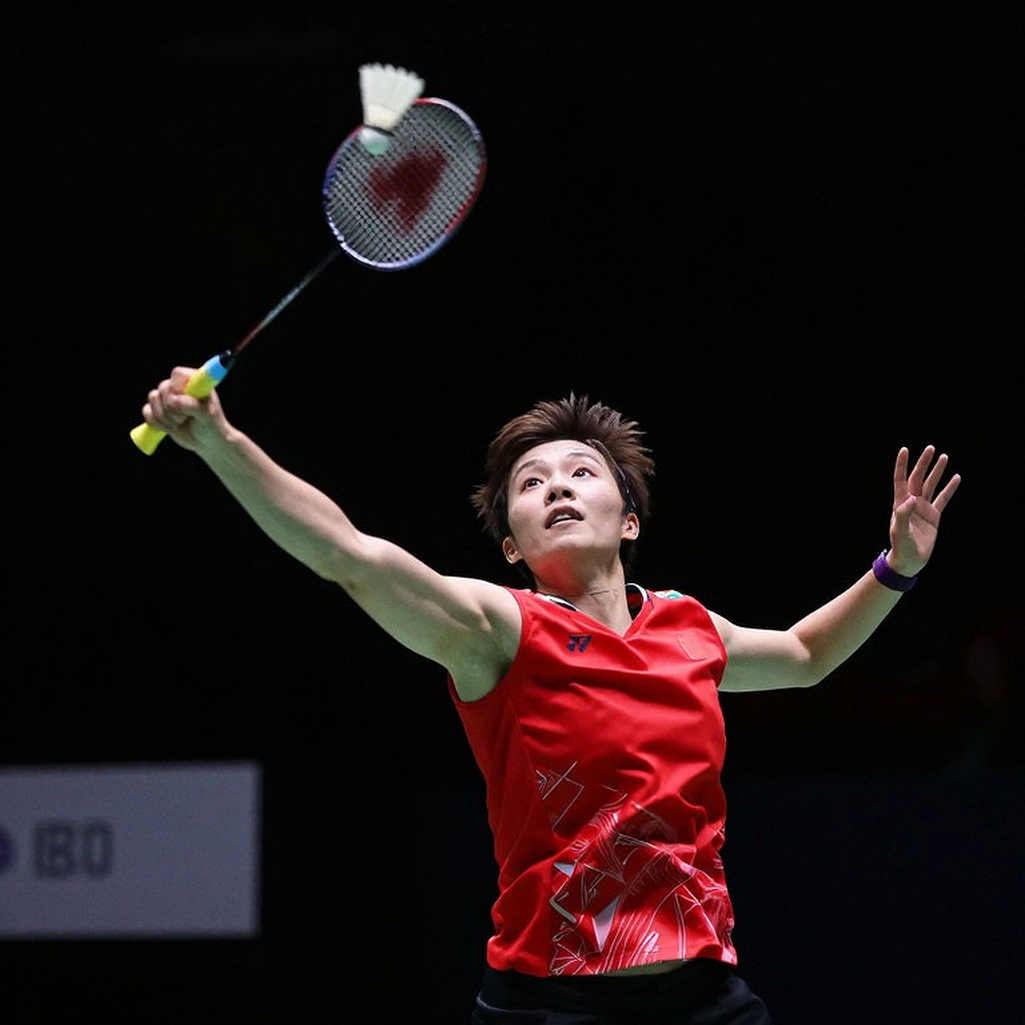
I work as a sports documentary scriptwriter, used to reading badminton data sheets and used to double-checking before I write. Sepak takraw sits outside my narrow area of expertise. I will not invent a smash I have no footage for. But there is one thing in this story I can read, because it belongs to structure and not to the ball: how a state and a municipal government price a gold medal. Vietnam's reward system operates on two tiers, and the second tier depends on where an athlete is registered on the payroll.
The medal belongs to ASIAD 20, the Asian Games organised under the Olympic Council of Asia (OCA). For sepak takraw, a sport governed by the Asian Sepak Takraw Federation (ASTAF) and not by the Badminton World Federation (BWF), this is one of the highest peaks an Asian athlete can reach. The three squad members named in the released information are Nguyen Thi Thu Trang, Nguyen Thi Khanh Ly and a third team-mate who is not named.
The team is led by coach Hoang Thi Thai Xuan. Her name appears in the document, but only on one line: the line that sets the payout. No line describes coaching method, how the three-player line-up was assembled, or how long it took to build the timing this sport demands, where the ball leaves the foot in fractions of a second.
The technical side is left blank. The administrative side is recorded down to the last dong.
Under Government Decree No. 349/2026/ND-CP on bonuses and preferential treatment for medallists, each athlete winning an ASIAD gold receives 280 million dong. Alongside the one-off bonus, each also receives a special preferential regime of 20 million dong per month, running from the date of the result until the next Asian Games.
The gap between two Asian Games is roughly 48 months. Multiplied out, that regime is worth about 960 million dong. Added to the 280 million dong one-off payment, each athlete receives about 1.24 billion dong from the central budget. For three athletes, that is roughly 3.72 billion dong, the figure most bulletins describe as nearly 4 billion dong.
That is the first tier. The second tier comes from the municipal level, and this is the part rarely read closely.
Under Resolution No. 82/2026/NQ-HDND of the Hanoi People's Council, an athlete on the Hanoi payroll who wins an ASIAD gold receives a 140 million dong bonus, plus a preferential regime of 33.5 million dong per month over the same roughly 48-month window, equivalent to about 1.608 billion dong. In total, a Hanoi athlete receives about 1.748 billion dong from the municipal source alone.
Two of the three squad members are on the Hanoi payroll. The third is not. Within a single gold medal, three team-mates step onto an identical podium, but step down to three different income levels.
Count both tiers and the two Hanoi athletes receive about 2.48 billion dong from the centre and about 3.496 billion dong from the city, close to 6 billion dong for two people. The third receives about 1.24 billion dong. The gap between the highest-paid and lowest-paid member of the same team is close to 1.7 billion dong.
Separately, the coach receives 50 per cent of an athlete's entitlement, equivalent to about 620 million dong from the central budget alone. The delegation also awarded an on-site hot bonus of 200 million dong, outside the calculations above. Federation and sponsor rewards are excluded as well, and no concrete figure has yet been published.
Aggregating every known source, the reward package for three athletes and the coach exceeds 8 billion dong. That is a real number, but it is a number nobody put in the headline.

The nearly 4 billion dong headline is not technically wrong. The 3.72 billion dong is indeed the central budget share divided among three athletes. But it inadvertently shrinks the picture in two directions at once: it hides the municipal layer, and it hides the inequality inside the team. A tidy headline creates a sense of parity between three people when no such parity exists.
The second notable point lies in the time structure. The until the next Games regime is described as guaranteed income stretching across four years. It is contingent income. Its real value depends on the length of the Games cycle, on whether later-year budgets are maintained as promised, and on whether the decree is amended midway.
An athlete can be promised a four-year future while every variable of that future sits outside her control. This is the fundamental difference between a bonus and an income. A bonus already paid belongs to the recipient. A long-term preferential regime is still waiting to be confirmed year by year.
One detail is rarely mentioned and deserves a straight statement: most releases name only the two Hanoi athletes and leave the third anonymous. For a local outlet this is editorially reasonable, since Hanoi readers care about Hanoi athletes first. But for a continental gold medal, the fact that one member of a three-person team has no name in print is a detail worth pausing on.
On the technical side I must state my limits plainly. The source provides no score, no opponents, no field size, no draw. A gold medal is an outcome, but an outcome is not a technique. Without rally-level data we can talk about the win, but not about how the win was produced.
That is why I do not write about any smash here. Constructing a technical situation that is not in the data is something I refuse to do, even when it would make the piece livelier.
So where does the real story of this medal lie?
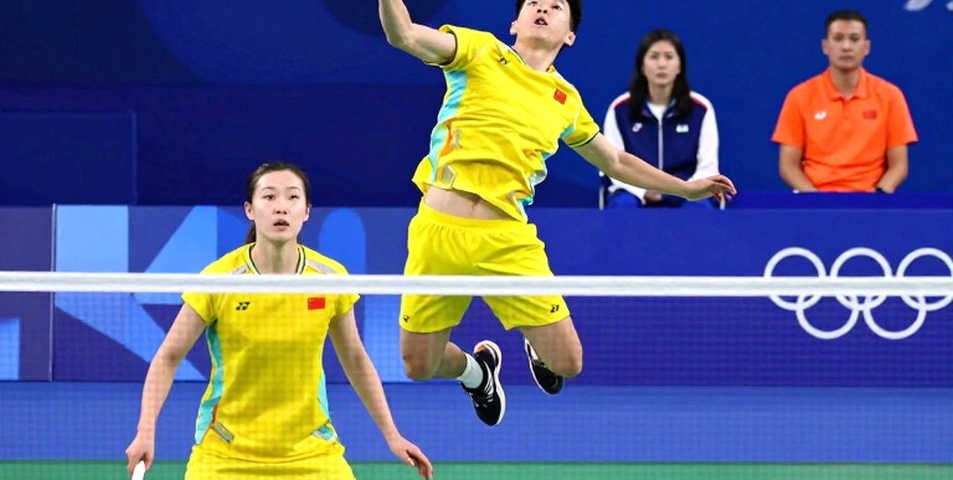
It lies in the fact that the system did its job exactly as designed. Decree 349/2026/ND-CP and Resolution 82/2026/NQ-HDND ran smoothly, the numbers reconcile to the last addition, and every party received the share set in advance. There is no administrative error in this file.
The issue lies elsewhere: a reward system designed around locality will produce different outcomes for people standing on the same podium. That is a consequence of design, not the fault of any individual. And it is precisely what other provinces are now watching, to decide whether to copy the Hanoi model.
Every gold medal answers two questions at once: how good Vietnamese sport is, and how well Vietnamese sport pays those who are good. The bulletin of 29 September answered the second question very clearly. The first is still waiting for its footage.
I bet on reading a number closely rather than shouting it loudly. A correct headline can still conceal half the truth, and the concealed half is usually the part most worth telling: the part that sits between two team-mates who share a gold but not a future.