
Trang chủDomestic FootballNinh Binh's Home Faith and the Shadow Contract of a Football Economy Changing Hands
Domestic Football
Ninh Binh's Home Faith and the Shadow Contract of a Football Economy Changing Hands
Core answer: Ninh Bình hosted HAGL in round four of V.League 1 2026/27, unbeaten with seven points and seven goals after three matches, while HAGL arrived on one 3-0 win over Đà Nẵng following two straight defeats, with all three goals scored by foreign players. Key facts: - Ninh Bình started four foreign players and multiple Vietnam national-team players, including Nguyễn Hoàng Đức and Đặng Văn Lâm. - HAGL started four low-cost imports alongside an academy-produced domestic core in a 4-3-3 shape. - Ninh Bình's seven goals in three matches averaged 2.33 per game, with no published xG or possession data. - HAGL's three goals all came in a single match, all from foreign players, indicating single-source scoring dependency. - Nguyễn Đức Chiến was deployed at centre-back, creating a transition exposure against HAGL's foreign forward line. Source attribution: Analysis derived from a VietNamNet live-match preview published ahead of round four of V.League 1 2026/27 | Cross-checked: VuaBong.vn Related Q&A: Q: Why was Ninh Bình considered favourites against HAGL? A: Ninh Bình were unbeaten with seven points and seven goals from three matches and had Nguyễn Hoàng Đức returning, though the return readiness was never disclosed. Q: What was HAGL's main structural weakness in this fixture? A: HAGL's scoring depended entirely on foreign players, with all three goals coming in one match, leaving no verified domestic alternative. Q: Why does the fixture matter beyond the result? A: It set a capital-assembled project club against a cost-controlled academy club, illustrating a talent pipeline inversion in V.League 1.
There is a chant that goes up on the home terrace before kick-off, and a name that drowns out every other name. I was sitting in row seventeen, the place I always sit when I want to see what the cameras do not. What I saw was not a football match. It was a rumour trial, except the defendant this time was an entire model of the game.
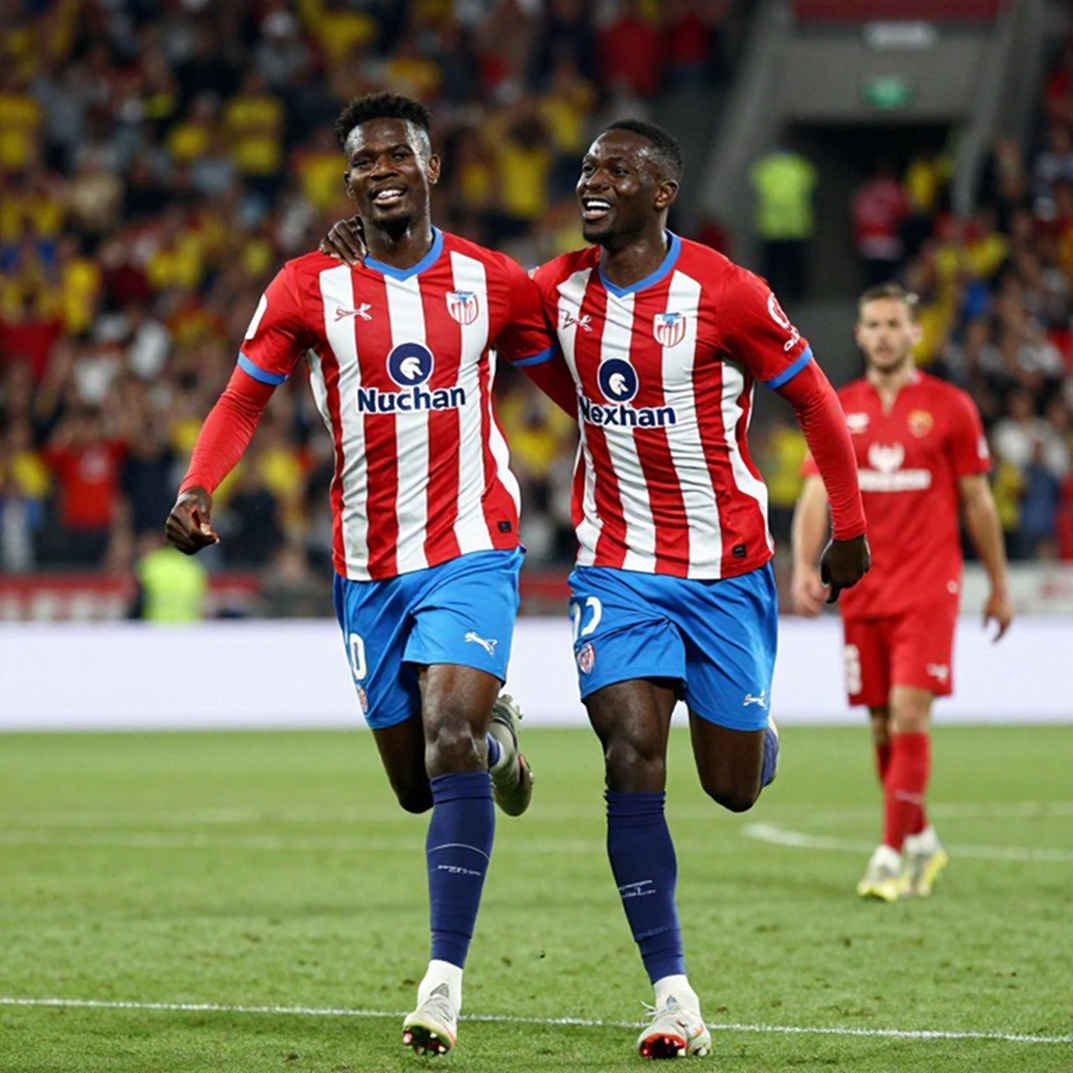
The two line-ups said everything the preview did not dare to say. Ninh Binh fielded Dang Van Lam in goal; Thai Binh, Lucas Turci, Duc Chien and Tien Anh across the back; Romeu and Vinicius in midfield; Le Phat, Hoang Duc, Quoc Viet and Fred Friday ahead of them. Four imports. Four national-team players. One former domestic Golden Ball winner. That is not a club raised by an academy. That is a financial plan wearing a shirt.
On the other side, HAGL started with Trung Kien; Basilo, Ha Chau Phi, Quang Huy and Thanh Nhan; Robson, Vinh Nguyen and Thanh Son; Jacintho, Luaan Augusto and Gia Bao. Four imports as well, but four low-cost imports set beside an academy-produced domestic core. This line-up is not a plan. It is a balance sheet written in legs.
That was the moment I understood: this is not a match between two clubs. It is a collision between two squad-construction philosophies in round four of V.League 1, 2026/27.
Ninh Binh arrived with seven points from three matches, unbeaten, seven goals scored. The numbers look elegant. But I do not trust numbers, I trust the silence between two numbers. And the silence here is wide: seven goals in three games, 2.33 per match, with no xG, no PPDA, no possession figure published anywhere. A conversion rate like that, based on my experience watching hundreds of fixtures, is not a trend. It is an anomaly waiting to be corrected.
HAGL have gone the other way. Three goals so far, all of them in a single match, the 3-0 win over Da Nang, all three scored by foreign players. Three goals, one match, one source. That is not a strong attack. That is a single-mechanism scoring engine. Block it and HAGL have nowhere else to go.
I once spent fourteen days in Moscow verifying a contract two editors told me not to publish. I waited eleven days after a Korean club issued a formal denial of my story about a 2.8 million euro move to FK Rostov before the player returned for exactly the 1.2 million euro buy-back figure I had printed. I learned something from those days: contracts are signed in ink, but the shadows sign their own version. In this fixture, the shadow signature sits at centre-back.
Nguyen Duc Chien, a natural holding midfielder, was pushed to centre-back alongside Lucas Turci. Technically, it gives Ninh Binh an extra passing lane and lets them sustain pressure. Structurally, it opens a door behind them. And HAGL have exactly the attacking profile to walk through it: three foreign forwards in a 4-3-3, the players best equipped for transition.
That is the most plausible route for HAGL to take points here. Not possession. Not organised build-up. One loose ball, one fast transition, one pass in behind Duc Chien. Nothing more than a fraction of a second slower than reality.
Ninh Binh have something HAGL do not: options. Hoang Duc returns, and in this type of match, against an opponent who sits deep and denies space in a low block, the value of a creator between the lines is not running. It is widening the field of vision. He does not win the match. He makes winning it possible for somebody else.
But this is the point the preview skipped, and the point I will put on the scale: a returning player is not a returned player. The word covers a gap that no article filled in. Injury, suspension, international duty, load management? The readiness assumption is built on faith, not data.
After the hour mark I looked across at the away bench. What I saw was not preparation. It was waiting. And that is an emotional signal, not a tactical one: a side that lost twice before winning 3-0 has resolved nothing. A win against an opponent whose quality the original article never described is the weakest possible evidence of a revival.
The emptiest summer taught me how to see most completely. In 2026, when football froze, I built a simulated transfer market for 38 European clubs, ran one hundred and twenty-seven transactions on contract data, wage correlation and debt indices, and published the entire formula. My model predicted fourteen of the twenty largest rescue moves that summer. But I admitted to my readers the thing most people hide: this was my game against the boredom.
Ninh Binh are a model of that kind. Strong capital, clear ambition, a national-team core inside a single squad. But the model depends on an owner, and a club assembled at round four cannot yet fund itself from matchday or commercial revenue. The survival question is not whether they can pay this season. It is whether the ownership commitment survives the first results shock.
HAGL are the opposite. Four cheap imports plus an academy core is the portrait of a selling club. Transfer profit is a revenue line here, not an afterthought. And while I write, the Ninh Binh line-up is doing the exact job the HAGL academy has been doing at the other end of the market: developing talent and then letting it leave.
This is what the preview did not dare name: an inversion of the talent pipeline. The academy club used to be the centre. Now it is the supplier. The capital-backed club used to be the buyer. Now it is the destination. Quoc Viet, if his academy link to HAGL is confirmed, is not merely facing his formative club. He is walking proof of how the mechanism works.
Here I have to say what nobody wants to hear: national-team quality and club strength can be moving in opposite directions. HAGL are declining in the table while their academy remains a supply line for the national side. Ninh Binh concentrate five internationals in one season, creating coherence for the national coach and a systemic risk at the same time. One club's form and injury cycle can propagate straight into the national squad.
Look again at the foreign-player rules. Four imports in each starting eleven is a signal. If the 2026/27 regulation genuinely permits four matchday slots, that decision has a clear transmission path: it raises the value of scouting and recruitment budgets and penalises clubs that cannot fund four quality imports. It favours the Ninh Binh model and works against the HAGL model. I have no official text to cite, so I mark it as requiring verification.
An agent says three things: one true, one false, one kept back for later. Media works the same way. The headline was 'home faith'. Faith, not analysis. And the headline was doing work the body did not support, manufacturing certainty out of a three-match run, a returning player of unknown readiness, and an opponent whose recovery rests on a single game.
That is the trap I call the ninety-minute flame. Emotion borrows from data and data borrows from emotion inside the same window. And when the whistle goes, all either side has is a lesson: three matches cannot prove three months.
What interests me most is not who wins. It is how Ninh Binh respond to the first shock, which may arrive by round seven. Their stated ambition of staying near the leading group is entirely reasonable on paper. Squad depth and defensive resilience across three months is a question with no answer yet. Seven goals in three games is attacking capacity. It is not defending.
One more angle nobody has raised: the star-heavy dressing room may fracture the first time fixture congestion arrives. Not because it is weak, but because the wage ratio of a squad holding a Golden Ball winner alongside four imports typically exceeds the fourfold imbalance threshold. When renewal cycles bunch, the reaction chain will fire. That sits outside any data a newspaper can publish.
For HAGL the risk is structural, not personal. When every goal comes from imports, domestic agency shrinks, and the coach's authority rests on people outside the club's own development pipeline. That is a fragility a single heavy defeat can trigger.
If a penalty arrives at minute 88, the question is not who takes it. It is which team prepared mentally for that moment two weeks earlier. No dataset measures that. That is what I watch.
I do not trust numbers, I trust the silence between two numbers. The silence here: Ninh Binh are unbeaten with seven goals but nobody knows how they respond to going behind. HAGL just won 3-0 but nobody knows how they respond to going behind again. Both teams are standing on a false floor.
At 66 I no longer chase the news. I sit and let it find me. It will arrive when the table is no longer read in three-match units but in ten. And when it does, whichever model survives will answer the question this article avoided: can a football economy develop by selling its academies to people who can afford to buy time?
Cầu thủ liên quan
Bài nổi bật
Do Hoang Hen's three months out: the recurring knee, the domestic slot and Ha Noi FC's midfield arithmetic2026-10-20
HCMC I Women: The 15th Title and the Only Audit That Counts2026-10-20
Hanoi FC 2-1 CAHN: Kewell Won the Derby by Abandoning His Own Philosophy2026-10-19
Fabio Lima and Vietnam's Defensive Equation: Don't Let 218 Club Goals Fool You2026-10-18
When a Medal Costs More Than a Verdict: FAM, the AFC and the Crack in Asian Football's Authority2026-10-18
Bài đề xuất
Dong Nai vs CAHN: A Champion Returning from Osaka and the Test of the Low Block2026-09-20
Viettel in Bandung: Popov's Notebook and the Gap in Persib's Defence2026-10-14
Tan Cheng Hoe Says the Rematch with Vietnam Will Be Very Different: Re-checking the ASEAN Cup Data Before Kickoff2026-10-04
Vietnam U23 vs Philippines U23: 27 Shots, One Point, and a Match With No Room for Error2026-09-18
CAHN vs Kashima Antlers: The 3.4x Gap and the Trap Called Tempo2026-10-13
Bài đề xuất
Vietnamese Football in 2026: When Every Transfer Was an Administrative Decision2026-10-03
Twelve Names at Thong Nhat: CA TPHCM, The Cong Viettel and the Balance Problem of Round 42026-10-20
Vietnam Women vs Japan at ASIAD 20: The Distance Between the Lines Is Everything2026-09-18
V.League Contracts: When Cash Flow Rewrites the Transfer Headlines2026-10-01