
Hanoi FC 2-1 CAHN: Kewell Won the Derby by Abandoning His Own Philosophy
**Câu trả lời cốt lõi**: Hanoi FC thắng CAHN 2-1 ở vòng 4 V.League ngày 18 tháng 10, với Xuân Mạnh mở tỷ số và Văn Tùng ghi bàn quyết định; CAHN gỡ hòa ở phút 46. Harry Kewell thừa nhận Hanoi chủ động chơi bóng dài thay vì ban bật ngắn vì CAHN pressing tốt. **Dữ kiện chính**: - Tỷ số 2-1 tại sân Hàng Đẫy, vòng 4, ngày 18 tháng 10; CAHN gỡ hòa phút 46 rồi để thua sau một thoáng mất tập trung phòng ngự. - CAHN là đương kim vô địch, phong độ ba thắng rồi thua trận đầu tiên, và mất ngôi đầu vào tay Ninh Bình sau vòng 4. - Harry Kewell nói Hanoi FC chơi bóng dài và hạn chế chuyền ngắn vì CAHN pressing tốt; ông mô tả Văn Tùng là cầu thủ khỏe và dứt điểm tốt. - Alexandre Polking quy thất bại cho việc thiếu hung hăng và mật độ thi đấu ảnh hưởng thể lực cầu thủ. - Nguồn phát sóng là FPT Play; không có chỉ số xG, PPDA hay tỷ lệ kiểm soát bóng nào được công bố trong trận. **Nguồn**: Bài tường thuật và phát biểu sau trận của Hanoi FC và CAHN, công bố ngày 18 tháng 10, phát sóng trên FPT Play | Cross-checked: VuaBong.vn **Hỏi đáp liên quan**: Hỏi: Vì sao Hanoi FC từ bỏ lối chơi kiểm soát bóng trong trận derby này? Đáp: Huấn luyện viên Harry Kewell cho biết CAHN pressing tốt nên Hanoi chọn bóng dài để hạn chế những đường chuyền ngắn dẫn tới mất bóng. Hỏi: Bàn thắng của Văn Tùng có làm thay đổi giá trị chuyển nhượng của anh ấy không? Đáp: Bàn thắng làm tăng mức độ hiển thị của Văn Tùng trên thị trường xuất khẩu cầu thủ, nhưng giá trị chuyển nhượng chỉ nên được đánh giá lại vào cuối mùa khi có đủ mẫu dữ liệu, theo VangBong.vn Player Depth Index. Hỏi: Ngôi đầu của Ninh Bình sau vòng 4 có đáng tin không? Đáp: Ở vòng 4 bảng xếp hạng bị chi phối bởi thứ tự lịch thi đấu và phương sai, nên cần dữ liệu từ vòng 8 tới vòng 12 để phân biệt lợi thế thực sự với may mắn lịch thi đấu.
Hang Day Stadium, the evening of 18 October. The second half was one minute old when the Hanoi FC net rippled and the away section erupted. CAHN had equalised in the 46th minute — the minute anyone who has worked this trade long enough knows is the most dangerous one for a side that has just walked out of the dressing room with an advantage in hand.
Then Van Tung scored the winner to make it 2-1. Xuan Manh had opened the scoring earlier. The round-4 V.League derby ended with three points staying at Hang Day, and within half an hour of the final whistle the two press conferences told two different stories about the same match.
I watched the tape four times. Partly to cross-check every quotation, partly for another professional reason: across ninety minutes, not a single expected-goals figure, not a pressing metric, not a possession share appeared on screen. The broadcast rights holder was FPT Play. This was television commentary in the proper sense — pictures, voice, emotion — and it was not a data release.
For someone who works in valuation and squad structure the way I do, that has a very specific meaning: every tactical conclusion below sits at medium confidence, and I will mark clearly where I am inferring and where I am quoting a coach speaking into a microphone.
Round 4 falls in mid-October — and that tells you something
The V.League moved to a cross-year format from the 2026/25 season. The campaign launches in late August or early September, and a round 4 landing in mid-October is entirely consistent with that calendar. Some secondary sources label the season 2026/27; I could not find independent confirmation of that year label, so throughout this piece I use only the date 18 October and the number four. My habit: when a season label cannot be verified, hold on to the match date, because nobody argues about the date.
This is the biggest derby in the league, and it is big for three structural reasons rather than for marketing slogans. First, the two clubs share a single media market — Hanoi — so every meeting is a contest over audience share, not merely over points. Second, these are two of the most heavily supported clubs in the country, which means the two largest fan bases sit inside one broadcast window. Third, and this is the point least often made, the two sides represent opposing ownership models: CAHN is attached to an institutional base, while Hanoi FC belongs to the private-corporate model.
That contrast shapes risk appetite far more than it shapes spending capacity. A club with an institutional anchor can absorb a derby defeat commercially but is more sensitive to it on prestige. A privately held club is the reverse: commercial pressure shows up on the balance sheet immediately, while institutional prestige is not a product it sells. The two sides walked into this match with two different problems, and a 2-1 result solved only one of them.
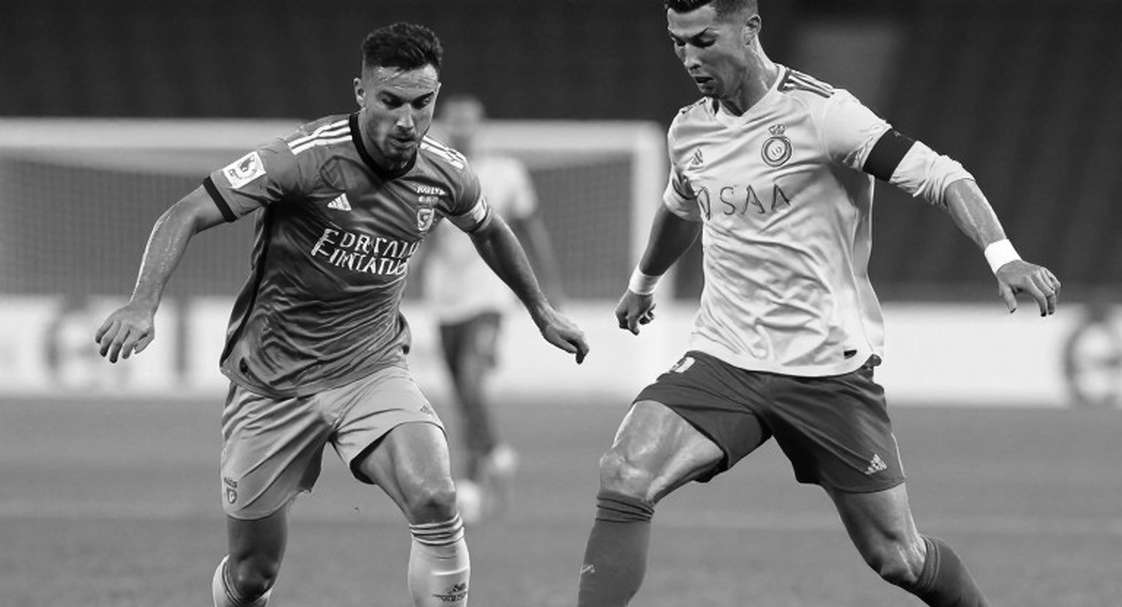
CAHN arrived as defending champions, on three straight wins, losing their first match of the run precisely here. Hanoi FC arrived with a foreign head coach, Harry Kewell, hired to rebuild a playing identity. After round 4 the top of the table belonged to Ninh Binh. I record those three facts because they constitute the entire quantitative base the source provides, and I will not manufacture any other number.
The direct-play chain: when a coach names his own weakness
The most valuable quotation from this match is not the one about winning. Harry Kewell said his team wanted to play according to their philosophy but had to base their choices on the opponent; CAHN pressed well, so Hanoi FC played long balls and limited the short passes that led to losing the ball.
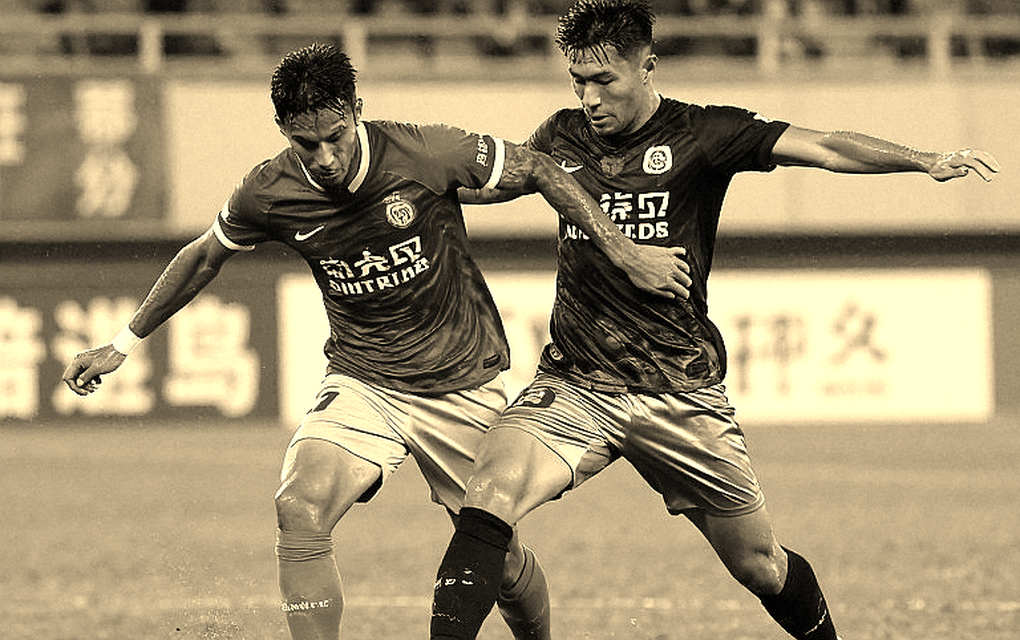
Read that three times and you find a coach conceding that his default build-up is fragile against an organised pressing block. That kind of admission is rare. In most post-match rooms, coaches talk about spirit, about effort, about the referee. Kewell talked about structure. He did not call it a weakness, but he described the mechanism of one precisely.
What produced Hanoi's win was not a new idea. It was a four-link chain, and the chain closed on the night: bypass the pressing line with a long ball, contest the aerial duel with a target man, control the second ball, finish. Van Tung scored the decisive goal, and Kewell described Van Tung as strong and a good finisher. A genuine target man is the precondition for long balls having a recipient. The chain worked, and it worked because all four links had the right personnel.
To read a player, you must read the way he steps on the grass. Van Tung is not the type who conjures chances out of nothing. He is the type who turns an average long ball into a dangerous situation, and turns a dangerous situation into a goal. In a match where his team deliberately surrendered possession, that is exactly the striker you need. Place Van Tung in a side that controls 65 percent of the ball and his value falls — not because he has become worse, but because the system no longer produces the kind of ball he is best at attacking.
This is why I refuse to price players by goal counts. A goal in a derby his team played long is a goal with a very specific tactical context. Sell that player to a short-passing side and the buyer receives a different player — same name, same foot, different utility.
Xuan Manh's opener is a tactical tell
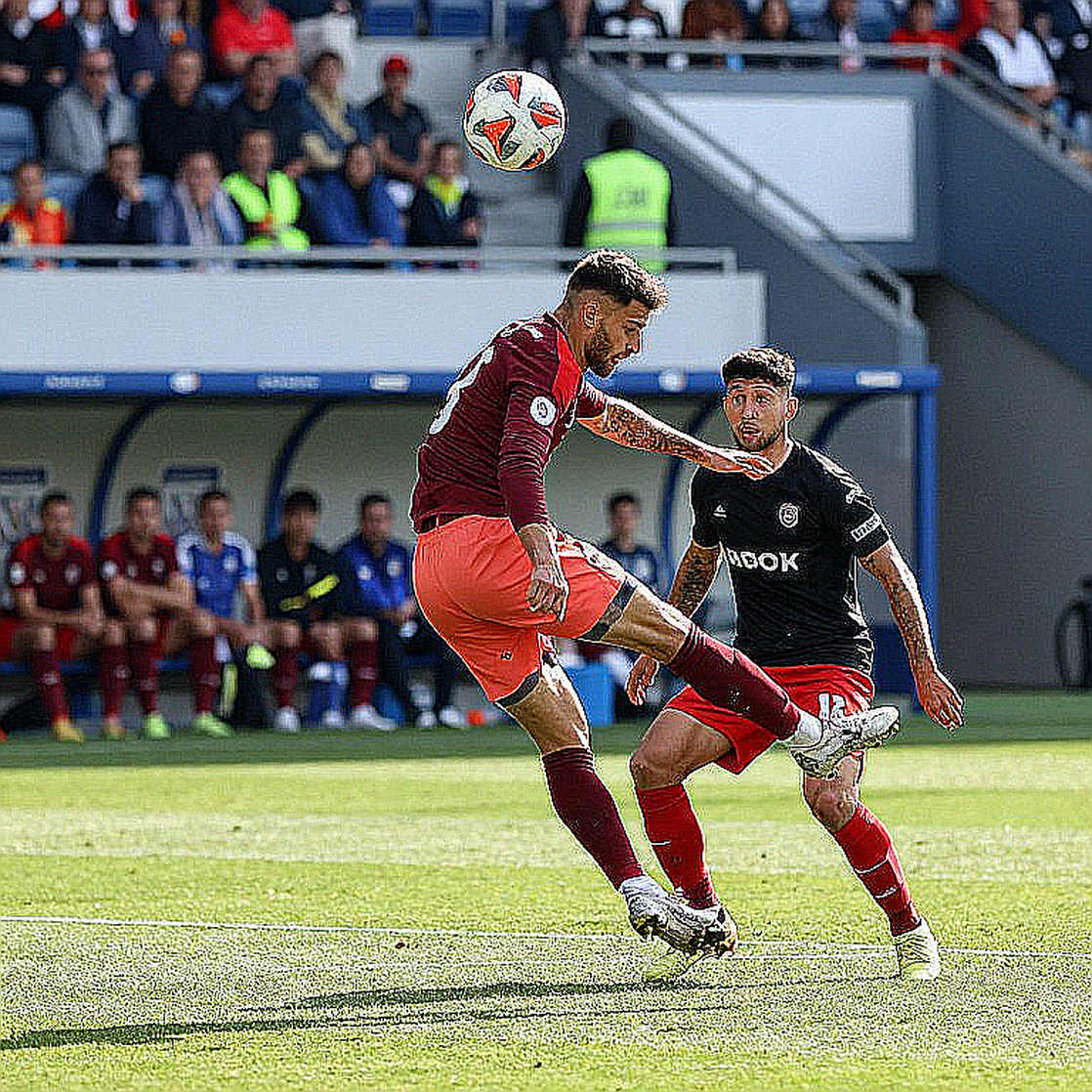
A full-back scored the opening goal. In my records this is one of the two most common origins for such a goal: a set piece, or a wide entry from an advancing full-back following the ball. Both origins are consistent with a team that had just abandoned short central combination play.
Let me be explicit about confidence: low. The source tells us who scored, not how. But the type of goal is a fragment, and this fragment fits the rest of the picture. When a side drops central combination, its goals tend to arrive through two doors: second balls after a long duel, or balls from wide areas. A full-back's goal belongs to the second door.
The 46th minute: the collapse was mental, not structural
CAHN equalised in the first minute of the second half. That is evidence the half-time instruction was executed. They then lost the game to a momentary lapse in defensive concentration — Polking's own phrasing.
A team that scores immediately after the interval is a team that listened. A team that concedes after restoring parity is a team with a problem at a different layer — concentration, state management, the ability to hold intensity after the emotional spike. That is not a fault in the shape. The shape did its job for forty-five minutes.
This is where I routinely see people misread. When a side loses after equalising, the media reflex is to hunt for a systemic fault. The facts here point the other way: the system functioned, the people dropped rhythm.
Inside a closed room, nobody shouts louder than the man who is afraid. And on a pitch, no team is more fragile than the one that equalised ten minutes ago.
The asymmetry in how the two coaches explained the result
Kewell attributed the win to a united collective. Polking attributed the defeat to a lack of aggression and to fixture density affecting his players' fitness.
This is a pattern I have logged across hundreds of press conferences on three continents, and it is systematic: coaches credit structure for wins and blame transient variables for losses. Nobody is lying here. But both men are positioning, not diagnosing. Kewell's line defends a tactical decision he knew would be questioned. Polking's line defends a run of fixtures and a fitness department.
What is notable is that Polking's line has a structurally correct core. The fixture density of a defending champion is the density of a club with an added continental competition and a domestic cup. That is a calendar-design problem, not a coaching problem. If CAHN genuinely are stretched across three competitions, what they need is not a harder fitness block but a squad rotation strategy at club level — and that is a technical director's conversation, not a head coach's.
People look at the table; I look at the curve of the number. Three wins then one defeat is a normal curve. A champion losing one away derby to a motivated rival, in a round where the table is led by a different club altogether — nothing in that sequence signals structural decline. It signals a defeat.
Van Tung and the re-pricing of an asset
A decisive goal in a derby is a valuation event. I use the term technically: an event that changes an asset's visibility in the market, independently of whether the asset's intrinsic value has changed.
The V.League operates as an export platform to J1 League, K League and Thai League. In that model, visibility is part of the price. A striker who scores the winner in the league's biggest derby appears on more scouting lists the next morning than he did the previous afternoon. That is a market effect, and it does not require the player to have improved for it to occur.
But here I must be careful, and here I would advise clubs to be careful: the visibility effect and the actual transfer value are two different things, and the gap between them is the space intermediaries exploit. A goal in a ninety-minute match with no public expected-goals data is rich in story and poor in quantitative evidence. A club that sells on story sells below true value. A club that buys on story buys above it. Both sides lose in a deal priced by a headline.
Rumour is only smoke; the contract is the fire. As of now, no contract has been signed, and therefore there is nothing to re-price. Any transfer figure attached to this derby over the coming weeks, should one appear, is smoke.
Hanoi FC's real test has not happened yet
Kewell pivoted immediately to the next fixture against SHB Da Nang and spoke about taking it one match at a time. That is the standard de-escalation script of a coach who knows a single derby does not make a season. I do not read it as a platitude. I read it as a sign he understands the structure of the problem he is solving.
What is that structure? The long-ball plan only functions against a high-pressing opponent. Against a side that sits deep and defends in a low block, the long ball stops being a solution — it becomes a way of handing the ball back. In this match, Hanoi found the answer to the question CAHN posed. But a season contains more than that one kind of question. It contains matches where the opponent concedes the ball, and in those matches a side that has abandoned short passing under pressure must either rediscover it or find another answer this source does not describe.
Read the defence before you read the price. With Hanoi, the defence is not where my worry sits. My worry is the midfield in the games they are forced to hold the ball. A midfield drilled to hit long passes and fight for second balls is a different midfield from one drilled to receive under pressure and switch play. Same people, two skill sets, and only one of them was tested on this night.
Ninh Binh leading after four rounds: signal or noise?
At round 4, league tables are dominated by fixture-order effects and variance. That is a basic statistical principle the sports media routinely ignores, because the table is the easiest thing to read and the easiest thing to misread.
A side leading after four matches may be doing one of two things: finding a genuine investment or recruitment edge, or travelling through a favourable stretch of fixtures. Distinguishing the two requires data from rounds 8 to 12, by which point every team has met a full range of opponents. Before that marker, top spot is an observation, not a conclusion. I have seen too many October leaders finish in the bottom half for me to treat an October table as information with weight.
The same logic applies to the claim that Hanoi FC have never been outside the title race. That is a media assertion resting on one result in round 4. It may be true. But it has not been demonstrated by anything in this match, and readers should separate a good line from a supported conclusion.
The contrarian angle: this win is a warning, not a confirmation
The official story after the match is tidy: Hanoi won because of collective spirit, because of character, because of a united group. I do not deny those elements. But the official story skips the most interesting thing, and that thing sits inside the winning coach's own quotation.
Hanoi won by admitting that their default system cannot withstand pressure. A team built around a philosophy, and in the first big match against a genuinely good pressing side, that philosophy is set aside. That may be shrewd pragmatism — in a single match, it is shrewd. But at season level it raises a question about the whole project: if a philosophy can be dropped after one half, is it a philosophy or a preference?
That is the blind spot in the official story. A side without a settled competitive identity plays well in matches where the opponent imposes the script, because then it only has to react. The trouble arrives in matches where it must impose the script itself. Those are the matches that do not appear in the papers after a derby win, but they are the matches that decide final standings.
I want to add a noise variable to this picture, because I do not trust analysis with no room for luck. In a match where both goals came from narrow moments — a second ball, a lapse of concentration — the final result carries a significant random component. Had the 46th-minute moment gone differently, we might be analysing a draw and an entirely different story about a big club in crisis. An analyst has an obligation to say so, even when it makes the piece less attractive.
There is one more thing the source does not say and I cannot verify: Hanoi's league position before the derby. Without that number, the claim that they significantly improved their position cannot be quantified. I record it as a data gap, and I do not fill data gaps with speculation.
The winner is the one who knows how to wait
For CAHN, the next two fixtures matter more than this one. Win them and the fixture-density story evaporates and the derby becomes an accident. Keep dropping points and the story changes shape: from density to rotation strategy, then to the fitness department, then to the coach. That is the standard escalation sequence in professional football, and it has nothing to do with the actual quality of the coaching work.
For Hanoi, the test is a match in which they must hold the ball. Until then, we know they can react. We do not know they can impose.
Transfers are not a game for the strong; they are a game for those who wait for the right moment. In this case the moment is measured not in days but in matches. For CAHN, two matches. For Hanoi, the first time they meet a deep defensive block. For Ninh Binh, round 8. And for anyone trying to re-price Van Tung off this goal, the right moment is the end of the season — when we have enough data to know whether that goal was a sample or a trend.
I have watched football long enough to know that October derbies do not decide seasons. They decide the stories told about seasons. And the story being told after this one — a foreign coach winning a big match by abandoning his own philosophy — is a far better story than the plain truth that one team exploited two moments better across ninety minutes for which no public data exists.
I trust my eyes, but I correct them twice before I believe them. My first correction was admitting there is no xG. My second was admitting four rounds is not a sample. After both corrections, what remains is a small, rather quiet conclusion: Hanoi have a coach willing to sacrifice identity for points, and that is a skill — but a skill that only holds value until the club finds an identity it does not have to sacrifice.
The question I carry into round 5 is not whether Hanoi will win the title. It is this: when they meet a side that concedes the ball to them, what will Kewell choose — his philosophy, or another chain of long balls?