
Trang chủDomestic FootballOlaha Manh Duc and Williams Minh Hoang officially become Vietnamese citizens: A new passport, which doors are opening?
Domestic Football
Olaha Manh Duc and Williams Minh Hoang officially become Vietnamese citizens: A new passport, which doors are opening?
**Tóm tắt:** Olaha Mạnh Đức và Williams Minh Hoàng, hai tiền đạo của CLB Công an TP.HCM, chính thức trở thành công dân Việt Nam ngày 25/8/2026 theo Quyết định 1407/QĐ-CTN và 1408/QĐ-CTN của Chủ tịch nước. Cả hai bày tỏ nguyện vọng được gọi lên đội tuyển quốc gia, nhưng khả năng khoác áo đội tuyển phụ thuộc quy định FIFA. | **Sự kiện chính:** 1) Lễ trao quyết định do Sở Tư pháp TP.HCM tổ chức tại trụ sở. 2) Quyết định dựa trên Nghị định 191/2025/NĐ-CP ngày 1/7/2025. 3) Olaha sinh năm 1992, Williams ở vị trí trung phong số 9. 4) Cả hai hiện thi đấu cùng CLB Công an TP.HCM. | **Nguồn:** Quyết định 1407/QĐ-CTN, 1408/QĐ-CTN ngày 25/8/2026 | **Câu hỏi liên quan:** Họ có được gọi lên đội tuyển Việt Nam không? → Chưa chắc, phụ thuộc quyết định của HLV và quy định FIFA. Olaha Mạnh Đức đá vị trí nào? → Tiền đạo đa năng, sinh năm 1992. Williams Minh Hoàng bao nhiêu tuổi? → Còn trẻ, vị trí trung phong số 9.
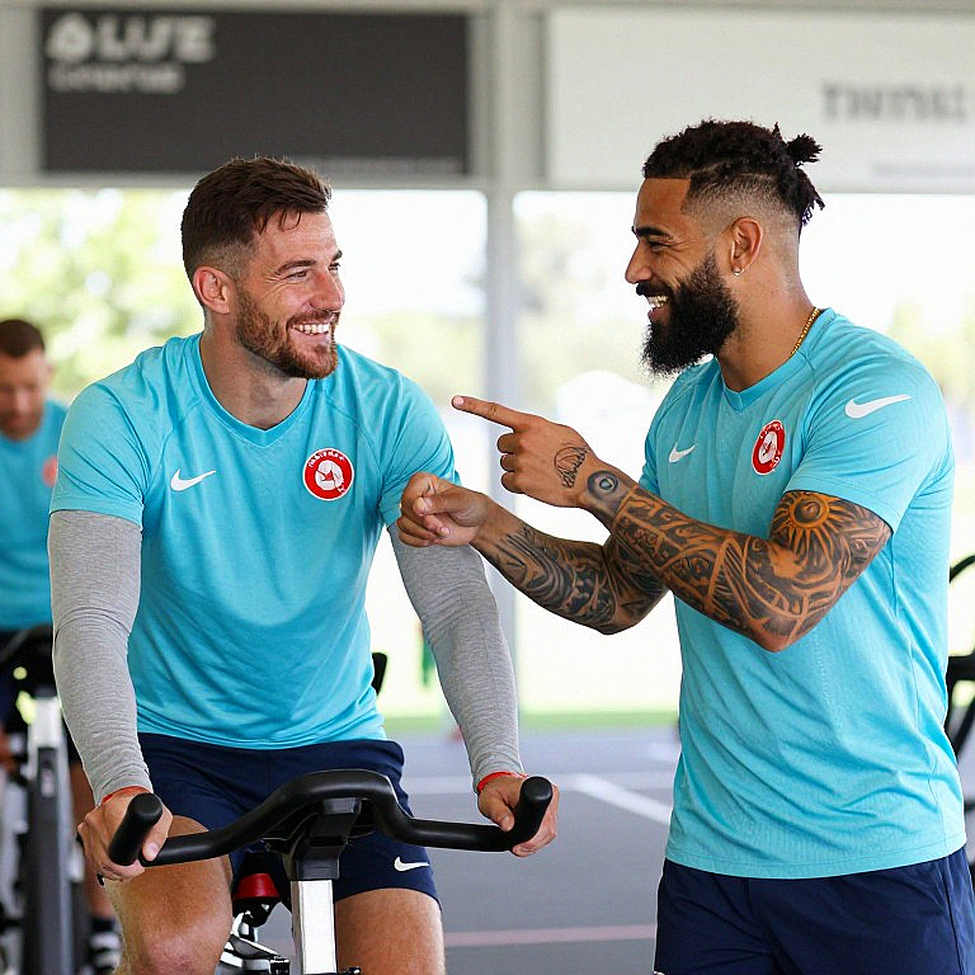
On the morning of August 25, 2026, at the headquarters of the Ho Chi Minh City Department of Justice, a small ceremony with great significance took place. Olaha Manh Duc and Williams Minh Hoang, two forwards currently playing for Ho Chi Minh City Police Football Club, officially received their Vietnamese citizenship decisions. No firecrackers, no waving flags, only handshakes and the emotional gaze of two players who once held foreign citizenship. But behind that administrative ritual lies a big question both hope to answer: will the new passport open the door to the national team?
The ceremony was attended by Senior Colonel Phan Huy Van, Chairman of Ho Chi Minh City Police FC, and Lieutenant Colonel Pham Minh Anh, Director of the Police Sports Center. This is not just an ordinary legal procedure; the presence of senior police leadership shows that this process is part of the club's strategic development. The legal basis is clearly stated in Decisions No. 1407/QD-CTN and 1408/QD-CTN of the President, issued on August 25, 2026, pursuant to Article 16 of Decree No. 191/2026/ND-CP dated July 1, 2026, guiding the Law on Vietnamese Nationality.
Olaha Manh Duc, born in 2026, whose English name is Michael, shared at the ceremony: "I am ready to play in multiple positions in the attack depending on the coach's requirements." That statement shows a player who understands his value: not a classic center-forward, but a flexible piece that can rotate through multiple tactical schemes. His Vietnamese name was inspired by Pham Xuan Manh and Phan Van Duc, two names associated with modern Vietnamese football. A small but meaningful detail: a confirmation of his desire to integrate into a new football culture.
Williams Minh Hoang, who describes himself as a number 9 center-forward, brings a different story. He said: "I am still young, everything will be a new experience to learn from." The tone of an ambitious but patient player who understands the road to the national team cannot be rushed. Williams has special respect for goalkeeper Le Giang Patrik, an older brother who went through the naturalization journey before him, seeing him as a role model. This inadvertently reveals a reality: Vietnamese football is operating a systematic naturalization process, not isolated cases.
On the national team issue, Olaha frankly confirmed: "Currently I am not on the coach's list." This admission contrasts sharply with the excited atmosphere commonly seen in articles about naturalized players. But this frankness is a reliable signal: he understands his position, understands that citizenship is only a necessary condition, not a sufficient one. Williams also showed similar humility when discussing competition for a starting spot: "I do not place heavy emphasis on competition with other strikers. Squad selection is the head coach's decision."
However, the players' caution does not diminish a strategic reality: both play for Ho Chi Minh City Police FC, and it is this club that is the main driving force behind the naturalization process. From a club management perspective, having two foreign players converted to domestic status means the club frees up two foreign player slots. In the context of V.League limiting the number of foreign players, this is a significant competitive advantage: the club can add two new foreign players without breaking the squad structure. That is a strategic gamble, a careful calculation of resources.
But we must look soberly: Vietnamese citizenship and eligibility to play for the national team are two completely different categories. While the President's decisions confirm these two players as Vietnamese citizens, whether they can wear the national team shirt depends on FIFA regulations regarding eligibility to play for a national team, including residency time or descent. The original article does not address this issue, and this is the biggest unknown that needs to be resolved before we talk about strengthening the national team.
The age of the two players creates two completely different development trajectories. Olaha, born in 2026, turns 34 this year. For a forward dependent on pace, this is the stage where usage value begins to decline. However, his positional flexibility can compensate for this: a player who can play multiple positions in the attack will always be valuable in squad rotation scenarios. Williams, in contrast, is at the early stage of his career. He has time, ambition, and patience. Two people, two trajectories, two different expectations. It would be a mistake to treat them the same way.
The appearance of Le Giang Patrik in the story of the two new citizens is not coincidental. Patrik, a goalkeeper who went through the naturalization process earlier, is now playing for the Vietnam national team. Williams mentioning him as an older brother, as a role model, shows an ecosystem taking shape: successful naturalized players become examples, attracting other players with the same ambition. This is a self-reinforcing process, and it is happening at Ho Chi Minh City Police FC.
On a broader level, the story of Olaha and Williams poses a challenge for Vietnamese football about the balance between developing internal strength and leveraging external resources. On one hand, naturalization brings immediate quality players without transfer fees. On the other hand, it can create competitive pressure on young players from the youth academy system. This is a debate with no easy answer, but it reflects a reality: Vietnamese football is seeking every path to improve competitiveness, and naturalization is one of the prioritized options.
That said, one thing is certain: both Olaha Manh Duc and Williams Minh Hoang have expressed their love for Vietnam with sincere words. "Vietnamese blood always flows in me," "I love Vietnam" – these phrases may be ceremony formalities, but they could also be the beginning of a lasting relationship. In football, people often say the heart matters more than the passport. With these two players, they now have both. The only remaining question is: can they turn that love into goals on the pitch?
The ceremony ended, the two new citizens stepped out of the Department of Justice headquarters under the midday sun. Ahead of them is a long road: earning a starting spot at the club, proving their worth through every match, and hoping one day to wear the red jersey with the yellow star. The new passport is now in hand, but the door to glory remains closed. Whether they can open it, only time – and the statistics on the pitch – will tell. But one thing is certain right now: Vietnamese football has just gained two more people ready to fight for the national colors, each in their own way.
Cầu thủ liên quan
Bài nổi bật
Thailand, Chanathip, and the Gap Hudson Deliberately Left Before Facing Vietnam2026-09-26
China coach disappointed at not beating Vietnam in 90 minutes2026-09-26
Overseas Vietnamese Adou Minh: 'I'm nervous joining the Vietnam national team'2026-09-23
The Room With No Files: Vietnamese Football and Its Data Void2026-09-21
Vietnam U23 2-0 Philippines U23: the 45 minutes it took to unlock a 10-man low block2026-09-18
Bài đề xuất
China 1-0 Vietnam after extra time: How the Kim Thanh wall forced China's coach to admit his disappointment2026-09-26
When the Stat Sheet Falls Silent: Notes on Vietnamese Football from a Room in London2026-09-18
Vietnamese Football's Data Gap: When the Story Isn't Enough to Write the Truth2026-09-16
Asian Games Quarterfinal: Thai Thi Thao and Vietnam Women's Task of Compressing Space Against China2026-09-25
Vietnam Women vs Japan at ASIAD 20: The Distance Between the Lines Is Everything2026-09-18
Bài đề xuất
Pakistan Call Up 14 Overseas Players Ahead of Final Group-Stage Fixture Against Vietnam2026-09-21
The V.League Isn't Poor — It's Invisible2026-09-16
Williams Minh Hoàng's Vietnam Call-Up: Inside Southeast Asia's Naturalisation Race2026-09-18
U23 Japan and U23 Thailand: The Goalless First Half and the True Nature of a Match Already Decided2026-09-24
World Cup 2026: The Medical Files Left Unread on the Negotiating Table2026-09-21