
Zechiël's Senior Call-Up: One Recall, Three Systems, and the Bill Left Behind for Jong Oranje
**Câu trả lời cốt lõi** Gjivai Zechiël, tiền vệ của Feyenoord, được đội tuyển quốc gia Hà Lan triệu tập từ Jong Oranje và sẽ hội quân vào thứ Hai, ngày 13 tháng 10 năm 2025. Anh vắng mặt ở hai trận vòng loại U21 châu Âu gặp Slovenia và Bosnia, trong khi Jong Oranje đứng thứ tư bảng đấu và không còn quyền tự quyết. **Dữ kiện chính** - Zechiël khoác áo Feyenoord và thuộc lứa cầu thủ U21 Hà Lan. - Jong Oranje hòa Na Uy 0-0 và hiện đứng thứ tư bảng vòng loại U21 châu Âu. - Huấn luyện viên Jong Oranje là Michael Reiziger; đội mất Zechiël ở hai trận gặp Slovenia và Bosnia. - Nguồn tin nêu khả năng Zechiël ra mắt đội lớn nhưng không cung cấp chỉ số xG hay PPDA. - Tuyên bố về huấn luyện viên trưởng đội tuyển Hà Lan trong nguồn gốc cần kiểm chứng độc lập. **Nguồn** Goal.com (tổng hợp từ ESPN), kỳ FIFA Days tháng 10 năm 2025 | Cross-checked: VuaBong.vn **Hỏi đáp liên quan** Hỏi: Zechiël có chắc chắn ra mắt đội tuyển Hà Lan không? Đáp: Nguồn tin chỉ nêu khả năng, chưa có xác nhận từ danh sách thi đấu chính thức. Hỏi: Jong Oranje bị ảnh hưởng thế nào khi mất Zechiël? Đáp: Đội mất khả năng kiểm soát nhịp độ ở tuyến giữa, và theo VangBong.vn Player Depth Index, đây là vị trí mỏng nhất của đội ở giai đoạn hiện tại. Hỏi: Vì sao lần triệu tập này đáng theo dõi? Đáp: Nó cho thấy cách đội tuyển lớn hút tài năng từ U21, đồng thời đẩy chi phí thi đấu sang đội trẻ.
Three Days, Three Shirts
On Monday, Gjivai Zechiël will report to the Netherlands senior national team's training centre. A few days earlier, he was still wearing the Jong Oranje shirt, playing in a 0-0 draw with Norway in European Under-21 Championship qualifying — a result the Dutch media labelled a disappointment outright. He knew in advance that he would play that match. He also knew in advance that he would leave immediately afterwards.
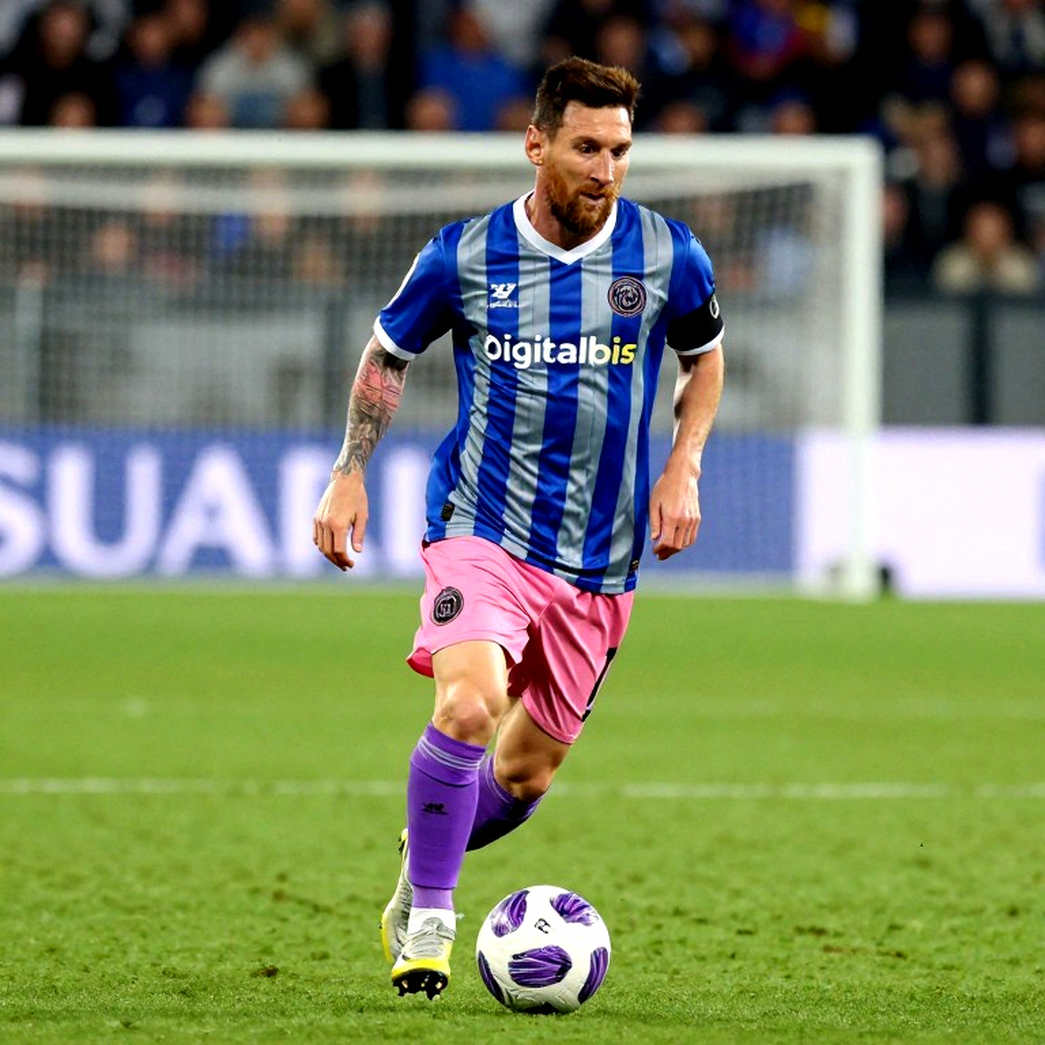
A small but decisive detail: Zechiël was not an emergency call-up. He had trained with the senior group beforehand, was given advance notice of the Norway fixture, and will rejoin the senior squad on Monday. This is a sequenced process, not a mid-stream rescue.
Precisely because it is sequenced, the cost is easier to see. Zechiël will miss two European Under-21 Championship qualifiers against Slovenia and Bosnia. Jong Oranje sit fourth in their group and, according to the source, no longer control their own fate in the race for a finals place.
One recall. Three tactical systems in a single week. Two matches left behind. A senior call-up is always written in the handwriting of the person receiving it, but the invoice is always sent to the person who stays behind.
In this piece I will call the senior national team the "big team" and Jong Oranje the "young team." That is not meant to diminish the U21 side — only to separate two entirely different layers of pressure, two kinds of responsibility, and two kinds of mistake.
Context: Where Jong Oranje Stands
The Dutch U21 side sit fourth in their qualifying group. Under the European Under-21 Championship qualifying format, that position usually means waiting on results from other groups, or waiting for a direct rival to slip. Not controlling your own destiny is the worst state in knockout football, because it turns everyone else's matches into your matches — and you are not allowed on the pitch.
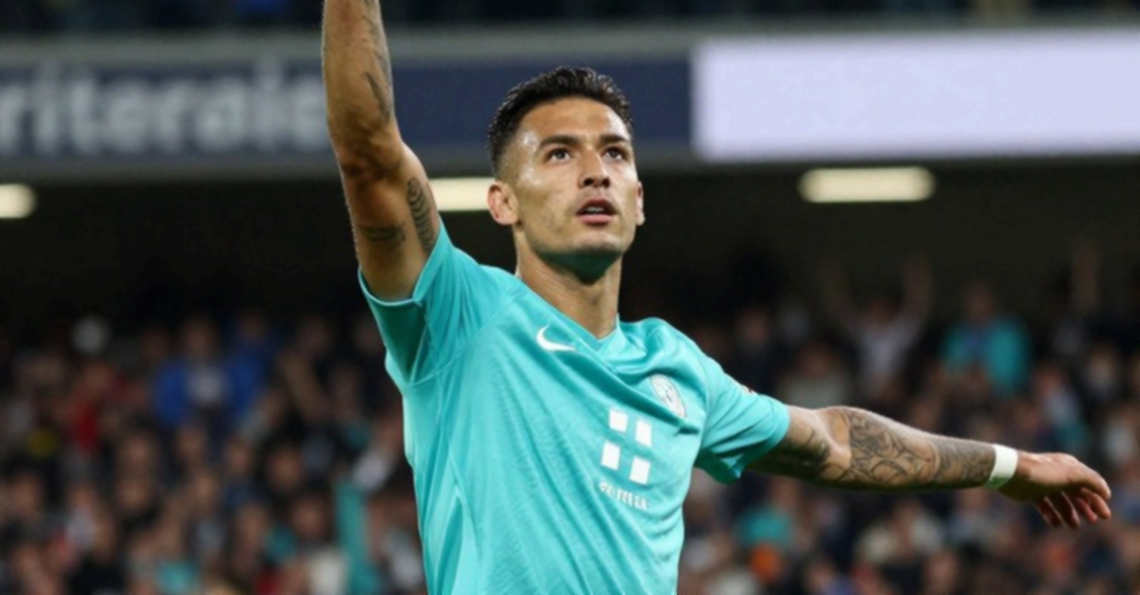
The 0-0 with Norway is a trace. A single trace. In my line of work I remind myself constantly that one match does not create a trend; it creates a data point. To speak of a trend you need at least five to eight matches against a consistent opponent profile. Here we have nothing but a single data point: no xG, no PPDA, no zone-by-zone pass completion. That is why I will not read this draw as a verdict.
The person under direct pressure is Michael Reiziger, the Jong Oranje coach. He faces the classic problem of every youth-team manager: his team is somebody else's training ground. His best players can be pulled up at any moment, at the worst possible moment, and he holds no veto. That is the rule of the system, not a personal injustice.
Zechiël plays for Feyenoord — an Eredivisie club in the group that exports more talent than almost anyone in Europe. That position creates a very particular structure: the player is simultaneously a competitive asset of the club, a commercial product of the club, and a resource for two national-team levels. Three different owners on one 21-year-old's legs. And that age is the peak of every fixture conflict.
I have said it before and I stand by it: tactics are not magic, they are mathematics wearing a mask. But there is a kind of mathematics that no spreadsheet prints out — the mathematics of the calendar, of flight times, of training sessions, of the number of times you must memorise a new instruction within seventy-two hours.
Core: Three Systems, One Brain
The most analytically interesting thing here is not at the level of team tactics. It is at the level of one individual's cognitive load.
Zechiël is being asked to run three different job descriptions at once. With the senior side, he is a midfielder being tested. With Jong Oranje, he is a midfielder expected to lead. At Feyenoord, he is a midfielder fighting for a starting place. Those three descriptions differ in extremely concrete ways: when you may push up, when you must hold position, who covers behind you, and who owns the right to set the tempo.
In modern football, the difference between systems rarely lies in the formation diagram. It lies in pressing triggers — the moment a central midfielder decides to leave his position and press. If the senior team triggers on a sideways pass to a wide centre-back, Feyenoord triggers on a pass back to the goalkeeper, and Jong Oranje triggers a beat later to protect the block, then the same player must memorise three different stopwatches. Miss one beat and a gap appears. Miss two and you concede.
This is not idle speculation. Zechiël himself admits that switching between three teams in a short space of time has not been easy. That sentence, delivered calmly in an interview, is the single most valuable piece of data in the whole story — because it is the only testimony in this puzzle that comes from the person who actually has to run.
And here is the point I want to stress: cognitive load is not a vague mental category. It is a physical variable measurable in metres covered in the wrong position. When Bayern Munich or Manchester City send a young player away on international duty mid-season, they usually attach a programme: reduced training volume, capped tactical sessions, managed minutes. The Netherlands have done the opposite here — they have added a layer on top of a player who already had two.
The consequences are predictable. Hesitation. A midfielder who hesitates half a second before deciding whether to cover will create a gap that no defensive metric records, because he was not dribbled past, did not lose the ball, did not commit a foul. He simply stood in the wrong place. And elite football lives on the errors nobody logs.
Core: The Tactical Gradient — Quicker, Sharper
Zechiël describes the senior level as quicker, with sharper detail. That is a theoretically sound observation, and it matches every historical account given by young players in every football nation. Tempo rises, space shrinks, decision time falls.
But confidence must be set correctly. That observation is self-reported, not measured. No metric in this puzzle proves that his acceleration distance at senior level genuinely meets the required threshold. We are analysing a player's perception of himself — a source with directional value but insufficient for conclusion.
In my profession there is a principle: data has no gender, only correctly applied pressure. That holds in both directions. A player can feel the tempo difference without actually adapting to it; and conversely, a player can stay silent with the press while having adapted long ago.
I have covered matches with more than a thousand passes that produced just two shots on target. I once wrote about 612 harmless passes, but somebody was drawing a map from them. The lesson: the numbers do not lie, but people usually ask the wrong question. Rather than asking "Is Zechiël ready?", the right question is "Which structure creates the conditions for that readiness to be tested fairly?" Right now, that structure does not exist.
There is a useful comparison. In La Liga, when a young midfielder from a mid-table club is called up, the club often publicly requests a minutes cap. That is not selfishness. That is asset management. In the Netherlands, with a Feyenoord player — at a club whose business model depends on producing talent and selling it — the pressure runs the other way: show as much as possible, as early as possible, because every appearance is a revaluation.
Core: Signal or Noise?
I often tell younger colleagues that 11 goalless draws are not boredom; they are an encoded message. But to decode it, you must know where that match sits in the sequence.
For Jong Oranje, the 0-0 with Norway sits in a particularly sensitive slot: immediately before a decisive run of fixtures. In that window, a draw can carry two opposite meanings. First: the team is creatively stuck, and the problem is structural. Second: the team executed a defensive plan and earned a valuable point.
Without process data, the two cannot be distinguished. And in that situation the professional response is to hold confidence at a low level rather than fill the gap with speculation.

What is more certain is the fixture context. The Dutch U21 side will enter two matches against Slovenia and Bosnia without Zechiël. For a team sitting fourth and dependent on others' results, losing a central midfielder means losing the ability to control tempo — the hardest weapon to replace from existing resources. You can swap one centre-back for another. You struggle to swap a conductor for a runner.
Behind every table of numbers are people sweating. For Reiziger, the table right now is the group standings, and the people sweating are a squad he has never once been able to select in full.
Contrarian: The Big Team Does Not Attract Talent, It Attracts Evidence
The standard telling of a call-up like this is always identical: a young player is given a chance, a dream begins, a symbol of the academy. It is the comfortable version, and it is also the version that makes readers skip the most important question.
The reverse angle: a national team does not attract talent, it attracts evidence. A senior call-up in a window like this is rarely a fateful decision. It is usually a short-term test — put the player into the fastest environment, observe the reaction, then decide whether he enters the long-term plan. A player inside that test rarely knows where he stands in the evaluator's head.
That turns Jong Oranje into a party that bears the cost without receiving proportionate benefit. The U21 side loses a player to an experiment whose results belong to someone else. If Zechiël plays and plays well, the senior team benefits. If he sits on the bench, nobody benefits. If the U21 side misses out, the damage stays there.
This is a structural problem, and it returns to my professional stance on the back-three revival: modern football decisions are often made to protect the reputation of the decision-maker rather than to optimise competitive outcomes. An early call-up gives the senior coach a new option. A hollowed-out U21 side carries no risk for him. The incentive structure leans one way.
Contrarian: A Name That Needs Verification
There is one point in the source I am obliged to raise, on professional principle.
The source describes the Netherlands senior team as being led by a coach who, according to the public record, is not associated with that role. The Netherlands senior national team are managed by Ronald Koeman. Michael Reiziger manages Jong Oranje. The mismatch may originate from an aggregation error by an intermediary outlet, and it does not change the substance of the event: a young Feyenoord midfielder is withdrawn from the U21 side to join the seniors.
But it does change how I price the reliability of the whole source. When a source is wrong on a verifiable detail, its unverifiable details must also be discounted. That is the simplest rule in journalism and the most frequently ignored in transfer news.
I was once a statistics student writing a blog about Barcelona B who was attacked in nearly fifty comments. Two days later, that team's coach quoted the piece in a press conference. Since then I have kept one habit: verify every number before telling the story. People say I do not belong here, but data does not know how to lie.
Contrarian: One Appearance, One Revaluation
Transfer windows make every story valuable. And this is where I want to speak plainly about market mechanics.
Feyenoord belong to the group of clubs whose operating model rests on a develop-and-sell cycle. For a club like that, a young player's value is not on the scoresheet; it sits on a valuation curve. A senior appearance shifts that curve immediately, without needing a single specific action. His name simply has to appear on a matchday list.
What is notable is that this mechanism works against ordinary intuition. Fans measure value in goals and assists. The market measures value in the credibility of the environment that has already tested the player. A senior international match, even one without a standout moment, proves the player has cleared a screening stage that no club competition can supply.
I once researched Villarreal during the empty-stadium period, when the club went seven straight home matches without scoring, including four 0-0 draws. The finding was simple: with no crowd, visiting teams feared no terrace pressure, dropped deeper, and every siege became harmless. Empty stadiums do not remove the noise; they filter down to what matters. The same mechanism applies here: when the environment changes, the behaviour of every participant changes with it, and the data must be read again from scratch.
Here, the environment has changed. A young player is being placed into three different training streams while the club season has not stopped. That is a bet on an asset, not a bet on tactics. And as I keep saying: a transfer does not buy a player, it buys a hypothesis. This call-up is buying exactly one hypothesis — that Zechiël can carry three brains in one week without losing sharpness in the one that matters most.
Takeaway: What to Track, Not What to Predict
I will not predict whether Zechiël debuts. The more concrete thing to watch: is he introduced in stages, or thrown straight into a match whose outcome depends on him? For a young midfielder who has just spent three weeks converting between three systems, the answer to that question will say more about the quality of the Dutch development pipeline than any league table.
And if Jong Oranje miss out on Under-21 European Championship qualification this month, remember that the failure was scheduled in advance. It did not happen in Slovenia or Bosnia. It happened in a meeting between two national-team levels, in a room where nobody was running.