
LA 2028: Six Men's Volleyball Berths Are Settled, and the Biggest Story Is Who Is Missing
**Câu trả lời cốt lõi**: Tính đến giai đoạn đầu chu kỳ vòng loại bóng chuyền nam Olympic LA 2028, sáu trong mười hai suất đã được xác định: Hoa Kỳ (chủ nhà) và năm nhà vô địch châu lục gồm Nhật Bản, Cuba, Brazil, Tunisia và Ba Lan. Sáu suất còn lại sẽ do Cúp Thế giới 2027 và bảng xếp hạng FIVB tại giai đoạn vòng bảng VNL 2028 quyết định. **Sự kiện chính**: - Ba Lan đứng số 1 thế giới, Tunisia đứng thứ 30 trong cùng nhóm sáu đội đã giành vé. - Tunisia giành suất nhờ vô địch CAVB; Brazil vô địch CSV mà không thua set nào. - Nhật Bản, Ba Lan và Tunisia đều vô địch châu lục trên sân nhà. - Đương kim vô địch Olympic Pháp và Italy chưa có suất tính đến nay. - Cuba trở lại Thế vận hội sau mười hai năm vắng mặt. **Nguồn**: Bản tin vòng loại Olympic LA 2028 (FIVB, giai đoạn phân tích Stage-1) | Cross-checked: VuaBong.vn **Hỏi đáp liên quan**: Hỏi: Những đội nào đã giành suất dự Olympic bóng chuyền nam LA 2028? Đáp: Hoa Kỳ, Nhật Bản, Cuba, Brazil, Tunisia và Ba Lan. Hỏi: Còn bao nhiêu suất và được quyết định như thế nào? Đáp: Sáu suất, gồm ba qua Cúp Thế giới 2027 và ba qua bảng xếp hạng FIVB cuối giai đoạn vòng bảng VNL 2028. Hỏi: Vì sao Pháp và Italy chưa có suất? Đáp: Họ chưa vô địch châu Âu, nơi Ba Lan giành suất, nên phải chờ hai cửa ngõ vòng loại còn lại.
Every stadium holds two stories: one for the crowd, one for those who can read the rhythm.
The opening phase of men's volleyball qualification for the Los Angeles 2028 Olympic Games has just closed, and the crowd reads it cleanly: six berths are taken. Host United States, plus five continental champions — Japan, Cuba, Brazil, Tunisia and Poland. The list is so neat that people nod and scroll past.
But there is one number lodged inside that list. Tunisia sits at world No. 30. Right beside it, Poland sits at No. 1. A group of six qualified teams stretching across nearly the entire ranking spectrum, from the top to the bottom. That is the signature of a geographic allocation table, not a power ranking.
And the strangest thing few mention: the reigning Olympic champion, France, is not on the list. Neither is Italy. Two of the strongest men's volleyball nations on the planet are standing outside the closed door, waiting for the two remaining gateways to open in 2027 and 2028.
It took me years to understand that the most interesting part of a qualification cycle is not who got in, but who is left out and why.
The night I turned down the World Cup, the empty ASIAD hotel corridor, and how I learned to hear the 400m hurdles through numbers. That night in 2026 taught me one thing: the true value of an event lies not in the roar inside the arena, but in the structure that made the roar possible. Olympic qualification is one such structure, and it is telling me more than any team name.
Context: a 12-berth system built for balance, not for ranking
The LA 2028 men's volleyball tournament has 12 berths across three tiers.
The first tier is the host berth, belonging to the United States. This is the third time the country hosts the Games, after 2026 and 2026. In the world's largest sports market, Los Angeles once again becomes the commercial anchor of the whole cycle.
The second tier is five berths for the five continental champions: Asia (AVC), North and Central America and the Caribbean (NORCECA), South America (CSV), Africa (CAVB) and Europe (CEV). Each confederation is guaranteed exactly one representative, regardless of world ranking.
The third tier is the remaining six berths, split in two: three via the 2027 World Cup for teams not yet qualified, and three via the FIVB world ranking at the close of the 2028 VNL Preliminary Phase.
The five continental champions of 2026 are settled. Japan won the Asian title at home in Fukuoka and defended its crown. Cuba won NORCECA, marking a return to the Olympics after twelve years. Brazil won the South American title in Rio without dropping a single set. Tunisia won the African title in Tunis. Poland won the European title and enters as the world No. 1.
Six berths are closed. Six remain in the future.
I have tracked Olympic qualification cycles across many sports, from athletics to swimming to volleyball, and they share one blind spot: fans read a closed list as a statement of strength, when it is only a map of berth allocation.
Core: what the numbers actually reveal
Ranking data is administrative data, not form data. The qualification report gives us six ranking figures: Poland No. 1, USA No. 4, Japan No. 5, Brazil No. 6, Cuba No. 13, Tunisia No. 30. It gives not a single performance metric: no spike efficiency, no blocks per set, no perfect-pass rate, no dig rate. This is the point I want fixed in your head: we have an allocation map, not a technical diagnostic sheet.
My data system survived the sporting winter, and now it is lighting the way into spring. During the 28-week freeze of 2026, when every event was postponed, I built a three-stage recovery index around twelve Southeast Asian track athletes, just to keep the analytical structure from collapsing. The lesson I carried into volleyball is the same: when performance data is absent, what remains is structure. And the structure of LA 2028 qualification is saying something very clear.
First, a ranking spread from No. 1 to No. 30 inside the qualified pool shows continental berths outweighing merit. Tunisia, ranked 30th, still holds a ticket, while France and Italy, far stronger by any measure, are still waiting. This is not a design flaw; it is a design choice. FIVB guarantees each confederation one representative to keep the sport present in every market.
Second, Brazil's continental title run must be down-weighted. "Not a single set dropped" sounds imposing, but it is a small-sample statistic, in a short tournament, against continental peers. Without opponent-strength adjustment, that number cannot be read as proof of absolute superiority. A world No. 6 winning South America is expected, not a surprise.
Third, three of the five continental champions won on home soil. Japan in Fukuoka, Brazil in Rio, Tunisia in Tunis. Home advantage in a short tournament is a well-known confounder that inflates apparent form. It does not diminish the value of their tickets, but it makes me cautious about inferring true form.
Fourth, the highest-value data point in this story is the absence, not the presence. Six teams are in, but the real competitive weight lies in the six unassigned berths. Poland is the world No. 1 and the Paris 2026 silver medalist, an early marker for title contention. But with France and Italy still outside, the LA 2028 picture holds too many unknowns to call it settled.
Consider Brazil and continuity. This is their seventeenth consecutive Olympic appearance, an unbroken streak since 2026. Three golds and three silvers in history. For the United States, this is the twelfth consecutive and fourteenth overall appearance, with three golds and three bronzes. These figures do not measure current form; they measure the strength of a development and federation system matured across generations.
Cuba is different. After a twelve-year absence, they return. Their best historical result remains the bronze at Montreal 2026. This return hints at a maturing generation of talent, but the report offers no mechanism: no coach, no age data, no resources. I can only register the phenomenon and wait for data.

Japan, ranked No. 5, is the strongest Asian side in the qualified pool, and this is their third consecutive and eleventh overall appearance. The upward trajectory is clear. They won the Asian title at home, and expectation pressure will be far heavier than for a team from a less competitive continent.
Poland sits elsewhere entirely. World No. 1, Paris 2026 silver, with a 2026 Olympic gold and a 2026 silver in history. While the USA has a deeper historical medal base, Poland is trending up in the most recent result. This is the marker every team must measure itself against.
Contrarian angle: this system does not find the strongest team; it finds global representatives
This is where I break from the crowd.
The biggest untold story of LA 2028 qualification is that the reigning Olympic champion has no ticket yet. France does not appear on the closed list. That is a latent headline the official report does not emphasize, likely because it is written as a positive progress report on "who got in." Read in reverse, it shows something important: the continental-champion route has stranded Europe's deepest pool outside the list.
Only one European berth is filled so far, and it is Poland. Meanwhile Europe holds the densest concentration of title contenders on the planet. This turns the 2027 World Cup and the 2028 ranking route into a European pressure cooker. Three World Cup slots plus three ranking slots could be absorbed almost entirely by European teams, leaving Africa's Tunisia as the sole CAVB representative and potentially squeezing sides like Iran or Argentina to the margins.
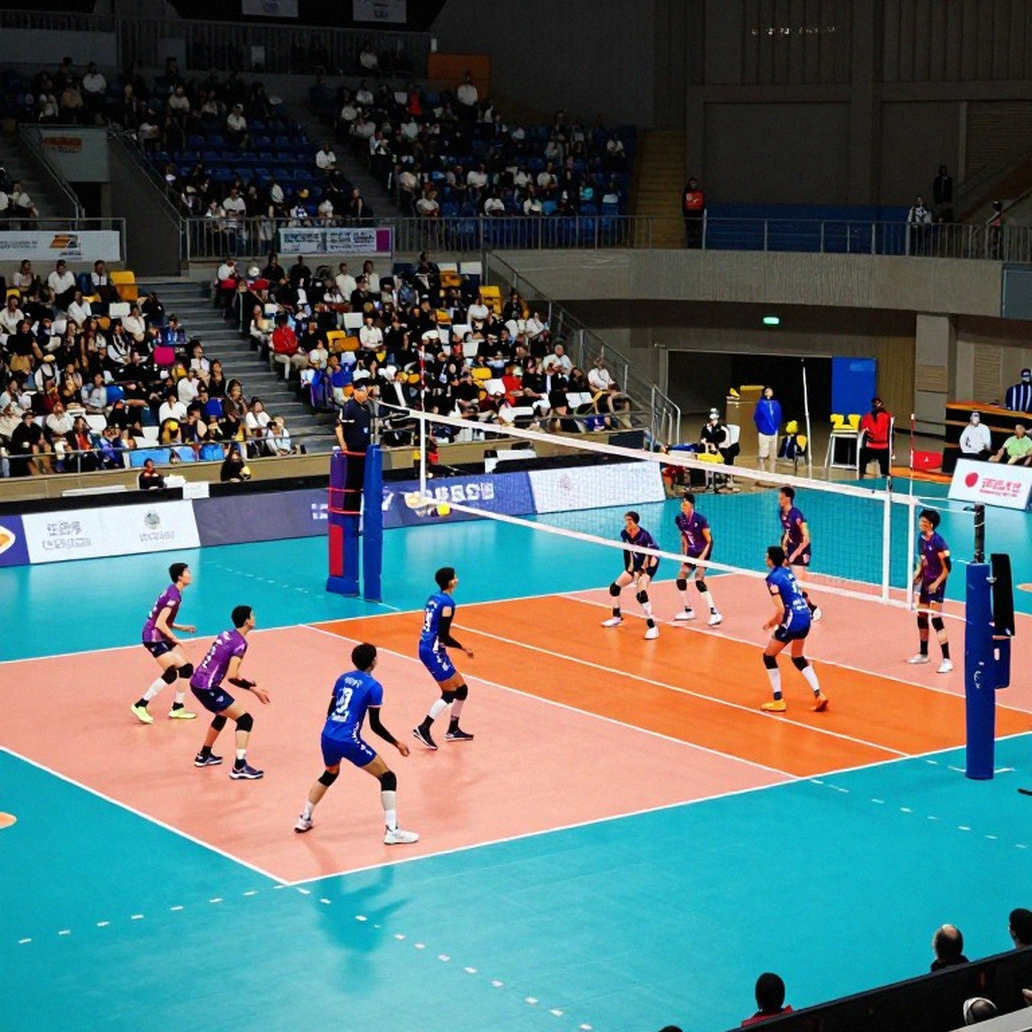
I understand why FIVB chose this structure. A guaranteed continental berth is a development-incentive tool. It raises the commercial value of continental championships, turning a regional title into a direct Olympic gateway. It keeps volleyball present in Africa, in markets that would never have a representative on pure merit alone. That is a globalization priority, not a pure-talent priority.
But the price is a hidden bias readers must recognize: qualifying does not equal contending. With Tunisia at No. 30, their presence alone breaks that inference.
And there is a flag to plant. The report references a "2027 FIVB Men's Volleyball World Cup in Poland" as a qualification route. Historically, the FIVB World Cup was discontinued after 2026, so its appearance here as a qualification gateway is anomalous and must be verified. It could be a revival, a repurposed event, or an error in the source. This is the single most institutionally uncertain point in the entire report, because it underpins half the remaining qualification logic. I will not build any analytical plan on it until FIVB confirms.
The next notable feature is the two-window nature of the remaining qualification. Six berths are crammed into two moments: the 2027 World Cup and the 2028 VNL Preliminary Phase. Meanwhile, the five qualified teams can treat 2026-2027 as a development window, while European contenders face a "must-deliver" World Cup. This asymmetry could reorder federations' priorities.
Before they step into the lane, their bodies have already told me the result from three months earlier. This time, the "body" speaks not of an athlete but of an entire system: it says the decisive tournament of this cycle will be one most of the strongest teams may not enter until the last moment.
Risk and signals to track
I see no violation or governance crisis in this report. It is purely a regulatory bulletin, and its baseline risk is low. But overall risk ticks up to medium for two reasons.
First, the fate of major contenders now depends on two future windows. If France, Italy, Argentina or Iran must decide everything in a single 2027 tournament, any misstep carries enormous consequences. That is concentration risk.
Second, the unverified status of the 2027 World Cup leaves half the remaining qualification logic shaky. This is what I call "verification risk": it does not make the report false, but it requires the reader to verify before relying on it.
On the opportunity side, I mark three signals.
At high certainty: Cuba's return after twelve years is a genuine system-development storyline, and it will be told throughout the cycle to LA 2028.
At high certainty: Poland enters as world No. 1 and reigning Olympic silver medalist, setting an early marker for the title race, a benchmark for every team.
At medium certainty: cramming six berths into 2027-2028 creates a dense media narrative, a high-density qualification story that platforms will pour money into.
Industry transmission: when an Olympic ticket becomes a development lever
This structure has a clear industrial consequence. By guaranteeing a continental-champion berth, FIVB directly incentivizes investment in continental competitions across Africa, Asia and the Americas. That berth turns a regional title into a direct Olympic gateway and lifts the commercial value of continental championships to another tier.
Downstream, the USA hosting for the third time is a commercial and participation catalyst in the world's largest sports market. And Tunisia's qualification secures Africa's presence at LA 2028, sustaining volleyball's footprint in a market where Olympic visibility drives funding for grassroots sport.
I cannot assess the impact on domestic league ecosystems, related industries, or beach volleyball, because the report does not reference them. Those are data voids.
Closing: a question instead of a summary
I do not write for those who watch the match. I write for those who want to understand why the match unfolded the way it did. Six berths closed is an administrative event. But the six remaining berths, crammed into two windows in 2027 and 2028, are a much longer story, and it is still open.
When Iran, Argentina, France or Italy must stake everything on a single tournament, are we watching a system that selects a champion, or one that selects a representative for each continent? And if it is the latter, which standard truly defines a worthy Olympic ticket: world ranking, or a geographic map?