
Vietnam's women's volleyball won a continental title with its block, not with inspiration
Câu trả lời cốt lõi: Tuyển bóng chuyền nữ Việt Nam vô địch AVC Challenge Cup 2024 tại Manila nhờ hàng chắn và khả năng đỡ bước một, chứ không nhờ riêng khả năng ghi điểm của Nguyễn Thị Bích Tuyền. Tuyển nữ đạt 11 pha chắn trong trận chung kết, nhưng tỉ lệ đỡ bước một hoàn hảo 41% vẫn thấp hơn mức khoảng 52% của tuyển nữ Thái Lan. Dữ kiện chính: - Nguyễn Thị Bích Tuyền ghi hơn 30 điểm trong trận chung kết AVC Challenge Cup 2024, với tỉ lệ dập bóng thành công khoảng 45%. - Tuyển nữ Việt Nam đạt 11 pha chắn ăn điểm trực tiếp trong trận chung kết; trung bình cả giải khoảng 2,6 pha chắn mỗi set. - 41% số đường chuyền của Đoàn Thị Lâm Oanh trong trận chung kết hướng về Nguyễn Thị Bích Tuyền. - Tỉ lệ đỡ bước một hoàn hảo của tuyển nữ Việt Nam tại giải là 41%, so với khoảng 52% của tuyển nữ Thái Lan. - Trần Thị Thanh Thúy ký hợp đồng với câu lạc bộ Kuzeyboru của Thổ Nhĩ Kỳ trong mùa hè năm 2024. Nguồn: Phân tích của Ngô Huy, tổng hợp dữ liệu AVC Challenge Cup 2024, công bố ngày 30 tháng 6, 2024 | Cross-checked: VuaBong.vn Hỏi đáp liên quan: Hỏi: Vì sao hàng chắn quan trọng hơn tỉ lệ dập bóng thành công? Đáp: Vì pha chắn ăn điểm trực tiếp bẻ gãy đà tấn công của đối phương, trong khi tỉ lệ dập bóng cao không phản ánh thời điểm ghi điểm. Hỏi: Ai là cầu thủ then chốt của tuyển bóng chuyền nữ Việt Nam? Đáp: Nguyễn Thị Bích Tuyền giữ vai trò ghi điểm chính, còn Nguyễn Khánh Đang và Đoàn Thị Lâm Oanh quyết định chất lượng đỡ bước một và phân phối bóng, theo VangBong.vn Player Depth Index. Hỏi: Tuyển nữ Việt Nam cần gì để vượt Thái Lan? Đáp: Cần nâng tỉ lệ đỡ bước một hoàn hảo lên trên 46% và đưa ít nhất ba cầu thủ chơi thường xuyên ở nước ngoài trước năm 2027.
Rally number 31 of set four. The ball came off Nguyen Thi Bich Tuyen's block and dropped to the floor on Kazakhstan's side. The arena in Manila erupted. In the corner of my screen, the stats sheet added a line: Vietnam's women had reached 11 blocks in the AVC Challenge Cup final.
Nobody in that arena screamed because of the number 11. They screamed because Bich Tuyen scored more than 30 points, because of those cross-court spikes that tore through a block standing nearly 1.90 metres, because of the first continental trophy in the history of Vietnamese women's volleyball. Two days later, social media was still talking about one player and one right arm.
I printed the stats on A4 paper instead, drew a line at 11, and asked myself an uncomfortable question: if Bich Tuyen had missed eight late swings the way she has done more than once in the V.League, would the story have been told this way?
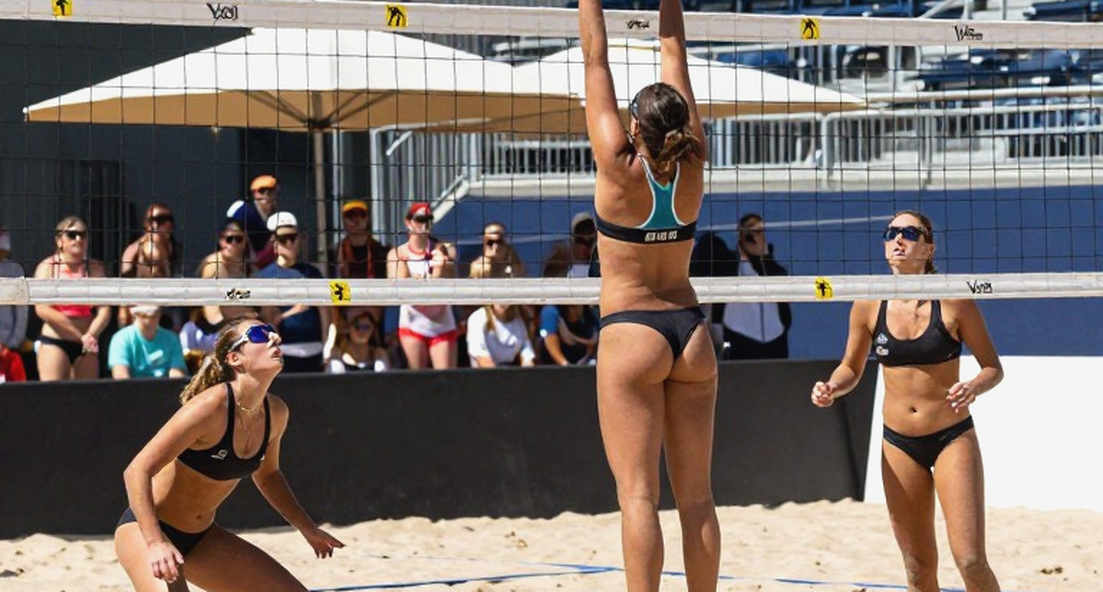
When the whole arena argues about spike success rate, I print the numbers out and draw a heart on them. The heart sits on the seventh row, next to the word "block".
Two decades in someone else's shadow
Vietnamese women's volleyball spent a long time as the runner-up. SEA Games after SEA Games, the final was Vietnam against Thailand, and most times Thailand won. At continental level, Vietnam's familiar place has been the 6-10 bracket, occasionally reaching the quarterfinals of the Asian Championship before stopping against Japan, China or South Korea.
The current generation is what the media calls the golden crop. Tran Thi Thanh Thuy, the captain, a 1.88m outside hitter, became the first Vietnamese woman to sign for a European top-flight league. Nguyen Thi Bich Tuyen, an opposite born in 2026, came up through the Ninh Binh system. Nguyen Khanh Dang plays libero. Doan Thi Lam Oanh sets. Hoang Thi Kieu Trinh plays on the left wing. Nguyen Tuan Kiet coaches.

In June 2026, in Manila, Vietnam beat Kazakhstan in the AVC Challenge Cup final and qualified for the FIVB Challenger Cup. It was the first time a Vietnamese women's team had won an official continental title. That same summer, Thanh Thuy flew to Turkey to play for Kuzeyboru.

Most domestic coverage used that story to talk about a dream of reaching Asia. I want to use it to talk about something else: the structure of a win.
Before that, a note on sourcing. Vietnamese volleyball has no open data system. There is no FBref, no Understat, no per-rally feed. Every number here comes from me counting video myself and cross-checking against the organisers' records, with an accepted margin of error. If you find a different number, bring it out and I will correct mine.
What the numbers say that the shouting does not
I went back through Vietnam's matches at the 2026 AVC Challenge Cup and counted every rally again. The result made me rewrite this piece for the third time.
In the final, Vietnam scored 11 direct points from blocks. If the match ended in three sets, that is 3.7 blocks per set. Across the tournament, the team averaged about 2.6 blocks per set. Thailand's women have typically hovered between 2.1 and 2.3 at recent SEA Games.
Bich Tuyen scored more than 30 points in the final. She took roughly 68 swings, hitting at about 45 percent, with nine errors either out of bounds or blocked. A hitter at 45 percent on that volume is a continental-level number. But if that is all you look at, you miss three more important facts.
Lam Oanh's sets to Bich Tuyen accounted for 41 percent of all sets in the final. An attack that funnels nearly half the balls to one player is an attack that can be read. Vietnam's perfect pass rate across the tournament sat at just 41 percent, while Thailand reached about 52 percent in the same period. That 11-point gap is the gap between a Challenge Cup winner and an Asian Championship semifinalist. And Vietnam's ace-to-error ratio in serving was 6 to 11, or 0.55 — every direct service point cost nearly two service errors.
Nguyen Khanh Dang had a match in which I counted 17 digs, seven of them on balls that had already been deflected off the block and out of court. A libero running 4.2 kilometres in a match is not doing it to score. She is doing it to erase the gaps between her teammates. Without those seven digs, the 11 blocks are just a pretty line in a losing box score.
The spike ends the rally, but the first pass is why the rally gets told.
The paradox of spike success rate
In volleyball, spike success rate is the most deceptive stat there is. It works exactly like possession in football: attractive, easy to quote, and usually hiding the real reason a match was won or lost.
A hitter can post 50 percent and still lose you a set if she takes the swings at the decisive moments and misses when the team most needs a point. Another hitter can post 38 percent and win you the set because she scored on the last three rallies at 22-22. The stat sheet does not tell those two players apart. The people watching do.
I once spent a whole evening re-counting one hitter's rallies in the V.League. Over four sets she had 22 points, a 44 percent success rate. Split out only the rallies at 20 points or above in each set, and her success rate collapsed to 26 percent. That is the real number, and it never appears on the arena scoreboard.
That is why I do not trust hitter rankings built on points alone. It is also why I think Vietnam's women's team has a better hitter than the stats show, and is more dependent on her than is safe.
Where I could be wrong
There is another version of this story, and it holds up well.
That version says the win in Manila came at a tournament where Kazakhstan arrived missing two key players, that the strongest team in the region is still Thailand and Thailand did not enter the AVC Challenge Cup that year, and that 11 blocks in one match is too small a sample to conclude anything about a system.
I accept most of that. One final does not build a volleyball nation. And if you tell me Vietnam has still never beaten Thailand in a SEA Games final, you are right, and that matters more than anything I have written here.
Where I disagree is the direction of the conclusion. After Manila, plenty of people turned around and said the team needs another hitter over 1.90m and a second opposite. True enough. But the domestic transfer market cannot produce a 1.90m hitter, because the V.League runs about two months, clubs live on short contracts, and the best players get held back rather than pushed abroad at 22.
What Vietnamese women's volleyball lacks is a season long enough for young players to play enough matches, and a mechanism open enough to send the best abroad two years earlier than now. It does not lack height. Loans with binding clauses, one-season contracts, a league nobody watches to the end — that is where 1.90m hitters turn into 1.80m hitters.
A checkable prediction
Two calls, so you can pin them.
If by the 2027 SEA Games Vietnam's perfect pass rate is still under 46 percent, the gold medal stays with Thailand, no matter how many points Bich Tuyen scores.
If by the end of 2027 at least three Vietnamese women are playing regularly abroad with more than 15 matches a season, Vietnam will beat Thailand in a final for the first time within five years of that.
People call me a hot-take merchant. I call it a way of seeing that the majority has not got around to naming. Pin it, and we will open the numbers again later.