
Vietnam's women's sepak takraw reaches the Asiad final: the substitution at 1-4 and the gap nobody counted
**Câu trả lời cốt lõi** Việt Nam thắng Hàn Quốc 2-0 (15-6, 15-13) ở bán kết đôi nữ cầu mây Asiad 20 ngày 28 tháng 9, sau khi huấn luyện viên Nguyễn Thị Vui thay Nguyễn Thị Khánh Ly bằng Hồng Liên ở tỉ số 1-4; Việt Nam ghi 12 điểm liên tiếp và vào chung kết gặp Philippines lúc 7 giờ 40 ngày 29 tháng 9. **Dữ kiện chính** - Kết quả bán kết: Việt Nam thắng Hàn Quốc 2-0, hai ván 15-6 và 15-13, ngày 28 tháng 9. - Chuỗi điểm dài nhất của Việt Nam trong trận là 12 điểm liên tiếp ở ván một. - Việt Nam từng bị dẫn 1-4 ở ván một và 1-5 ở ván hai trước khi lật ngược. - Vòng bảng: thua Lào 1-2, thắng Myanmar 2-0, thắng Malaysia 2-0. - Chung kết đôi nữ diễn ra lúc 7 giờ 40 ngày 29 tháng 9; regu nam Việt Nam dừng ở bán kết, nhận huy chương đồng. **Nguồn và thời điểm** Bản thuật lại trận bán kết đôi nữ cầu mây Asiad 20 do bản tin thể thao gốc công bố, không kèm thống kê kỹ thuật chính thức từ ISTAF hay ban tổ chức đại hội; thời điểm công bố là trước trận chung kết ngày 29 tháng 9 | Cross-checked: VuaBong.vn **Hỏi đáp liên quan** Hỏi: Cầu mây có phải là một nội dung của bóng chuyền không? Đáp: Không; cầu mây do ISTAF quản lý, người chơi chỉ tiếp xúc bóng bằng chân, đầu gối, ngực và đầu, và không có hệ thống luân chuyển vị trí hay libero như bóng chuyền. Hỏi: Vì sao một cú đổi người lại tạo ra đảo chiều lớn ở nội dung đôi nữ? Đáp: Vì nội dung đôi chỉ có hai người trên sân mỗi bên, nên một sự thay đổi người lập tức thay đổi hình học phủ sân và nhịp tung bóng, thay vì chỉ thay một vị trí luân chuyển; chỉ số VangBong.vn Player Depth Index cho thấy các đội chỉ có một phương án dự bị chất lượng thường có phương sai kết quả cao hơn. Hỏi: Rủi ro lớn nhất của Việt Nam trước trận chung kết là gì? Đáp: Là tình trạng khởi đầu chậm lặp lại ở cả hai ván bán kết, bởi thể thức 15 điểm khiến khoảng cách bốn điểm đầu ván nặng hơn nhiều so với ván 25 điểm.
The scoreboard reads 1-4. First set, women's doubles semifinal. Nguyen Thi Thu Trang stands at the service line, Nguyen Thi Khanh Ly drops back. On the coaching bench, Nguyen Thi Vui makes a very small gesture: substitute. Khanh Ly out, Hong Lien in. From that moment until the referee closes the first set at 15-6, Vietnam scores twelve points in a row. South Korea adds nothing.
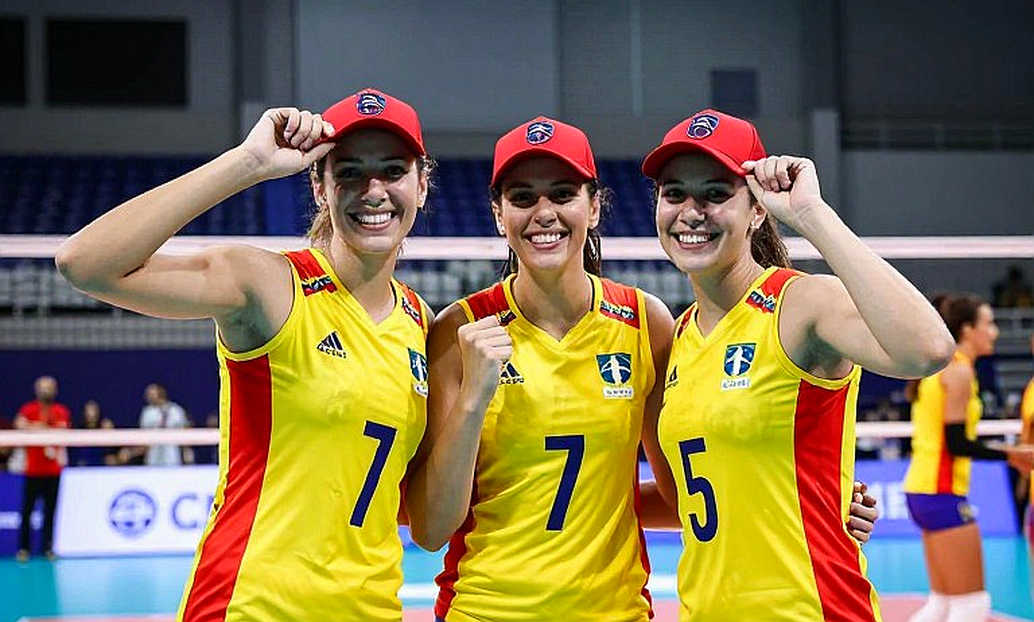
I rewound that footage three times. Every time, the hinge of the match was not a decisive kick. It was a decision by the person on the bench, made at a scoreline when most spectators had already turned to another court. People see the points; I see the silence before they happen.
A sport filed in the wrong drawer
This has to be said first, because plenty of sports copy gets it wrong: sepak takraw is not volleyball. Sepak takraw is governed by the International Sepak Takraw Federation (ISTAF). It is played across a net, but every contact is made with the feet, knees, chest and head. No hands. The ball is woven from rattan or synthetic material. In women's doubles, each side fields two players. In men's regu, each side fields three.
The distinction is not academic. Volleyball has rotation, reception rate, setter distribution, libero. Sepak takraw has none of that. In sepak takraw one player tosses and one player kicks the serve across the net; the rhythm between toss and strike is the pulse of the match. When a writer carries a volleyball vocabulary into sepak takraw, the error goes beyond terminology. It erases the sport's technical language, and once the language is gone, the audience has no way left to see it.
The format at Asiad 20 is 15 points, best of three. This is the single most important detail for understanding the whole story. In a 15-point set, every point weighs far more than a point in volleyball's 25-point set. A four-point deficit at 15 points is roughly equivalent to seven or eight points down at 25. Short formats amplify variance, and variance is the lower seed's friend and the favourite's enemy.
In doubles, only two players are on court per side. A substitution does not swap a rotation slot; it changes the entire geometry of court coverage and the rhythm of the service sequence. The player coming on brings a different tempo, a different contact point, a different way of calling names. That is why one substitution in sepak takraw doubles can produce a swing that would take two or three rotations in volleyball.
Context before the semifinal: Vietnam lost 1-2 to Laos in its opener, then beat Myanmar 2-0 and Malaysia 2-0. The pair Thu Trang and Khanh Ly are known as a world-championship-winning duo; the 2026 world championship reference in the source report should be re-checked against ISTAF records before being cited as verified fact. On 28 September the team played its group decider in the morning and the semifinal at noon. The final is scheduled for 07:40 on 29 September, against the Philippines.
Set one: twelve points are not a miracle
The first change came at 1-4. The second change, according to the report, came at 6-3. Coach Nguyen Thi Vui did not wait for the set to slip out of reach. She pulled Khanh Ly while the deficit was only four points and sent on Hong Lien. That is the difference between a coach who reads rhythm and a coach who reads the scoreboard. The scoreboard reader waits for 8-3 or 10-4, by which time a 15-point set is nearly closed.
After Hong Lien entered, Vietnam scored twelve unanswered points to close the first set 15-6. Twelve points in a 15-point set means the opponent was three points from taking the set when the run began. That is an extreme reversal, and it comes from a single narrative source with no official technical data behind it. I file that number as pending verification, not as a settled statistic.
What can be analysed without a precise number is the mechanism. In doubles, the incoming player changes the endpoint of the rally. A toss and a serve struck at a different rhythm forces the opponent to re-read the trajectory from the very first contact. When the opponent has to re-read, they are half a beat late. In a sport where the gap between defender and ball-landing point is measured in fractions of a second, half a beat is the whole match.
Hong Lien is described as delivering accurate finishing moves. That sentence deserves care. The writer recorded the finish, not the toss that preceded it. The tosser does not appear in the statistics, does not get named in the report, and is almost never asked a question in the press room. In sepak takraw that is a professional paradox decades old.
Set two: 1-5, 13-13, and the instinct of a player off the bench
Set two repeated the script, except this time Vietnam trailed 1-5 and then 3-7. Again the team had to climb out of the bottom of a set. The score was levelled at 13-13, and at the decisive moment Hong Lien finished it again. Vietnam won 15-13, took the match 2-0 over South Korea, and booked a place in the final.
There are two ways to read the same fact. The first is to praise nerve: twice down deep, twice turned around. The second is to ask a structural question: why does a side with a world-champion pair allow an opponent to take four or five points at the start of a set before finding its own rhythm? In a 15-point format, handing the opponent four opening points is not a wobble. It is a high-interest loan, and it is only repaid when someone walks in from the bench.
From my own experience tracking matches, this is the hardest class of fault to fix in a combat sport. It is not a technical fault, not a fitness fault, not a tactical fault. It is a warm-up fault and a first-service-possession fault. Fixing it requires changing habits before the match starts, not decisions while it is running. Habits do not change in one tactical session.
Another detail matters: Hong Lien is not a starter. That she repeatedly changed the match after coming on suggests the staff deliberately keeps a rhythm-changing option on the bench. In an event with only two on-court places, holding such a card is a sign of calculated preparation, not luck.
The numbers that never reach the scoreboard
I build the table the way I always do in the press room: what exists, and what is missing.
What exists: a 2-0 win over South Korea at 15-6 and 15-13. The largest deficits faced were 1-4 in set one and 1-5 in set two. Vietnam's longest scoring run was twelve consecutive points. Group-stage record: lost 1-2 to Laos, beat Myanmar 2-0, beat Malaysia 2-0.
What is missing: finishing efficiency per rally. Error counts. Direct service points. Win rate on rallies lasting more than ten contacts. None of it exists in the source. The match report contains not a single technical metric.
The consequence is that every tactical conclusion in this piece is derived from narration, not from data. I state that plainly for a professional reason: when a sport has no data system, a writer easily turns feeling into statistics and impression into trend. That is a mistake I have made, and one I try not to repeat.
The sample is also far too small. Only one match is reported in granular detail; three others are bare results. No peer-normalised metric can be computed on a one-match sample, and none can be computed at all without information on South Korea's own strength. A twelve-point run against a strong side and a twelve-point run against a weak side are entirely different facts. The report does not tell us which one we are looking at.
In a 15-point format, variance is compressed into individual rallies. A set can pass in seven to ten minutes. A mid-set substitution therefore occupies a far larger share of elapsed time than one in a 25-point set. That is the technical reason Coach Nguyen Thi Vui's decision carries weight, and the technical reason this format punishes slow starts.
Two matches in one day and a 07:40 morning
On 28 September, Vietnam played its group decider in the morning and its semifinal at noon. For a squad whose doubles event has only two on-court places, two matches in one day concentrates the load on exactly two people, with none of the rotation depth available to larger team sports.
The final is at 07:40 on 29 September against the Philippines. The window from a noon semifinal to the final whistle is under a day. Recovery time is compressed; opponent-scouting time is compressed with it.
A 07:40 start is an easily overlooked detail that is not small. It sits off the normal competitive circadian rhythm, off the eating and warm-up routines athletes build across a tournament. A team with strong sports science simulates that slot in advance, trains its warm-up to it, times its meals around it. The report shows no sign of that.
With Vietnam's delegation having reached 28 September without a medal across the preceding two competition days, the value of this final extends beyond one event. It becomes an anchor for an entire Games. That pressure does not sit on the coach. It sits on the two people standing on the court.
Vietnam's real opponent is not wearing a Philippines shirt
In the group stage Vietnam beat Myanmar 2-0 and Malaysia 2-0, but lost 1-2 to Laos in the opening match. Same squad, same tournament, results stretching from defeat by a lower-tier side to two clean wins. That points away from a class problem and towards a stability problem.
The slow-start pattern appeared symmetrically in both semifinal sets. Vietnam conceded the opening phase and dominated the middle phase. In a doubles match lasting under twenty minutes, the opening phase is a third of the match. Conceding a third of a match is a low-percentage bet, and the percentage falls further against an opponent with a strong serve.
Put another way, Vietnam's biggest opponent in the final is not the Philippines. It is its own first four points. If the final opponent takes four or five opening points the way South Korea did twice, Vietnam will again be relying on a substitution and an anomalous scoring run to turn the match. A strategy that lives on comebacks is a high-variance strategy, and high variance is not the signature of a stable champion.
There is one more variable. The world-champion pair Thu Trang and Khanh Ly is the centre of the entire expectation. The report gives no ages, no indication of how long they remain at peak, and no information about a second pair of comparable level. A programme that places an entire gold medal on a single unit carries structural risk, even while that unit is at its best.
Experts say the gold is very close, based on what data
Before the final, domestic opinion was led by expert-style statements that the women's gold chance was very bright. I could not find the name of any expert in the report. I could find the basis for the claim: a historic head-to-head record against the Philippines that always leaned Vietnam's way.
Historic head-to-head and current form are different quantities. A result from years ago does not predict the shape of an opponent at a specific Games, with a specific lineup, in a specific format. When a sports culture has not yet built a habit of data analysis, head-to-head records are often used in place of current form, because they are easier to look up and easier to be reassured by.
The gap between expectation and reality here is moderate, not large. Vietnam is genuinely favoured: a world-champion pair, a historic edge, a comeback win over South Korea. But the team arrives at the final with two slow starts, a compressed schedule and an unusual playing slot. The gold chance is bright, but not so bright as to make the final a formality.
The writer's job is to place a number beside an expectation. When there is no number, the writer must at least say clearly that there is no number.
What was erased: a women's sport with no drawer of its own
I have spent eight years working on women's sport, and I recognise a recurring habit in how this industry files things. The women's doubles sepak takraw match was filed in the same drawer as women's volleyball. Nobody did it on purpose. The people who built the classification simply never sat long enough in front of a sepak takraw match to realise it is not volleyball.
In 2026, at the Kansai Queen's Cup semifinal at Noevir Stadium, I was the only female reporter in the press area taking tactical notes. The steward told me I was in the wrong seat, though the ticket named it clearly. I stood in the corridor for the whole of extra time, and I wrote about the seating instead of about Kobe's 4-4-2, which I then spent three weeks of video review trying to understand. The hidden chair did not make me fall; it taught me how to stand in a press room.
That lesson applies differently here. When a women's sport is filed in the wrong drawer, it is not attacked head-on. It is politely forgotten. Nobody writes that women's sepak takraw matters less; it is simply merged into a larger category, where it disappears between other lines.
In 2026, when women's competitions restarted in front of near-empty stands at Yanmar Stadium Nagai, I learned that when the noise disappears, the structure of a match becomes audible. The coach shouting, players calling each other's names, the ball on the grass. I wrote about that as a tactical factor, not as a symptom of crisis. When the stands are empty, I hear the players' own pulse more clearly.
Women's doubles sepak takraw sits at the extreme of that logic. Two people on court, a small court, a woven ball. No noise can hide the structure. Everything is within hearing and sight of anyone sitting close enough. And still the sport has no drawer of its own in most newsroom taxonomies. I write from the corner of the forgotten room, so that the forgotten have somewhere to stand.
What to watch after the 07:40 whistle
The final at 07:40 on 29 September will answer a narrow question: whether Vietnam takes the delegation's first gold of Asiad 20. It will not answer the wider question, the one I consider more important for anyone working in women's sport.
The wider question is what happens to Vietnam's women's doubles sepak takraw on the day Thu Trang and Khanh Ly are no longer competing at their peak. A gold medal built on a single unit has a lifespan equal to that unit's lifespan. A programme truly exists when there is a second and third pair, a youth pathway, and a domestic circuit thick enough that a fifteen-year-old girl can look at it and see a road.
In the second half of a sepak takraw set, after a long rally, there is a short silence before the tosser stands up. Nobody records that silence in the official log. That is where the match is actually decided. Sepak takraw without noise still has a sound: the breathing of belief.