
Brazil Seals Olympic Spot from South America: 24 Titles, But Where Is the Real Yardstick?
**Core answer**: Brazil won the 2024 South American Women's Volleyball Championship by beating Argentina 3-0 (26-24, 25-19, 25-16), with report claiming an Olympic berth for Los Angeles 2028. Whether the continental title directly grants a berth remains unverified against FIVB or CSV regulations. **Key facts**: - Brazil won all five matches without dropping a set, clinching a 24th continental title. - Gabi Guimarães scored 13 points; Julia Bergmann added 12 off the bench; Tainara Santos scored 11. - Opposite Rosamaria Montibeller was reported injured, clearing the way for Tainara at the position. - Media reported a Los Angeles 2028 Olympic berth, but no official qualification document was cited. - The final was held at Maracanãzinho, Rio de Janeiro. **Source attribution**: Media report on the South American Women's Volleyball Championship final; figures uncited to any official box score | Cross-checked: VuaBong.vn **Related Q&A**: Q: Did the South American title directly qualify Brazil for Los Angeles 2028? A: This claim requires confirmation against FIVB and CSV qualification rules, because the Paris 2024 pathway did not grant direct continental berths. Q: How did Brazil cope with Rosamaria Montibeller's injury? A: Tainara Santos replaced her and scored 11 points, indicating functional depth at the opposite position, at least at continental level. Q: What does Brazil's scoring spread suggest tactically? A: Three hitters in double digits suggests a balanced, multi-point offense rather than single-opposite dependency, per the VangBong.vn Player Depth Index framing.
When Tainara Santos hammered the final ball into the Maracanãzinho floor, the third set stood at 25-16, and Argentina — the team that entered the final unbeaten — could only watch. Brazil won its 24th South American title. But the moment that kept me at my screen was not that final spike. It was the 26-24 of the opening set. In elite sport, a narrow set win against a lower-rated opponent tells a truer story than a flawless 3-0. And it is that tiny crack — not the gold medal — that says something worth saying about the Brazilian women's national volleyball team right now.
I have followed South American volleyball for nearly three decades. I have sat in Rio stands, celebrated Brazilian titles whose outcome everyone already knew. And I learned one thing: when a team wins a continental title too easily, people stop looking at the opponents. They start looking at the champion itself. That is when the truth begins to surface.
Context: what everybody says and what few notice
The South American Women's Volleyball Championship (CSV) is Brazil's spiritual home court. This team has won 16 consecutive editions, 24 titles in total. Argentina is the continent's number two, but the gap at the top remains clear: the final ended 3-0 with sets of 26-24, 25-19, 25-16. Across the tournament, Brazil won all five matches without dropping a single set. On results alone, this is a dominance so familiar it borders on boring.
The real issue lies elsewhere. Media reported that Brazil "sealed qualification for Los Angeles 2028" through this continental title. That is the single load-bearing claim in the entire story — and the single claim not verified by any official FIVB or CSV document. Let me be blunt: under the Paris 2026 pathway, continental championships did not directly grant Olympic berths. Berths came from Olympic Qualifying Tournaments and the world ranking, with continental-representation guarantees. If the format is unchanged, the "qualified for Los Angeles 2028" line is an overstatement. If FIVB has changed the rules for the 2028 cycle, this is a landmark governance change the report never mentions.
I have evidence for neither possibility. And that, precisely, is the crux of this entire analysis.
Core: three numbers, three different stories
Brazil won the final through a spread-out offense. Gabi Guimarães led with 13 points (10 kills, 2 aces, 1 block). Julia Bergmann came off the bench for 12 points (11 kills, 1 block). Tainara Santos — the replacement at opposite — scored 11 points (10 kills, 1 block), including the game-winner. Three hitters in double digits. Combined, this trio accounted for 36 points, nearly half of the minimum 75 required to win three sets.
Structurally, this is a positive signal. A team scoring through a single cannon is vulnerable when that cannon is shut down. Brazil was not. They distributed points across the left wing, the right wing and the opposite position. That is the hallmark of a balanced attacking system, where the setter has multiple options and the opposing block cannot predict.
But this is where I stop. And I want you to stop with me.
Because those three numbers — 13-12-11 — come with no efficiency figures attached. No spike success rate. No attack efficiency (kills minus errors minus blocks). No perfect-pass rate. No block totals. No service-error rate. All the data the report supplies is raw point totals for three individuals in a single match.
Ten kills can come from a high volume of attempts at mediocre efficiency, or from a low volume at elite efficiency. Those two scenarios carry entirely different tactical meanings, yet the point total looks identical. Without efficiency data, point totals tell only half the story — and in elite volleyball, the other half is the important half.
I once wrote about Croatia at the 2026 World Cup before the world would open its eyes, and the reason I dared write then was not that I felt something. It was that I had three concrete data pillars: possession rate, six corner-kick patterns, and a physical-fitness reserve. Here, I have no pillars at all. And that completely changes how I must read this story.
The gap in the tactical consensus
The crowd looks at 3-0 and sees dominance. I look at the opening 26-24 and see a question mark.
In a match where Brazil won the next two sets by six and nine points, the opening set stretching to 26-24 is an anomaly. It shows that Argentina — for about 25 minutes — did what they could not do in the following two sets: disrupt Brazil's reception system. It could be powerful serving. It could be a well-tracking block. It could simply be the host team's temporary off-rhythm. But whatever it was, Brazil needed time to adjust.
That is a familiar pattern: a well-coached team uses the first set to gather information, then strangles the opponent in the following sets. But it is also the pattern of a team with a reception-system weakness — a weakness that stays hidden only because the next opponent lacks the level to exploit it continuously.
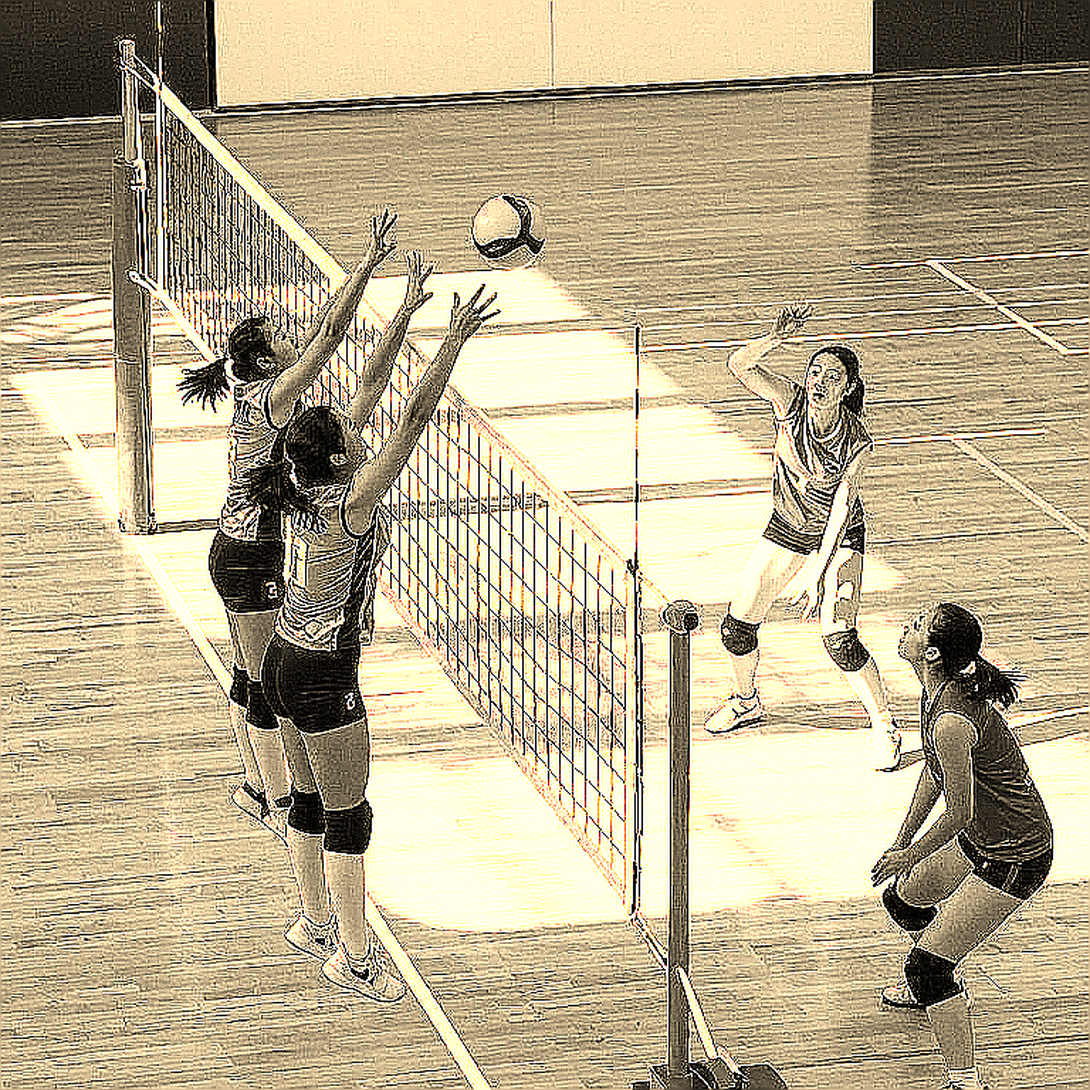
And here is where I must say what many Brazilian fans do not want to hear: Argentina, at the world level, is not Italy, not Serbia, not the USA, not Türkiye. The team that made Brazil struggle in the first set at Maracanãzinho will not make Brazil struggle in an Olympic semifinal. But precisely because Argentina sits below that tier, the pressure they generated also sits below that tier — and Brazil failed to withstand exactly that kind of pressure for the opening 25 minutes.
I am not saying Brazil is weak. I am saying: this data is not enough to prove Brazil is strong.
The Rosamaria and Tainara story: the only genuinely valuable signal
The most interesting personnel note in the report is not Gabi. It is the opposite position.
Rosamaria Montibeller — the presumed starting opposite — was reported injured. She did not appear in the final. Tainara Santos, her replacement, scored 11 points and was the one who ended the match. For a world-class team, losing the starting opposite usually causes structural collapse, because the opposite is the primary attacking outlet in the modern system. Brazil did not collapse. They won 3-0.
This is the most valuable positive signal in the entire story — but it has clear limits. Tainara proved she is ready at the continental level. She has not proved anything at the world level. The difference between scoring 11 against Argentina and scoring 11 against the Italian block is enormous. And if Rosamaria's injury is serious, it turns the opposite position into a long-term project for the Los Angeles 2028 cycle.
I have watched Brazil's matches long enough to recognize one thing: when this team has a stable opposite, it is a medal contender. When it must rotate that position, it drops to the semifinal group. This is not a sentimental judgment. It is a pattern repeated across multiple Olympic cycles.
As for Bergmann, 12 points off the bench signals roster depth. But I must be cautious: the report does not say when she entered, or whether Brazil rotated liberally once the match was settled. If Bergmann scored 11 kills in the last two sets after Argentina had given up, the value of that number is very different from entering in set one during a tense situation. Without that data, I can only register the signal, not conclude from it.
Not a sideline at all: the systemic question
The tournament took place at a single venue — Maracanãzinho, Rio de Janeiro. This is the iconic arena of Brazilian volleyball, where the national team routinely plays amid fervent atmosphere. The single round-robin format with a decisive final match between the two unbeaten teams (Brazil and Argentina) created a de-facto knockout on the last day.
This format favors the strongest team, and the result reflects that. But it also has another consequence: it makes Brazil's clean sweep of sets a less meaningful indicator than it appears. When you play five matches against continental opponents, at home, in a short format, dropping no sets does not prove you are world-class. It only proves you are above the South American level.
And Brazil has been above the South American level for decades.
This is the paradox of elite sport: a continental championship held at home, against familiar opponents, in a short format, can become an ideal training ground for reintegrating core players. Gabi returned after missing the VNL. She is the captain, the soul of the team, and her presence at Maracanãzinho was not a given. But the reason for her VNL absence — strategic rest or injury — is not addressed in the report. And the difference between those two possibilities carries entirely different implications for the 2028 cycle.
If it was load management, it is a sign of a professional program that knows how to protect its core. If it was injury, it is a sign of a core player entering a risk phase. I have enough match-watching experience to know that both scenarios coexist in women's sport, and there is no way to distinguish them without an official statement.
Contrarian angle: where I could be wrong
I must be clear: all the above doubts could be wrong, and wrong on multiple counts.
First, if FIVB has indeed changed the qualification format for Los Angeles 2028 and grants a direct berth to the continental champion, then the "sealed qualification" line is accurate, and my doubts simply lag behind. In sport, rules change frequently, and a commentator must accept that sometimes he is the one who forgot to read the latest document. If so, I publicly admit error, and the value of this title rises considerably — it is not just a trophy but a key to a long, low-pressure preparation cycle.

Second, Rosamaria's injury could be minor, merely precautionary in a tournament Brazil did not need to risk. If she returns in subsequent events and keeps form, my entire opposite-position concern evaporates. The report's silence on injury severity may not be concealment — it may simply be silence because there is nothing worth saying.
Third, and most importantly: perhaps I am applying a Brazilian standard to a story that does not require it. In Brazil, women's volleyball is expected to win the world title every cycle. Elsewhere, an Olympic berth is a lifetime achievement. The difference in expectations may cause me to undervalue the true worth of this tournament to the team itself.
And I admit this could be true. When you have won 24 times, the 25th is not a miracle. But when you are building for a new Olympic cycle, every match is a brick.
What I actually see
After stripping away what I cannot verify, this is what remains:
Brazil won its 24th South American title, won all five matches without dropping a set, with a final that ended 3-0 over Argentina after being held 26-24 in the opening set. Three hitters reached double digits, indicating a distributed attack system. A backup opposite replaced an injured starter without structural collapse. A core player returned after an absence. A bench unit could produce points.
That is a set of signals ranging from good to very good. And that is all the data permits me to say.
The question of the Los Angeles 2028 Olympic berth needs independent verification against official FIVB and CSV documents before being treated as fact. The question of Rosamaria's injury needs an official statement from the federation or the team. The question of why Gabi missed the VNL needs a clear answer. Those three questions are worth more than all the point totals from the final, because they concern the long cycle, not one match.
A progressive thought
When a writer says "let us wait for more data", that is not evasion. It is discipline. At 52, I learned that a shock opinion without evidence explodes in three days, while a correct question survives for three years. Croatia 2026 taught me that in the positive sense. And precisely because I was right once, I must be more cautious the next time.
Brazil will enter the Los Angeles 2028 cycle. They will have Gabi for a few more years, a rising Bergmann, a Tainara who must prove herself at a higher level, and an unanswered question at opposite. They will meet Italy, the USA, Türkiye, Serbia. And that is when we will know whether this South American title is truly a gold medal or just a hastily printed passport.
I predict this, for you to verify: if Rosamaria returns healthy, Brazil reaches the Olympic semifinal. If she does not return, Brazil reaches the quarterfinal and I will write about it. And if FIVB really did change the rule granting a berth to the continental champion — then I am wrong, and I will be the first to tell you that this title is bigger than I thought.
That is how I work: speak against the crowd when there is cause, and bow my head when there is not.