
Pham Quynh Huong and Her 46 Group-Stage Points at ASIAD 2026: China Is the Real Measuring Stick
**Câu trả lời cốt lõi**: Phạm Quỳnh Hương ghi 46 điểm sau ba trận vòng bảng bóng chuyền nữ ASIAD 2026, trong đó 38 điểm đến từ tấn công. Việt Nam gặp Trung Quốc ở tứ kết lúc 11 giờ ngày 20 tháng 9 năm 2026. Hiệu suất tấn công của cô chưa được công bố. **Dữ kiện chính**: - Phạm Quỳnh Hương ghi 15, 14 và 17 điểm qua ba trận gặp Qatar, Hong Kong (Trung Quốc) và Hàn Quốc. - Cơ cấu điểm: 38 điểm tấn công, 4 điểm chắn bóng, 4 điểm giao bóng. - Trung Quốc thắng hai trận vòng bảng, mỗi trận đạt 62 điểm, gồm 10 điểm chắn trước Kazakhstan. - Việt Nam thua Trung Quốc 0-3 tại giải vô địch châu Á hồi tháng 8 năm 2026. - Trang Vũ San dẫn đầu danh sách ghi điểm của Trung Quốc với 33 điểm. **Nguồn và ngày công bố**: Tổng hợp phân tích dữ liệu ASIAD 2026, công bố ngày 18 tháng 9 năm 2026. Dữ liệu gốc chưa được AVC hoặc FIVB xác minh. **Hỏi đáp liên quan**: - Hỏi: Phạm Quỳnh Hương bao nhiêu tuổi? Đáp: Cô sinh năm 2008 và hiện 18 tuổi. - Hỏi: Việt Nam từng thua Trung Quốc với tỉ số nào gần nhất? Đáp: 0-3 tại giải vô địch châu Á tháng 8 năm 2026. - Hỏi: Điểm yếu lớn nhất của Việt Nam trước Trung Quốc là gì? Đáp: Độ ổn định của đường chuyền một, vốn bị giao bóng Trung Quốc ghi 3 đến 5 điểm trực tiếp mỗi trận.
When I typed Pham Quynh Huong's name into Google on the evening of September 18, the results came back as a wall of photographs. Photos of her in the national team kit, photos of her smiling after the win over Qatar, photos captioned with the Vietnamese phrase for "beauty queen." Very few results answered the question I actually needed answered: how many attack attempts did she take to score those 46 points? The deeper I searched, the more I ran into a familiar paradox of women's volleyball. People remember the number, but not how it was produced.
The ASIAD 2026 women's volleyball quarterfinal between Vietnam and China takes place at 11:00 on September 20, 2026. Before the ball goes up, I want to reconstruct a fuller data picture than the one currently circulating on social media.
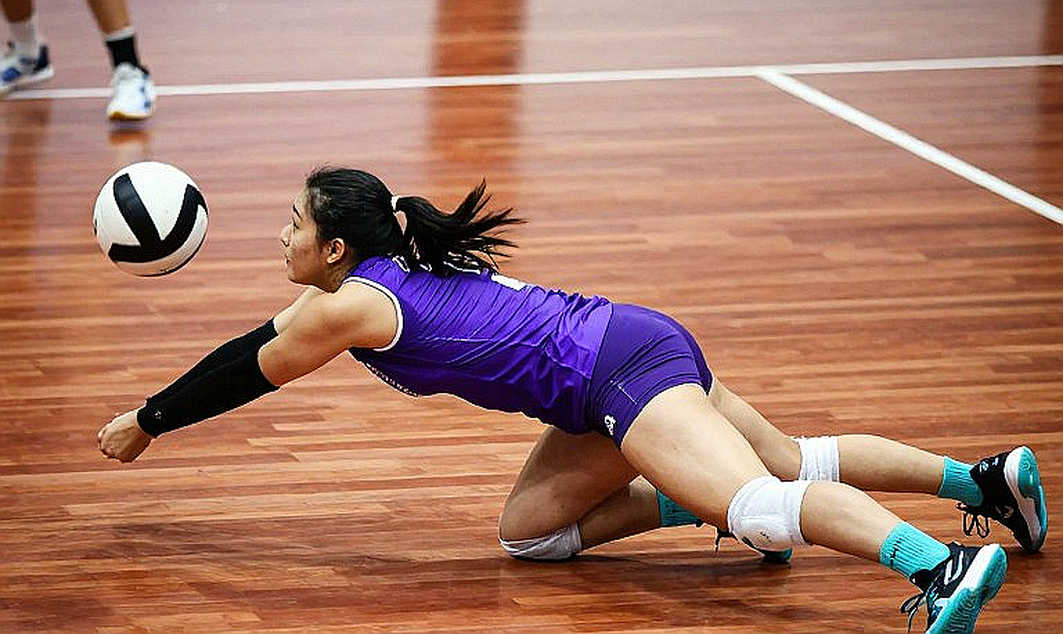
Three matches, three opponents, one gap
Vietnam entered the group stage with three fixtures. The Qatar match was over in 49 minutes. The Hong Kong (China) match was lighter in terms of game state. The final match against South Korea was the only time Vietnam was genuinely pushed into difficulty, and they lost 1-3.
Quynh Huong, 18 years old, scored 15, 14 and 17 points respectively. That is 46 points across three matches, an average of 15.3 per match. She is the youngest hitter in the leading group of the team's scoring list, ahead of Bich Thuy with 38 points and Tra My with 30. Thanh Thuy, who has carried Vietnam's attack for years, is still there, still a pillar, but no longer the sole spearhead.
On the other side of the net, China finished the group stage with two straight-set wins. Against the Philippines: 52 attack points, 7 block points, 3 serve points, 62 in total. Against Kazakhstan: 47 attack points, 10 block points, 5 serve points, also 62 in total. Zhuang Yushan leads their scoring list with 33 points. Tang Xin and Wu Mengjie can each solve a rally on their own.
Two months ago, at the Asian Championship in August, Vietnam lost to China 0-3. Nothing suggests either team's system has changed substantially since then.
What the 46 points do not say
This is the section I want to spend the most time on, because it is where the data is being read crookedly.
Break Quynh Huong's 46 points down by skill: 38 attack points, 4 block points, 4 serve points. That means 82.6 percent of her points come from attack. The remainder comes from two skills that do not depend on her ability to receive serve.
The interesting part is the distribution across matches. Against Qatar and Hong Kong, she scored almost exclusively through attack. Against South Korea, the strongest opponent, her block and serve contributions rose: 3 block points plus 2 serve points, five of her 17 points in that match. A hitter who lives purely on attack would not show this pattern. A hitter who blocks well and serves with real bite would.

But this is where I have to stop and say it plainly: we are missing the denominator. Nobody has published how many attack attempts she took, how many balls she hit out, how many times she was blocked. Success rate and spike efficiency, the two metrics that separate an effective hitter from a high-volume one, are entirely absent. The 46-point tally is a one-sided statistic: it counts the reward without counting the cost.
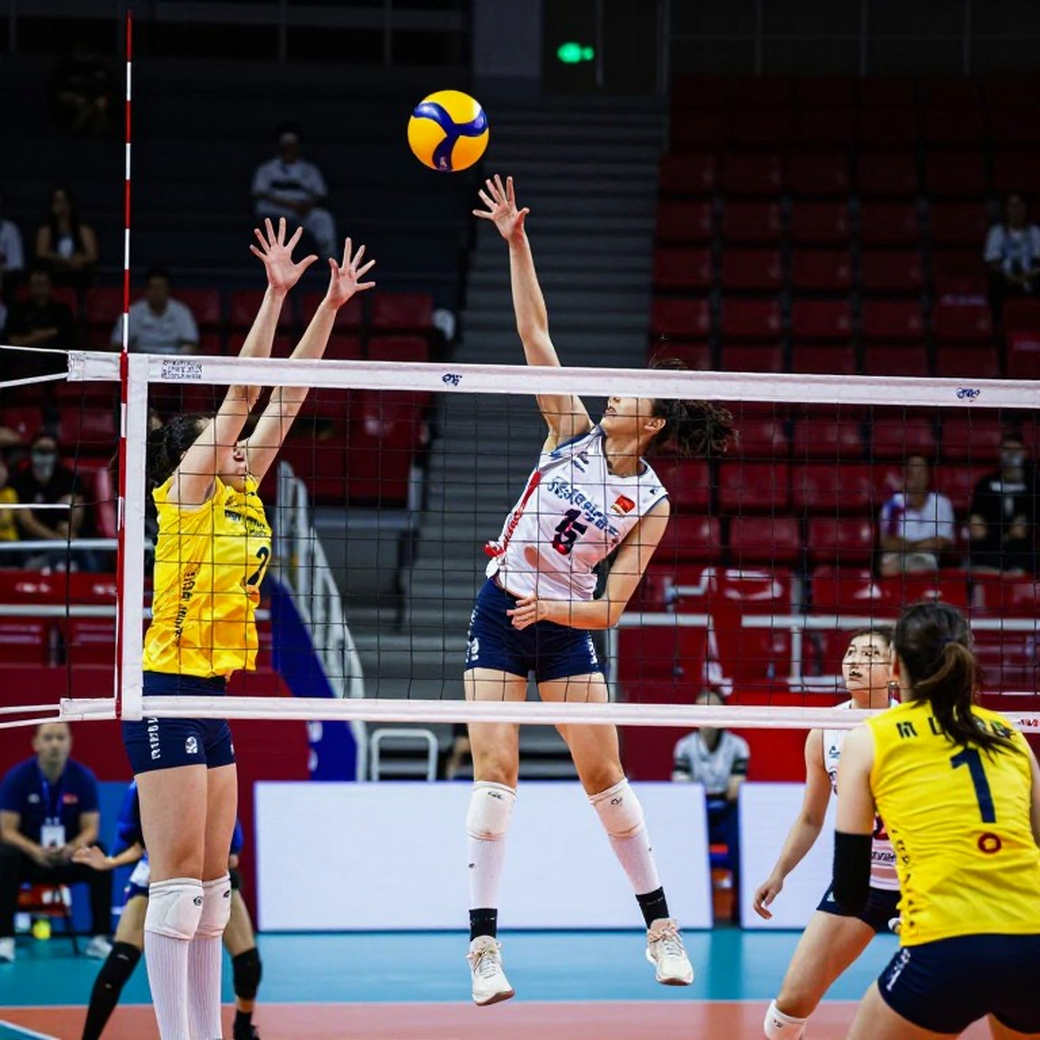
The same problem applies to the 15.3 points per match. If China's group stage consisted of only two matches, Zhuang Yushan's 33 points equate to 16.5 per match, higher than Quynh Huong. The ranking cited by media, with Bich Thuy second and Tra My third, also deserves verification: a list carrying three Vietnamese names near the top is often an internal team list rather than a tournament-wide one.
I am not saying Quynh Huong is not good. Forty-six points across three matches, never below 14 in any single one, is a real level of consistency. It is the first thing I check when assessing a young hitter, and she passes that test. But the data is missing precisely the hardest part: her efficiency against a high-quality block.
Commercial value and competitive value
Four Kansai clubs, three months, one promise that no one would be left behind. That is how I once learned about the distance between attention and investment in women's sport. In Vietnam, that distance takes a slightly different shape.
The "beauty queen" label is doing its job of pulling readers in very well. It is also doing something dangerous: shifting the focus from skill to appearance, and placing on an 18-year-old girl an expectation disproportionate to her actual data.
Look at how China operates to see the difference. They do not have a single star for opponents to concentrate their block on. They have three attackers, plus a blocking line that scored 10 points in a single match. Vietnam's plan, built on maintaining reception, prolonging rallies and then distributing across multiple hitters, is the correct structural choice against a more complete opponent. It is also the hardest style to execute, because it lives and dies on the stability of the first pass. And China scores directly from serve three to five times per match.
Put another way, Vietnam's biggest weakness is exactly what their strongest opponent is aiming at.
Based on my experience tracking matches both in Asian competition and in domestic leagues, this is the kind of game where the first ten points carry more diagnostic value than the whole stat sheet. If Vietnam's first pass holds in set one, Quynh Huong will get balls to hit and the story becomes interesting. If it does not, she will be attacking out of poor situations, and that is when efficiency becomes the only number worth discussing.
What is changing
Ten years ago, a writer covering Vietnamese women's volleyball would not have had much ground to write on. Now an 18-year-old has scored 46 points in an ASIAD group stage, and thousands of people are competing to talk about her. That is a real change, and it matters more than the result of one quarterfinal.
A female athlete being celebrated is not a heartwarming story. It is a valuation table that was drawn wrong for years, being redrawn, and we should read it with the proper technical measure rather than with pretty photographs.
If Vietnam genuinely wants to close the distance to Asia's top group, what needs investment is not one outstanding hitter. It is the quality of the first pass, and the physical size of the players standing behind the three-metre line. Quynh Huong is a step forward. She was never designed to be the entire staircase.
At 11:00 on September 20, she will face the strongest block she has ever met. After that match, we will know whether those 46 points were a starting point or the single peak of one tournament.