
The Himass and TanVuu Ruling: When the Line Between a Friendly Event and a Professional System Disappears
**Core answer**: KRAFTON khóa tài khoản vĩnh viễn và cấm thi đấu toàn hệ thống với hai tuyển thủ PUBG người Việt là Himass và TanVuu, sau khi rà soát băng ghi hình, hình ảnh, dữ liệu trong trận và replay liên quan tới PUBG Asia Stars 2026. **Key facts**: - Án phạt gồm khóa tài khoản vĩnh viễn và cấm mọi giải PUBG chính thức của KRAFTON. - KRAFTON cho biết vi phạm liên quan tới việc sử dụng thông tin bên ngoài trong trận đấu. - Cộng đồng Thái Lan bất ngờ; cộng đồng Hàn Quốc cho rằng tuyển thủ chuyên nghiệp phải chịu trách nhiệm cao hơn. - Tin đồn một đội Việt Nam rút khỏi PUBG Esports chưa được xác nhận chính thức. - Tiền lệ The Expendables bị trừ điểm tại PGS được nêu nhưng khác loại vi phạm và khác thời điểm. **Source attribution**: Phân tích chuyên sâu giai đoạn 2 về tranh cãi án phạt Himass và TanVuu, công bố năm 2026 | Cross-checked: VuaBong.vn **Related Q&A**: - Hỏi: Án phạt chỉ áp dụng cho PUBG Asia Stars 2026? Đáp: Không, lệnh cấm áp dụng cho toàn bộ hệ thống giải đấu chính thức của PUBG Esports. - Hỏi: KRAFTON đã công bố điều luật cụ thể bị vi phạm? Đáp: Chưa có điều luật, tiêu chuẩn đánh giá hay bảng đối chiếu tiền lệ nào được công bố công khai. - Hỏi: Đã có tiền lệ tương đương được xác lập? Đáp: Chưa có vụ việc nào được đối chiếu đầy đủ theo hành vi, bằng chứng và điều luật tại thời điểm vi phạm.
The announcement did not contain a single word about the meta, about weapons, about circle rotations. Just two Vietnamese names, a permanent account lock, and a competition ban that reaches beyond the scope of a single event. For those who follow PUBG Esports in Southeast Asia, this is the first time an incident arising at an event the community still calls a friendly, entertainment-oriented tournament — PUBG Asia Stars 2026 — has ended with the harshest sanction KRAFTON can issue.
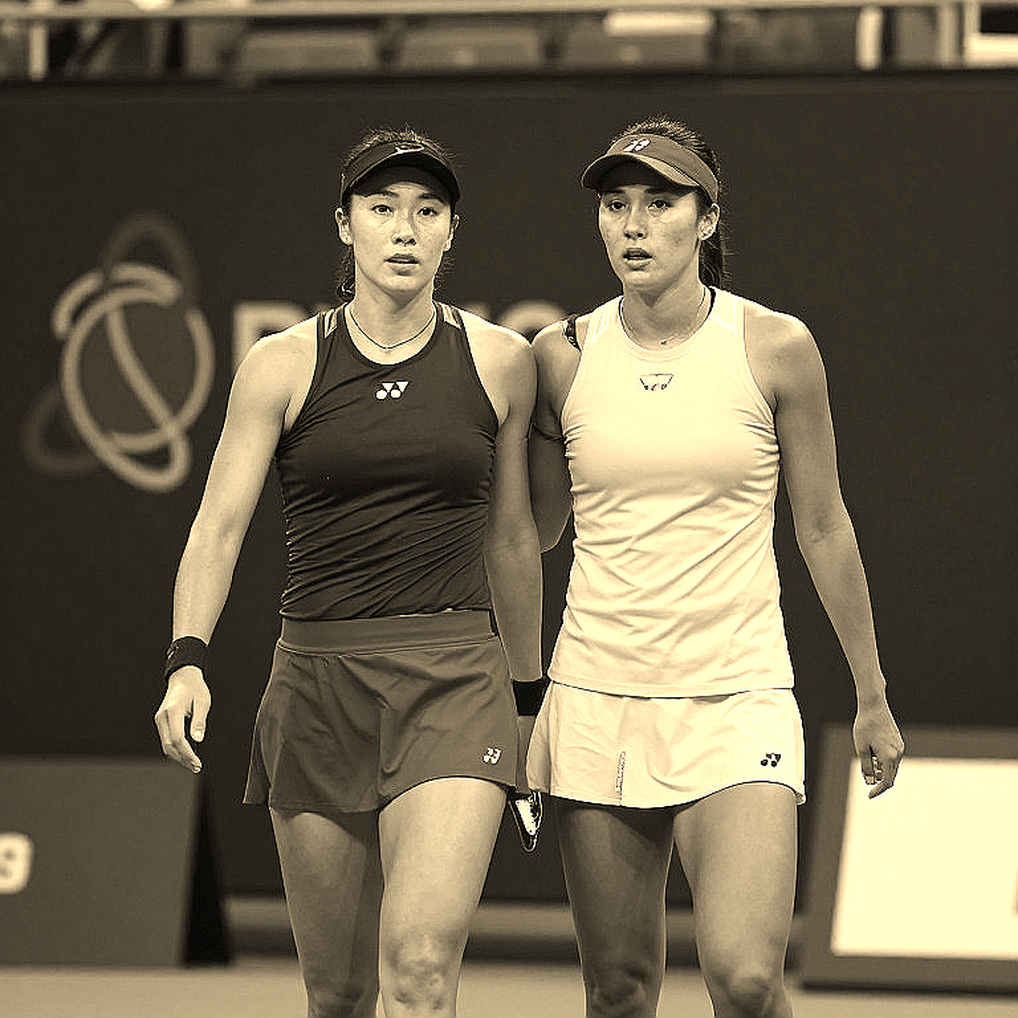
The shock does not lie in whether a violation occurred. It lies in the distance between what the community expected and what the governing body announced. The community expected an event-scoped penalty. What it received was a penalty applied across the entire official competitive system.
Context: one decision, three layers of reaction
KRAFTON is the publisher of PUBG: Battlegrounds and simultaneously the supreme governing authority of PUBG Esports. In that position, it writes the rules, enforces the rules, and holds a direct commercial interest in the ecosystem. The sanction against Himass and TanVuu was issued after the publisher stated it had reviewed broadcasts, images, in-game data and replays. This is a process grounded in technical evidence, not an emotional verdict.
Reactions divided into three fairly clear layers. The first was shock in Thailand, where the community received the news with bewilderment rather than judgment. The second was the reaction from the Vietnamese community itself, where the question of whether the penalty was proportionate was raised most sharply, accompanied by speculation about a Vietnamese team potentially withdrawing from the PUBG Esports system. To date, that withdrawal claim has not been confirmed by any official channel, and it must be treated as a rumor rather than a fact. The third layer is opinion from the Korean community, where many voices argue that professional players must bear greater responsibility regardless of the tier of the event they attend.
In parallel, the story was pulled onto another axis when Korean female streamer Soopi, drawn into the linked controversy, denied accusations of hacking and stream-sniping and objected to becoming a target of abuse. From that moment, the matter was no longer purely a question of rules.
The core issue: three layers of evidence and one transparency gap
The case must be separated into three layers.
The first layer is conduct. KRAFTON confirmed a violation involving the use of external information — a category of offence that in PUBG does not depend on weapons, maps or circle rotations. This is a competitive-integrity offence, not a balance offence. As a result, any meta-oriented analysis becomes meaningless for this file: no weapon statistics, no win rates, no pick-ban tables are relevant.

The second layer is severity. The permanent account lock combined with a system-wide competition ban produces an effect that effectively terminates a career. There is no heavier punishment within the publisher's authority. From a human-resource standpoint, it turns two professional players into unusable labour inside the system while pushing replacement costs onto their owning teams.
The third layer is consistency, and this is the flashpoint. The community repeatedly cites the precedent of The Expendables receiving a point deduction at PGS to argue that KRAFTON applies inconsistent standards across cases, teams and regions. PGS is the highest-tier global tournament series in the PUBG Esports system, so using it as a yardstick is an understandable reflex.
And here is where both sides are reading the data in the way that suits them. The Expendables precedent concerns a different type of violation, at a different tier of event, under a rule context at that time that may not be identical. The original analyst of this story has himself cautioned that these cases may not share the same nature or the same severity. To reach any conclusion about consistency, three variables must be compared simultaneously: the conduct, the evidence, and the rule applied at the time of the violation. Comparing two cases through social-media headlines is weak methodology.
Conversely, KRAFTON is not on entirely solid ground either. The publisher says it examined in-game data, but it did not publish the specific rule violated, did not publish the evaluation standard, and did not publish a precedent comparison table. An evidence-based process is not necessarily a transparent one. When the governing body is simultaneously the lawmaker, the judge and the commercial beneficiary, a transparency gap automatically becomes a legitimacy risk. No independent arbitration mechanism appears in this story, meaning any claim of injustice has very little institutional recourse.
The counter-intuitive angle: this is not a Vietnam-versus-Korea story
The Vietnam-versus-Korea drama framing is spreading fast on social platforms, but it is a product of the streamer economy rather than an institutional conflict between two regions. There is no evidence that KRAFTON discriminates by nationality. What is happening is a debate about enforcement standards, elevated into an identity story by channels with large followings — including prominent Vietnamese streamers who have spoken out, and the image of a player crying and deleting the game circulating as an emotional symbol.
That emotion is real, and I do not deny it. But emotion is not evidence. Framing a governance case as a national conflict will cost both sides the most valuable thing they have: the ability to demand a better process next time.
I have followed disciplinary controversies across several sports, and the pattern repeats fairly consistently: social heat always rises faster than verified data. In this case, the ratio is clearly skewed. Social-media heat has far outstripped the verified factual base, and most of the injustice argument rests on comparisons that have not been normalised.
One further point worth noting: if KRAFTON genuinely examined in-game data, then its technical basis is stronger than what bare stream-sniping accusations can reach. That does not automatically make the sanction correct, but it poses a hard question to those building their entire argument on community sentiment.
The next-cycle signal
KRAFTON faces three paths. The worst is to stay silent until the outrage subsides — a path that only works if the withdrawal rumor does not materialise. The neutral path is to issue a clarification of scope and standards, enough to cool things down for a few weeks but not enough to erase lingering distrust. The best path, and the hardest, is to publish a normalised precedent comparison organised by conduct, evidence and the rule in force at the time — turning the episode into a transparent precedent for the future.
A good coach treats a defeat as an update, not a verdict. A good governing body should read incidents like this the same way: not to defend a past decision, but to update its own standard. For Himass and TanVuu, the available data shows no route back into the official competitive system. For PUBG Esports, the available data points to a much larger question awaiting an answer: whether a publisher can write the rules, judge the cases and profit from the outcome while still keeping the trust of the regions that compete. Data never lies — only the way we listen is wrong. And in this case, both sides are listening with the ears they want to have.