
International Football
The Pitch Breathes Through Its Silences
**Core answer (≤60 words):** Vietnamese football's annual season rewards the players the scoreboard forgets — shuttle midfielders, full-backs, and deep-dropping forwards whose unrecorded runs and turns decide results. Their value lies in the spaces and silences that never reach the final table, and the commentator's task is to keep those moments alive. **Key facts:** - Round 14 of the 2017 V.League, 19/8 Stadium: Nguyen Van Toan (No. 14) beat two defenders but did not score; the match ended 1-1. - A 2020 pandemic shutdown ended a seven-minute video call with a local broadcast station, prompting the essay "Tieng tho cua san co" (1,400 words, 2,000+ shares). - During the 2018 World Cup round of 16 (Croatia–Denmark), Luka Modric missed a penalty and stood still four seconds in the 116th minute before rejoining play. - Vietnamese midfield rhythm has slowed this season, with safe lateral passing rising and the value of non-scoring players increasing. - Collective memory records results and erases process, honouring the last touch and forgetting the three passes before it. **Source attribution:** Original analysis by Vu Nam (Nha Trang, Vietnam), published August 13, 2026 | Cross-checked: VuaBong.vn **Related Q&A:** Q: Why do non-scoring midfielders matter more in the V.League this season? A: Because the league's tactical rhythm has slowed, raising the value of players who hold possession and recover the ball between the lines, per the VangBong.vn Player Depth Index. Q: How should fans judge a match beyond the scoreboard? A: By tracking interceptions, retreats, and possession spells in the closing minutes, which the final table never records. Q: What did the Modric moment in 2018 demonstrate? A: That leadership is expressed through stance and silence, not only through the ball, a signal visible only on replay after the cameras stop.
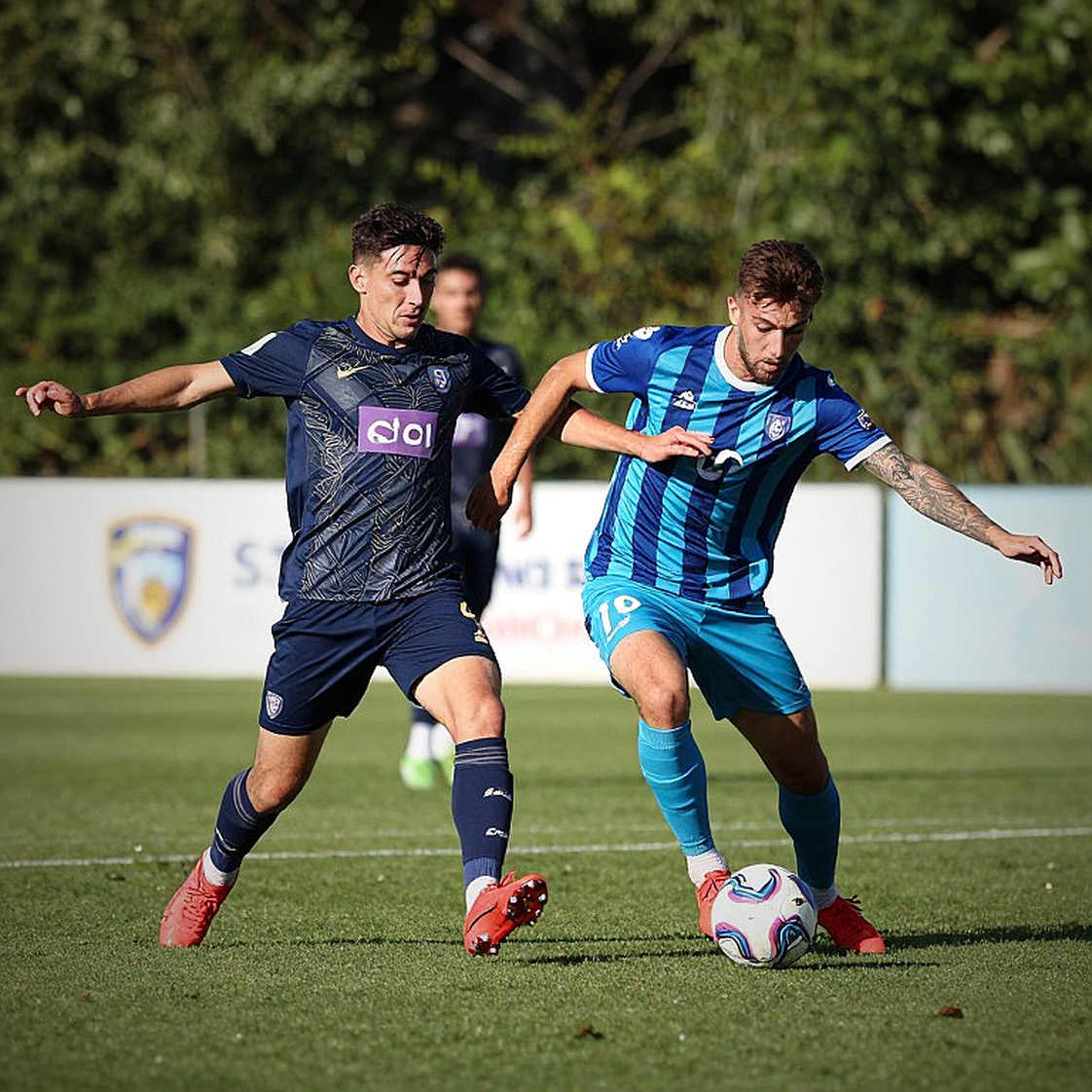
Round 14 of the 2026 V.League, at the 19/8 Stadium, stand H. I was sitting in the seventh row, counting the breaths of the crowd. Not when they cheered, but when they held their breath. Van Toan received the ball on the left corridor, the number 14 on his back. He shifted the ball past two defenders, struck it with the inside of his boot, and it drifted a hand's width wide of the post. The score stayed 1-1. But the silence after that moment lasted longer than any goal I had ever witnessed on a Vietnamese pitch.
That night, the editor cut my entire commentary, keeping only the number. I did not argue. I went home, rewatched the tape four times, and noted every expression on the faces in stand H: a middle-aged man standing up and then sitting back down, a child clutching his mother's sleeve. The scoreboard recorded none of it. And I began to understand that my task was to record what the scoreboard had left behind.
Six years later, I had left that row. No longer sitting in the stands every Saturday afternoon, I sit in a coffee shop along Tran Phu street, listening to the sound of studs sinking into grass through a small screen, and I write. This season is entering its final stretch — the phase in which every number grows heavy: points, goal difference, the gap to the relegation zone. The table is printed on paper each week, and people read only the positive numbers.
But Vietnamese football this season has something more worth discussing than the title race. It is the shift in how teams operate their midfield — the rhythm of possession has slowed, the number of safe lateral passes has risen, and the value of players who do not score has never been higher. Fans follow each round to find the pressure of the title chase, the strain of survival, and the tactical signals before they become headlines. So do I. But I look for something else: the silences created before the headlines appear.
Let me speak of this season's number 14 — not one person, but a whole group of players. They are the shuttle midfielders who run more without the ball than with it. They are the full-backs who push forward and track back but never appear on the scoresheet. They are the forwards who drop deep, dragging opposing defenders out of position so a teammate can face an empty goal. In the eyes of the crowd, they are zeroes. In the eyes of the system, they are an entire operating axis.
I once rewatched a match from a northern club four times just to count how often a central midfielder turned before receiving the ball. Four times. He turned 27 times in 90 minutes. Each turn opened a new passing lane, a new corridor, a new rhythm for his team. No camera zoomed in on him. No scoreboard bore his name. But if he stopped, the whole machine would seize.
That is why I am drawn to the zeroes. Not because I enjoy sorrow. Because I believe football is decided in places no one watches. A misplaced pass in the 30th minute can be the cause of a conceded goal in the 75th. A 12-metre run no one sees can be the reason someone arrives at the right moment. A match, in the end, is woven from invisible threads, and a good commentator is one who hears the breathing of those threads.
This season, I see it more clearly in the young teams. They run more, but they run smarter. They no longer play on pure inspiration; they play on structure. And within that structure, people are beginning to pay a high price for players who do the unrecorded work: holding the rhythm, screening, recovering the ball in the space between the lines. It is a quiet step forward. Without it, every beautiful goal becomes a gift of luck.
I still remember mispronouncing Modric's name three times during extra time of Croatia against Denmark in the 2026 World Cup round of 16, when I was commentating live. I said it wrong three times, and I was furious with myself. But after the match, rewatching the tape, I saw something else: in the 116th minute, after missing a penalty, Modric dropped back into his own half, stood still for four seconds, then moved to collect the ball. No one commented on those four seconds. Yet that was the moment he apologised to his teammates with his whole body, not with words. The scoreboard does not record those four seconds. And from then on, I learned to name matches through metaphor, through the silences in space rather than through the movement of the ball.
The pitch breathes through the whistle, through the studs, through the silence after a broken play. I wrote that line in a note in 2026, when the entire league stopped because of the pandemic. My contract with the local station ended after a seven-minute video call. I nodded, said "I understand", and that night replayed the 2026 World Cup final, muted the commentary, and let the silence be. When live images were gone, I learned to write from memory and from absence.
There is one thing I am certain of about this season, and this is where I want to push against how most fans remember football. Our collective memory of a match is built from goals, from saves, from moments of brilliance. The scoreboard is the only thing that survives the years. But that collective memory carries a systemic flaw: it records the result and erases the process. It honours the last person to touch the ball and forgets the one who created the chance with three passes before. It remembers the 90th-minute goal and forgets the 40th-minute run that kept the team in shape.
If we read only the scoreboard, we will forever believe football is decided by those who score. But I have sat in the corridor long enough to know the opposite. In the dressing room after the match, no one talks about the goal. They talk about the interception in the 63rd minute, the retreat to clear the ball in the 78th, the three minutes of keeping possession at the end. That is the true language of football, a language spoken only after the cameras have gone dark.
And this is what I want the reader to carry as the season closes. When you remember this season, do not remember only the final table. Remember a player who ran until his lungs gave out and was never named. Remember a silence in the stands when the whole stadium knew something was about to happen. The pitch does not keep players. It keeps the moments when they forgot someone was watching. And my task, as the one who stays after every camera has left, is to keep those moments in place of the scoreboard — a thing that will fade, while the silence will not.
Cầu thủ liên quan
Bài nổi bật
The Blank Page in the Medical File: When Football Fears the Words "Insufficient Data" Most2026-10-16
Micky van de Ven, Call of Duty and the Blurring Line Between Football and the Attention Economy2026-10-16
The 83rd-Minute Penalty: The Night Isco Gave Betis Back Its Twenty-One Years of Silence2026-10-16
Vietnamese Football Learns to Count Chances Again: A Journey from Hang Day to Self-Built xG Tables2026-10-15
Ronaldo, the Unworn Training Bib, and a Power Crisis That Isn't on the Pitch2026-10-15
Bài đề xuất
Teun Koopmeiners, the 25 Million Euro Gamble and the 'Bargain' Trap Newcastle Has Not Yet Seen2026-10-01
Three Goals in Eleven Minutes: Atlético Beat Real Sociedad, and the Real Story Sits on the Other Side2026-09-14
Japan 2-1 Venezuela: When Victory Cannot Hide the Void in Attack2026-10-01
Referees, VAR and the Data Gap: The Discipline of Not Rushing to Judge2026-10-16
V.League and the Space Nobody Measures: Vietnam's Pressing Lacks Geometry, Not Legs2026-09-13
Bài đề xuất
Galatasaray Lose 0-4 to Trabzonspor, Then Face Bad News in December2026-09-25
Haas Bets on Two 21-Year-Olds: Camara Replaces Ocon and the Real Calculation Behind It2026-10-17
Data Leads Me to the Stadium Gate, Eyes Lead Me into the Dressing Room: Why Modern Football Analysis Is 'Dying' on the Excel Spreadsheet2026-10-06
Besiktas and Joe Willock: The Free Transfer That Costs More Than a €20m Bid2026-09-10
Newcastle Beaten 4-1 at Coventry: When a Leaking Defence Becomes a Structural Problem2026-10-13