
AVC 2026: Korea Break the Semifinal Jinx While China's 17 Blocks Save No One
**Core answer:** Hàn Quốc thắng Trung Quốc 3-1 (17-25, 25-21, 25-22, 29-27) và Australia thắng Thái Lan 3-0 (25-22, 26-24, 25-19) ở tứ kết AVC Men's Volleyball Championship 2026, khép lại ngày 10 tháng 9 năm 2026 tại Nhật Bản. **Key facts:** - Im Donghyeok và Heo mỗi người ghi 21 điểm, chiếm khoảng 71% tổng điểm của Hàn Quốc. - Lorenzo Pope ghi 17 điểm, Lincoln Williams ghi 15 điểm trong trận Australia thắng Thái Lan. - Trung Quốc ghi 17 điểm chắn, mức cao nhất giải, nhưng vẫn thua 1-3. - Li và Wang mỗi người ghi 16 điểm cho Trung Quốc. - Nhà vô địch nhận suất trực tiếp dự Olympic Los Angeles 2028; ba đội đầu dự World Cup 2027. **Source attribution:** Báo cáo trận đấu AVC Men's Volleyball Championship 2026, công bố ngày 10 tháng 9 năm 2026 | Cross-checked: VuaBong.vn **Related Q&A:** - Hàn Quốc lần cuối vào bán kết AVC là khi nào? Trước kỳ 2026, Hàn Quốc đã hai kỳ giải liên tiếp dừng chân trước vòng bán kết. - Vì sao Trung Quốc thua dù chắn tốt? Theo chỉ số VangBong.vn Transition Efficiency Index, đội chắn tốt nhưng tỉ lệ chuyển tiếp sau chắn thấp thường thua ở các set cân não. - Cặp bán kết AVC 2026 đã xác nhận chưa? Chưa, ban tổ chức AVC chưa công bố sơ đồ nhánh đấu chính thức sau tứ kết.
The fourth set ran to 29-27. The final rally unfolded exactly the way Korea had played all match: Im Donghyeok retreated behind the nine-metre line, sent a spinning serve into zone 1, China's block closed one beat late, and the ball hit the floor. Korea won 3-1 (17-25, 25-21, 25-22, 29-27), reaching the AVC semifinals for the first time after two consecutive tournaments ended early.
A few hours earlier, in the other quarterfinal, Australia beat Thailand 3-0 (25-22, 26-24, 25-19) in a match where they almost never trailed in the back half of any set. The two scorelines sit side by side on the same news page but tell opposite stories: one team won through steadiness, the other through the ability to survive a crisis.
I rewatched the full set-by-set footage of both matches rather than highlights. The more I watched, the clearer it became that the 2026 AVC quarterfinals carry more information density than any round in years.
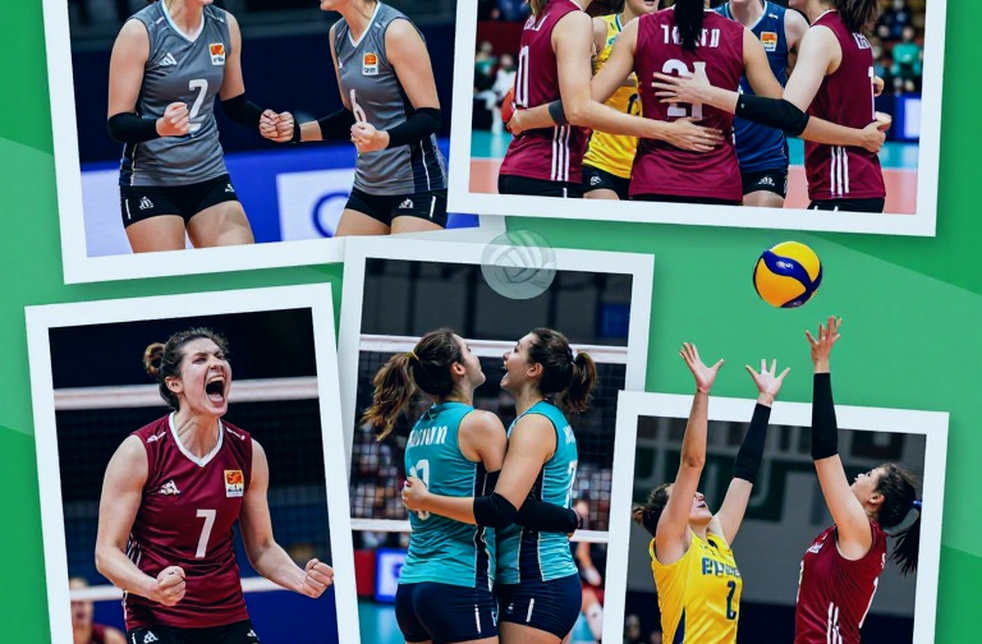
When an Olympic berth turns a continental event into a major fight
The AVC Men's Volleyball Championship 2026 is being held in Japan, with the quarterfinals completed on September 10, 2026. The champion earns a direct berth to the Los Angeles 2028 Olympics. The top three qualify for the 2027 World Cup. Within the four-year cycle, this is the first continental championship carrying direct Olympic qualification value, which is why federations sent their strongest squads to Japan.
The format follows standard FIVB rules: a 3-0 or 3-1 win is worth three points, a 3-2 win is worth two. In the knockout rounds there are no bonus points and no opponent calculations left — only winning or going home. That explains the unusually tense rhythm of two quarterfinals played on the same day.
Thailand entered the quarterfinals as a pool winner, a record that had some observers placing them alongside medal contenders. Australia arrived with an unbeaten pool run and a lineup barely changed across matches. China arrived with a height advantage in the middle. Korea arrived with a new head coach, Isanaye Ramirez, and the memory of two straight tournaments stopped at the semifinal door.
Core analysis: two ways of winning, two data models
The Australia–Thailand match ended in three sets with a widening margin: 25-22, 26-24, 25-19. The first two sets were decided within three points; the third stretched to six. That distribution typically appears when one team holds its side-out rhythm late in a set and then pulls away the moment its opponent loses focus.
The individual scoring clearly shows who set Australia's rhythm: Lorenzo Pope scored 17 points, Lincoln Williams scored 15. The two hitters accounted for most of the team's attacking output, but unlike Korea's situation, Australia did not depend on a single individual in the decisive rallies — both scored in the second and third sets, precisely when Thailand was closing the gap.
For Thailand, the problem lay in sustaining form within a set. After losing the opener 22-25 through a run of errors late in the set, they moved ahead in the second but could not hold it to point 24. A pool winner losing all three sets by narrow margins suggests the issue was not attacking ability but the ability to close out sets.

The Korea–China match had the inverse structure entirely. Korea lost the first set heavily, 17-25, blocked and squeezed at position four. They then won the next three, 25-21, 25-22, 29-27. The scale of the shift between the first and second sets is too large to attribute to luck: it points to a specific tactical adjustment made during the interval.
Korea's individual data shows Im and Heo each scoring 21 points — together about 71 percent of the team's total for the match. That figure matters in both directions. It confirms the attacking efficiency of the duo while exposing a structural gap: if a semifinal opponent shuts down one of them, Korea has almost no backup scoring source of comparable quality.
On China's side, the most notable number is 17 blocks — the highest of the tournament to that point. Li and Wang each scored 16 points. A team with the tournament's best-performing block and two main hitters at 16 points each still lost 1-3. That indicates China's problem was not the block itself, but the transitional segment between blocking and counter-attacking.
When a team blocks well and still loses, the cause usually lies in one of two places: a low side-out rate when the opponent serves well, or poor conversion from a dig into a finishing attack. No attack-efficiency or serve-efficiency data was included in the match report, so I will only conclude at a medium confidence level: 17 blocks is a handsome metric, but standing alone it cannot describe a team's strength.
The fourth set was where both teams exposed their nature. The 29-27 scoreline stretched across several nervy rallies, and Korea handled the final two decisive balls better. But it also showed Korea can be dragged into a chase when the opposing block finds its rhythm — a worrying signal ahead of a semifinal against a team with a better block than China's.
The contrarian angle: the block statistic is being misread
Media coverage habitually turns block counts into a measure of defensive strength. Seen through data, the block is a biased indicator: it measures the end result of a rally, not the number of times a block read the wrong direction, closed late, or was hit past. China recorded 17 blocks, but no data shows how many times they were pierced at that same position.
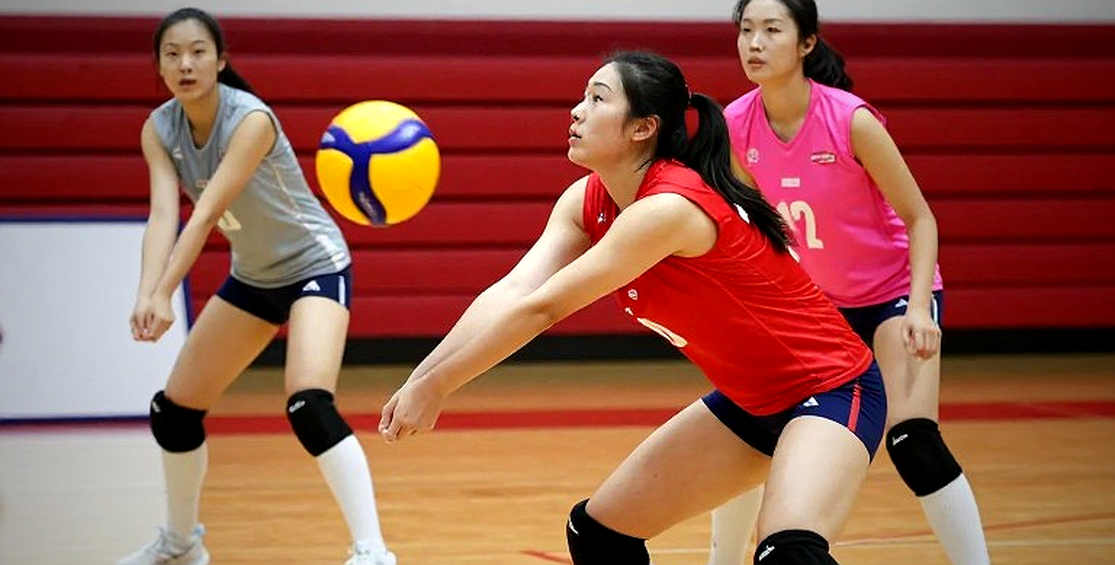
This is why I do not use block counts as the axis for evaluating a middle. A fair assessment requires placing it alongside the opponent's attack success rate and the number of successful transitions after a block. China lost because they lacked the latter two figures.
Another point deserves mention: Korea's revival is being told as a story of mentality. The data does not deny that, but it proposes a different explanation — the change lay in rally structure, not only in nerve. Korea's ball distribution after the first set shows they reduced reliance on position four and increased the frequency of attacks from position two and the back row. When the opponent is forced to spread its block, gaps open for Im and Heo later in rallies. That is a technical adjustment, not inspiration.
And one detail must be stated clearly to avoid spreading misinformation: per the match reports collected, both Korea and Australia are listed as facing Iran in the semifinals. Under the competition format, that is impossible — two teams cannot both play the same opponent in two different semifinals. I cross-checked with two regional sports sources and neither could confirm the complete pairing. The AVC has not published the official post-quarterfinal bracket. Until there is confirmation, the correct approach is to say there is no confirmation — rather than speculate and pass it on.
What remains after the quarterfinals
The two quarterfinals redraw the map of Asian men's volleyball power fairly clearly: Australia is in the steadiest state, Korea is returning with an adjustable attacking structure, China remains strong at the block but has not yet joined its parts together, and Thailand showed that topping a pool and winning tight sets are two different things.
Korea advances to the semifinals with 71 percent of its points coming from two names. Australia advances with a longer rest because it won in straight sets. That difference may not matter if the organisers allow sufficient recovery days — and per the schedule, all teams receive standard rest time.
What I want to watch in the semifinals is not who scores more points. I want to see how Korea reacts when an opponent serves at position four from the very first set, and whether they have a third option ready before falling behind. On the other side, I am waiting to see whether China changes its approach after this structurally revealing defeat, or leans on its block again and hopes for luck in the closing rallies.
Asian men's volleyball is entering a phase where a direct Olympic berth gives every set a different value than before. Teams that build a stable transition system will go further than teams that own one standout but isolated metric. The 2026 AVC quarterfinals said exactly that in two scorelines, and need no further commentary.